
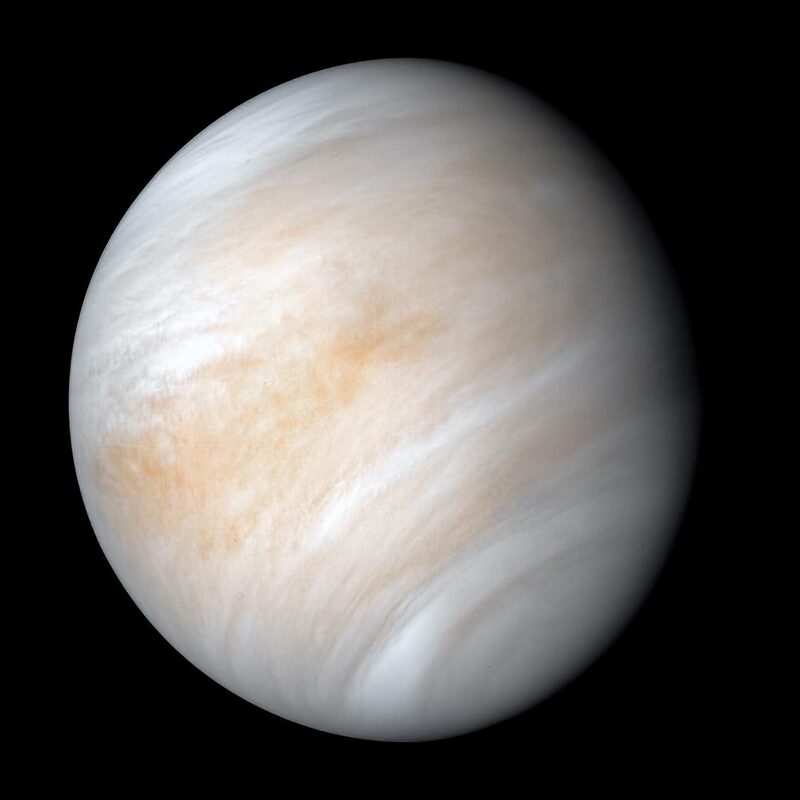
Concentrated sulfuric acid is not a place you would expect biochemistry to happen. It is the working fluid of Venus's cloud deck, and on Earth it is the sort of reagent that gets its own cabinet. So the result that a team of MIT chemists reported this week in the Proceedings of the National Academy of Sciences, announced by MIT News on August 31, comes as a genuine surprise: three short peptides, dropped into 98% sulfuric acid, did not fall apart. They sat there for weeks, intact. And then they did something nobody had shown before in that environment. They folded.
The study's senior authors are Mei Hong, a professor of chemistry at MIT, planetary scientist Sara Seager, and Janusz Petkowski of Wroclaw University of Science and Technology. Graduate student Jia Yi Zhang is lead author; former MIT postdoc Aurelio Dregni also contributed. It builds directly on a series of studies Seager's lab began in 2020, including a 2023 PNAS paper, which found that nucleic acids, lipids and individual amino acids survive in concentrated sulfuric acid. The new work takes the next step up the ladder of complexity, from building blocks to chains, and asks whether those chains can hold a shape.
What they tested
The three peptides are short. HHQ is a synthetic seven-amino-acid chain; HHQ13 is a longer, 13-residue variant; K7 is another seven-residue peptide with a completely different sequence. Together they span seven to thirteen amino acids, which is tiny by the standards of functional proteins but long enough to have a backbone that could, in principle, curl into something.
The medium was 98% sulfuric acid, matching the composition of the droplets in Venus's upper clouds. Those droplets are not uniform; Earth.com's coverage notes the cloud chemistry ranges from roughly 98% acid down to about 80%, with the balance being water. The team went with the harshest, driest end of that range.
To see what the peptides were doing, the group used the 800-megahertz solution NMR spectrometer in Hong's lab, a collaboration that staff at MIT's Department of Chemistry Instrumentation Facility suggested after earlier acid-stability work there. NMR is the right tool for this kind of question because it reports on the local environment of individual atoms in the molecule, which lets a chemist infer not only whether a chain is intact but how it is arranged in three dimensions.
What they found
Two things, and the second matters more than the first.
First, the peptides lasted. All three remained stable in the acid for many weeks. Hong, in an interview with Earth.com, described the team's reaction plainly: "First, we were astounded that peptides remain stable at all in concentrated sulfuric acid, for many weeks on end."
Second, and this is the headline, all three adopted the same kind of defined three-dimensional structure, an omega loop, rather than flopping around as random coils. "Even more remarkable was that they adopt specific three-dimensional structures instead of random shapes," Hong said.
The loop is not empty of chemistry. According to the NMR data, sulfuric acid molecules hydrogen-bond to specific positions along the peptide backbone, and the researchers believe the acid acts as a scaffold, sliding into the center of each loop and holding it in shape. The loops enclose a cavity amounting to roughly one-sixth of the molecule's volume, per Earth.com's summary of the paper. In other words, the solvent that ought to be destroying the molecule is instead part of what holds its shape together.
Why the acid doesn't win
The counterintuitive part has a clean explanation, and it comes down to water.
The reaction that normally cuts a peptide bond is hydrolysis. As the name suggests, it needs a water molecule to do the cutting. Acid speeds hydrolysis up, which is why strong acids are so hard on proteins in ordinary aqueous chemistry. But 98% sulfuric acid is, by definition, only about 2% water. With almost no water available, the hydrolysis reaction has nothing to work with. The acid is still there, still concentrated, but the specific pathway that would dismantle the chain cannot run.
Hong put it this way: "Without water, an acid that you would consider a harsh solvent suddenly is not as menacing as one might think."
That reframing is the conceptual core of the study. The threat to peptide chemistry in Venus's clouds was never acidity in the abstract; it was acid-catalyzed hydrolysis. Remove the water, and the picture changes.
Why It Matters
The reason a folded peptide matters more than a merely surviving one has to do with what proteins actually do. In every known biochemistry, protein function is a consequence of shape. An enzyme works because its fold puts the right atoms in the right places. A chain that survives but cannot hold a structure is chemically interesting; a chain that folds reliably is a candidate component of something functional.
Seager made exactly that point: "Life needs to have specially shaped proteins so that they have a specific target they can latch onto and perform their function. Before this, people thought that peptides couldn't survive in sulfuric acid, so showing peptides are not only stable, but also fold, is a really big deal."
The Venus context is what gives the result its edge. The idea that the planet's clouds might host life is old. Universe Today's coverage traces it to Heinz Haber in 1950, and to Harold Morowitz and Carl Sagan's 1967 paper in Nature. The appeal has always been the altitude band between roughly 48 and 60 kilometers, where temperature and pressure are Earth-like. The persistent objection has been the medium: those Earth-like conditions exist inside droplets of concentrated sulfuric acid, which has generally been assumed to be incompatible with the molecules life is made of.
The earlier work from Seager's lab chipped at that assumption at the level of nucleic acids, lipids and amino acids. This paper chips at it at the level of structured peptides. Neither result claims the acid is friendly to Earth biochemistry as a whole. What they show is narrower and more defensible: a specific class of molecule, under the specific conditions found in Venus's upper clouds, does not disintegrate and does organize itself.
Seager is also the principal investigator of the Morning Star Missions to Venus, a set of privately funded missions aimed at probing the cloud layer directly. Laboratory work like this shapes what such missions should reasonably expect to find, and what would count as a meaningful detection. If defined molecular structures can persist in the droplets, then the absence of them in a sample would tell you something too.
The caveat that has to travel with the result
It is worth being precise about what this study is and is not.
It is a demonstration that peptide chemistry, including the formation of defined three-dimensional structure, is possible in a solvent that mimics Venus's upper-cloud droplets. It is not evidence that life exists on Venus, that peptides are present in Venus's clouds, or that any organism could assemble and use them there. The peptides in this study were made on Earth and placed into laboratory acid. The experiment answers a chemistry question, not a biology one.
The chemistry question was, however, a real obstacle, and it has now been partly cleared. The next questions are the ones you would expect. Earth.com reports that the team has not yet tested whether the loops in sulfuric acid do anything at all, and that Hong plans to move on to longer peptides with more varied sequences, along with water-repelling peptides of the kind that normally sit inside a cell membrane.
The research was funded by the Alfred P. Sloan Foundation, the NOMIS Foundation, and the National Institutes of Health.
