
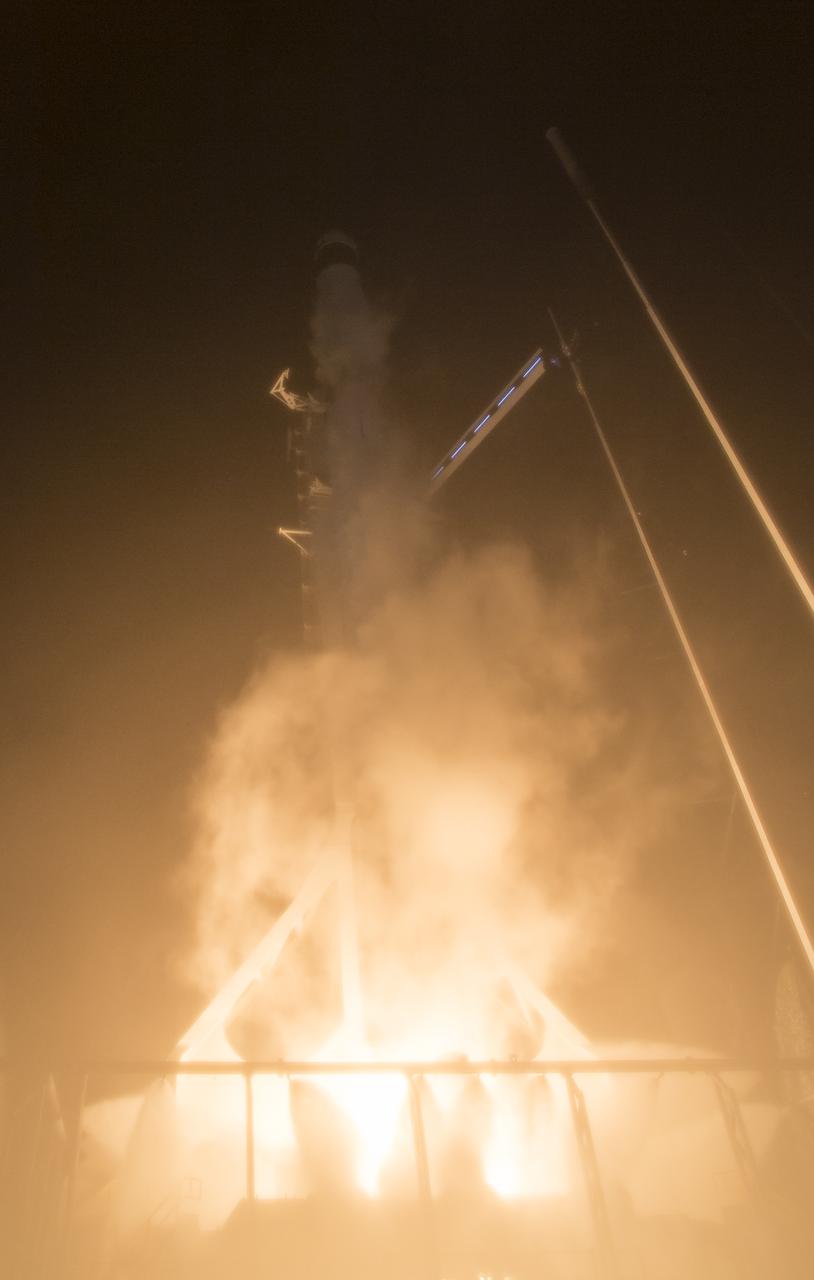
For more than a decade, the United States has had a peculiar blind spot in its space regulations: a growing class of commercial missions that no federal agency has clear authority to approve, and which the country is nonetheless obligated by treaty to authorize and supervise. On July 23, 2026, the Office of Space Commerce announced it is going to start approving them anyway — voluntarily, without new legislation, and with a stopwatch running.
OSC said its Space Commerce Certification proposal is moving to the next phase of implementation after months of engagement with industry partners, other federal agencies and the White House. The immediate next step is procedural but concrete: a "call for interest" published in the Federal Register within the coming weeks, followed by initial applications from commercial and agency partners, which OSC expects to process in the months after that.
"We are honored by President Trump's trust in the Office of Space Commerce, and we look forward to building a quick path to 'yes' for U.S. industry," OSC Director Taylor Jordan said. Commerce Secretary Howard Lutnick, who posted the announcement alongside Jordan, framed the stakes in the bluntest possible terms: "Space is going to be a multi-trillion dollar industry."
The phrase to sit with is "path to yes." Not "framework," not "rulemaking." OSC is not claiming the power to say no — because it doesn't have it.
The hole in the regulatory map
American commercial space regulation is a three-legged stool, and each leg was built for a specific activity. Congress gave the Department of Transportation responsibility for commercial launch and reentry, exercised through the FAA. The FCC assigns radio frequencies and, in practice, extracts orbital-debris commitments as a condition of licensing. The Department of Commerce licenses commercial remote sensing satellites. That is essentially the whole statutory landscape.
Now list the missions companies are actually proposing: on-orbit servicing and satellite refueling, commercial space stations, active debris removal, fuel depots. None of them is a launch. None of them is a remote-sensing system. All of them need spectrum, but spectrum authority is not mission authority. Congress has never resolved which agency, if any, is supposed to approve the mission itself.
That would be an academic problem except for Article VI of the Outer Space Treaty, which requires governments to authorize and continually supervise the space activities of non-governmental entities such as companies. A U.S. company that wants to grapple another operator's satellite and top off its tank has an obligation-shaped hole where its approval should be. The pressure is not hypothetical: the FCC's approval of Reflect Orbital's satellite, designed to reflect sunlight to the ground, is exactly the sort of case where a spectrum regulator ends up as the de facto arbiter of whether a novel mission happens at all — the commission itself noted that environmental and astronomical concerns fell "outside our review and authorization."
How certification is supposed to work
OSC's answer is not to regulate but to broker. Under the proposal, the office functions as a clearinghouse. A company that chooses to participate submits a package of basic information, which Jordan said OSC would tailor around "some basic questions around things like international obligations, national security, as well as basic business structure." OSC then coordinates the interagency review with the agencies that have equities — the Department of War, the State Department, the FAA, the FCC and NASA — though companies may still need to engage some of those agencies directly.
Then the clock starts. The system is built on a "presumption of approval": applications would be automatically granted after 120 days if the office took no action. That default matters more than any single provision. Most regulatory processes presume nothing and grind until an agency affirmatively acts. Inverting the default is what turns a review into a "path to yes."
The pitch to industry is that certification buys something tangible on the other side. According to SpaceNews, applicants could be relieved of some of the work required for licensing by other agencies — the FAA's payload review and FCC debris-mitigation plans among them — on the logic that an interagency review that already covered national security and debris questions should not be re-litigated three more times at three more desks.
The catch, stated plainly
Participation is entirely voluntary. OSC has no statutory authority to compel anyone to apply, because Congress never gave it any. The legal foundation is not a mission-authorization statute but the treaty obligation itself, plus President Trump's August 2025 executive order on "Enabling Competition in the Commercial Space Industry."
And the relief on offer is not guaranteed. It would be up to the FAA and the FCC to decide whether to waive any of their own regulations. Certification can recommend; it cannot override. So the value proposition to a first applicant is partly speculative: submit to an extra review, in exchange for a coordination benefit that other agencies are free to decline to honor.
OSC is candid that the first companies through the door constitute a pilot — Jordan described the initial applicants as a pilot for the certification, allowing the office to refine how the process will work. That is the honest framing. What is being tested is not really whether OSC can shuffle paperwork among five agencies in 120 days. It is whether a light-touch, non-statutory, opt-in regime can substitute for the law Congress has repeatedly declined to pass.
Eleven years of not deciding
The legislative history explains the shape of what Commerce is doing. The 2015 Commercial Space Launch Competitiveness Act required the Obama administration to submit a plan for authorizing non-traditional space activities; it chose the Department of Transportation. In 2018, legislation that would have assigned the authority to Commerce instead nearly passed, then failed at the final stage. A 2023 Biden administration proposal stalled. The current effort began as a draft released for stakeholder feedback in December 2025, was updated in March 2026, and reached this week's announcement.
Congress has noticed that the executive branch just moved without it. Rep. Brian Babin (R-TX) said he must determine whether the proposal "fully meets the needs of the commercial space sector, or whether legislative action is needed." Rep. Zoe Lofgren (D-CA) was more pointed: "We have not yet landed on a solution — and we need to."
Why It Matters
This is the closest the United States has come to actually authorizing the missions that define the next phase of commercial space — servicing, stations, debris removal, depots — and it is arriving through administrative improvisation rather than law. That has real consequences in both directions. If it works, a company planning a refueling mission gets a defined process, a 120-day answer, and a defensible claim that the U.S. government has supervised it under Article VI. If it doesn't — if applicants find that certification adds a review without removing any, or if a future administration simply stops running the program — the industry will have spent a pilot cycle discovering that a voluntary regime is only as durable as the executive order behind it.
The near-term tell will be the Federal Register notice and who answers it. A call for interest that draws serious applicants for genuinely novel missions would be evidence that industry values certainty enough to volunteer for scrutiny. Thin interest would tell Congress something too — that the gap Babin and Lofgren are still arguing about cannot be patched with a clearinghouse, and that the statute nobody has passed since 2015 is still the only real fix.
