
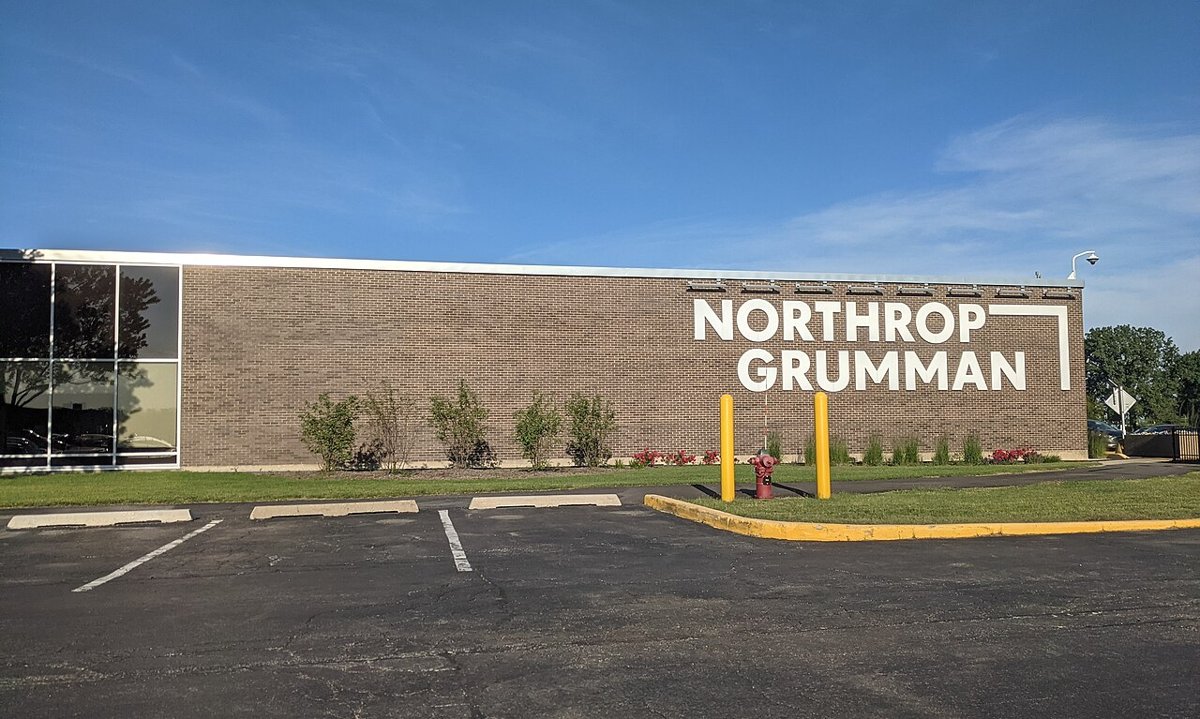
There is a particular kind of frustration that comes from being told to build more of something critical — rockets, in this case — while simultaneously being handed contracts too short to justify buying the machines to do it. Northrop Grumman, one of the largest producers of solid rocket motors in the United States, is making that frustration public: the company says the solid rocket industrial base is ready to scale production, but only if the government is willing to sign longer-term contracts.
It is a deceptively simple ask that touches on one of the most stubborn structural problems in defense procurement. And it arrives at a moment when the demand signal for solid rocket motors — from both military and civil space programs — has arguably never been louder.
The Production Paradox
Solid rocket motors are among the most unglamorous components in the aerospace supply chain, and also among the most indispensable. They power missile defense interceptors, strategic deterrent systems, satellite launch vehicles, and NASA missions alike. Both civil and military space programs depend on a reliable solid rocket motor supply chain, and for decades that supply chain has operated on the assumption of relatively modest, predictable production rates.
That assumption no longer holds. The Pentagon's appetite for missile defense systems has grown sharply. The Space Force is reorganizing its acquisition apparatus — its rapid acquisition office recently saw its director move to the Air Force Nuclear Weapons Center, a signal that military space acquisition leadership is in flux even as demands on the industrial base intensify. Meanwhile, NASA continues to rely on solid rocket boosters for its heavy-lift programs. The result is a supply chain being asked to do significantly more with infrastructure sized for significantly less.
Northrop Grumman's position is straightforward: the company says the industry is ready to scale. The expertise exists. The workforce, while constrained, can be grown. The bottleneck is not technical capability — it is financial certainty. Scaling solid rocket motor production requires substantial capital investment in facilities, tooling, raw material stockpiles, and workforce training. That investment only makes sense if a company can reasonably expect to recoup it over a production run of sufficient length.
And that is precisely what current government contracting practices do not provide.
Why Short Contracts Kill Capacity
The defense acquisition system has long favored shorter contract periods — typically one to three years, with options that may or may not be exercised. From the government's perspective, this makes sense: it preserves flexibility, allows for technology insertion, and avoids locking taxpayers into long commitments with a single vendor. From an industrial base perspective, however, it creates a crippling mismatch between the timeline of capital investment and the timeline of contractual certainty.
Consider the economics. A new solid rocket motor production line might require hundreds of millions of dollars in facility upgrades, environmental permitting, specialized equipment, and workforce development. The payback period for that kind of investment is measured in years — often five to ten. If a contract only guarantees two or three years of production, the rational decision for any company is to avoid the investment entirely, or to pass the risk directly to the government in the form of higher unit costs.
This is not a hypothetical problem. It is the lived reality of the solid rocket motor industrial base, and it helps explain why production capacity has remained stubbornly flat even as demand has climbed. Companies are not going to build factories on the strength of a handshake and a one-year option.
Northrop Grumman is, in effect, telling the government: we are willing to scale, but you have to give us contracts long enough to make the math work. It is less a complaint than a diagnosis — and one that has been echoed by other defense industrial base players across multiple sectors.
A Supply Chain Under Pressure
The urgency behind this conversation is not abstract. The solid rocket motor supply chain serves customers across the entire national security and civil space enterprise. When that supply chain cannot keep pace with demand, the consequences cascade outward in ways that are difficult to predict and expensive to manage.
Missile defense programs face delivery delays. Launch schedules slip. Competition for limited production slots intensifies, driving up costs and forcing painful prioritization decisions. In the worst case, a constrained solid rocket motor supply chain becomes a single point of failure for programs that the nation has decided are critical — a vulnerability that adversaries can observe and potentially exploit.
The Space Force's ongoing reorganization adds another layer of complexity. With acquisition leadership shifting — the rapid acquisition office director's move to the Air Force Nuclear Weapons Center being one recent example — there is an inevitable period of institutional adjustment. New leaders bring new priorities, and the contracting strategies that emerge from a reorganized acquisition enterprise may look different from those that preceded them. Whether those strategies will address the long-term contracting gap that Northrop Grumman has identified remains an open question.
What Longer Contracts Would Actually Look Like
When defense companies ask for "longer contracts," the immediate assumption is often that they want guaranteed revenue with no accountability. The reality is more nuanced. What the solid rocket motor industry is seeking is not a blank check but rather a commitment horizon that matches the investment horizon — contracts of five to seven years or more, with clear production rate expectations and the kind of demand visibility that allows companies to make rational capital allocation decisions.
There are precedents for this approach. The Pentagon has used multi-year procurement authority for major weapons systems like fighter aircraft and submarines, and the results have generally been positive: lower unit costs, more stable supply chains, and greater industrial base investment. Extending similar mechanisms to solid rocket motor production would not be a radical departure from existing practice — it would be an application of proven acquisition strategy to a sector that desperately needs it.
The challenge, as always, is political. Multi-year contracts require congressional approval. They reduce the flexibility that appropriators and authorizers prize. And they create the appearance of locking the government into commitments that future administrations may not want to honor. These are real concerns, but they must be weighed against the cost of the alternative: an industrial base that cannot produce enough solid rocket motors to meet the nation's stated requirements.
Why It Matters
Solid rocket motors are not optional components in the American defense and space architecture — they are foundational. Every strategic deterrent missile, every missile defense interceptor, and a significant portion of the nation's space launch capability depends on a healthy, scalable solid rocket motor industrial base. When Northrop Grumman says that base is ready to scale but needs longer contracts to do it, the company is not making a self-interested plea. It is describing a structural problem that, left unaddressed, will constrain American military and space capabilities for years to come.
The fix is not technically complicated. It is not even particularly novel. Multi-year procurement authority exists, has been used successfully in other sectors, and could be applied to solid rocket motor production without inventing new acquisition mechanisms. What it requires is a decision — by the Pentagon, by Congress, and by the broader national security establishment — that a reliable supply of solid rocket motors is important enough to commit to over a meaningful time horizon.
That decision has not yet been made. And every year it is deferred, the gap between what the solid rocket motor industrial base can produce and what the nation needs it to produce grows a little wider. Northrop Grumman is saying, plainly, that the industry is ready. The question is whether Washington is ready to meet it halfway.
