
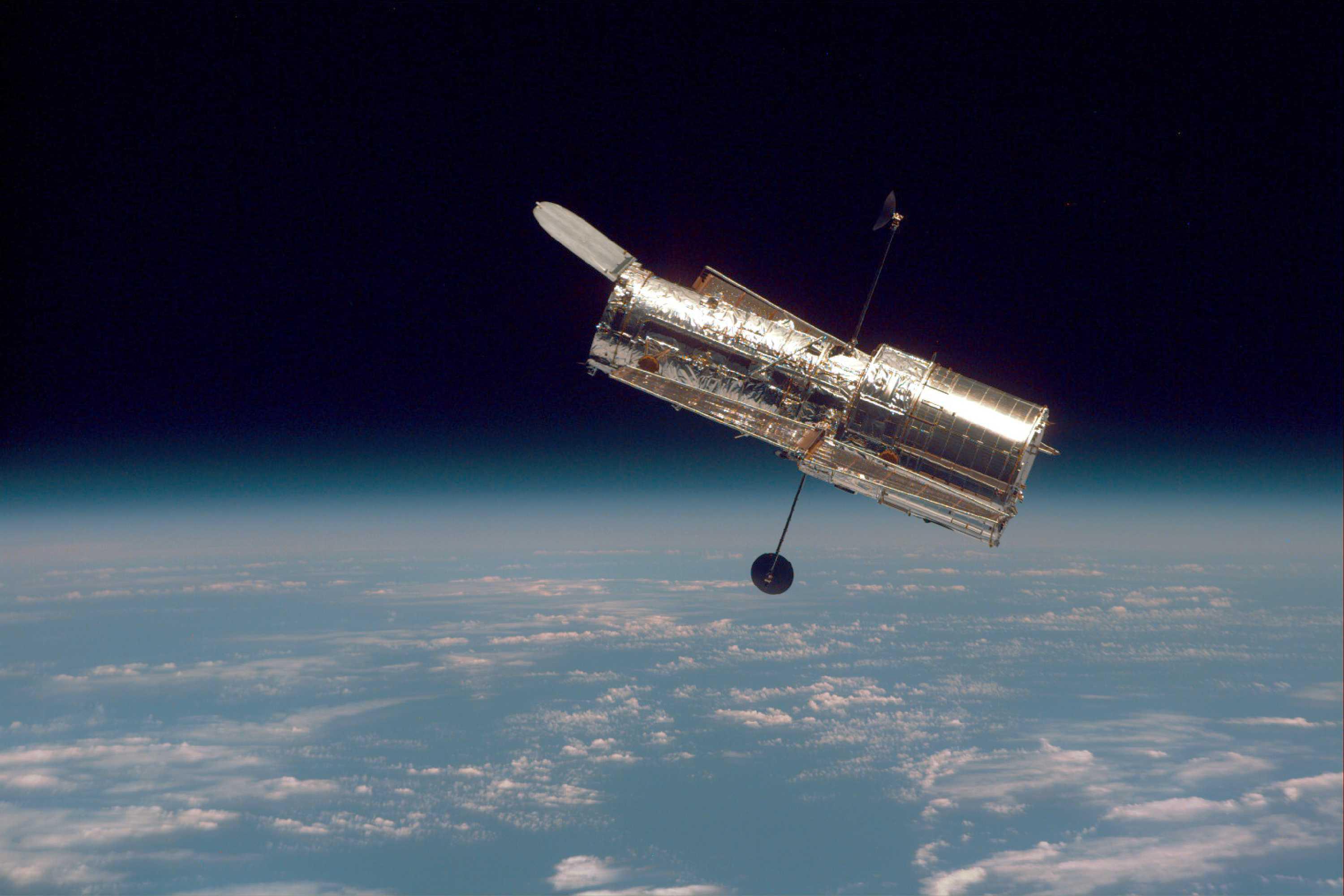
The Hubble Space Telescope has no engine, so it cannot climb back up on its own. Thin traces of atmosphere at its altitude keep slowing it down, and one way or another, that drag is going to bring it home. On Oct. 29, NASA issued a Request for Information asking commercial companies which ending they can offer. Is it a reboost to a higher orbit, a servicing visit that improves the observatory, or a safe, controlled reentry?
Companies have until 3 p.m. EST on Monday, Nov. 30, to respond. The timeline is the hard part. NASA's analysis puts Hubble's reentry somewhere in the 2033-2034 timeframe, so whatever happens has to happen by 2032.
What NASA is actually asking for
The RFI covers three options. A company could boost Hubble to a higher altitude, service it to enhance its capabilities, or carry out a controlled reentry or other orbital disposal. According to Ars Technica, the reboost scenario involves capturing the telescope and raising it to at least 373 miles (600 km). The RFI text says the mission "must not harm the HST" and is expected to fly by 2032.
The burden falls almost entirely on the contractor. The respondent would supply the launch vehicle, the servicing spacecraft, mission operations and, if the plan involves astronauts, the crew. NASA is also clear that an RFI is not a purchase order. The agency is not committing to buy a mission. It is gauging what industry can do and on what terms.
NASA leadership is presenting this as a bridge, not a rescue for its own sake. "Extending Hubble's life would mean more discoveries," NASA Administrator Jared Isaacman said. Nicky Fox, associate administrator of the Science Mission Directorate, said the agency wants to boost Hubble while the flagship mission that follows it is developed.
How Hubble got here
Hubble was built to be visited. For most of its career, Space Shuttle crews came up to swap instruments, replace hardware and push the telescope back up. The last time it was raised was 2002, when Space Shuttle Columbia visited and left it at about 362 miles (583 km). It now sits near 292 miles (470 km), Ars Technica reports.
The final servicing mission, STS-125, launched May 11, 2009, according to The Register. That flight left behind one piece of hardware that matters a lot now: a soft-capture mechanism, which The Register says should make docking with the telescope easier than the grappling that was planned for the Swift rescue attempt.
When Hubble comes down is a question of odds, not a fixed date. NASA estimates a 10 percent chance that the telescope reenters by September 2032, and a 50 percent chance by December 2033. Solar activity is the wild card. The Register notes that increased solar activity can cause greater-than-anticipated atmospheric drag, as the end of the Swift mission showed. Waiting until the last moment means betting against the Sun.
We have been here before
This is the second round. In 2022, Isaacman, who was then a private astronaut and not yet running NASA, proposed a crewed reboost mission using SpaceX's Dragon. NASA put out its own RFI that year and got eight responses, Ars Technica notes, including a joint proposal from Astroscale and Momentus. In 2024, NASA dropped the reboost plans.
Two things have changed since then. Hubble has spent two more years losing altitude, which shrinks the window. And the person who once pitched the rescue now leads the agency that would approve it. Neither fact guarantees a mission. They do help explain why the question is back on the table.
The new RFI is also wider than a simple "save it or not" choice. Including controlled reentry as an equal option treats disposal as a real mission in its own right. The Register points out that without propulsion Hubble will come down uncontrolled, and that it is massive enough to pose a remote risk to people on the ground. Even if the telescope is never boosted, someone may still need to fly up and guide it down.
The engineering problem in brief
Each option shares the same core task. A spacecraft has to rendezvous with a telescope that cannot maneuver, attach to it without damaging it, and then either push it up or steer it down. The "must not harm the HST" line in the RFI is doing a lot of work. Hubble is still delivering science, and a botched docking could end that sooner than drag would.
The payoff from a successful reboost would be large. Ars Technica reports that raising Hubble to 600 km would likely keep it in orbit for at least 25 more years. Servicing, the most ambitious option, could improve the observatory rather than just extend it, though the RFI leaves the details to respondents.
Why It Matters
Hubble has no replacement on the way anytime soon. The Register notes that NASA acknowledges no replacement is expected before the 2040s, when the Habitable Worlds Observatory could be operational. Ars Technica adds that Webb and Roman are not one-for-one replacements, because they look deeper into the infrared while Hubble is tuned to visible and ultraviolet light.
Demand is not the issue. Hubble is oversubscribed by about 7 to 1, meaning astronomers ask for roughly seven times more observing time than the telescope can give. An observatory that turns away most requests is one researchers still need.
The RFI is also a test of the commercial space model NASA keeps promoting. The agency is asking companies to provide everything, from the rocket to the crew, for a job once reserved for the Space Shuttle, and Ars Technica reports NASA has no funding allocated to a Hubble reboost or servicing mission. How many companies answer by Nov. 30, and how seriously, will show whether the private sector can take on real orbital servicing work. It will also show whether Hubble's story ends with a boost or a carefully aimed fall.
