
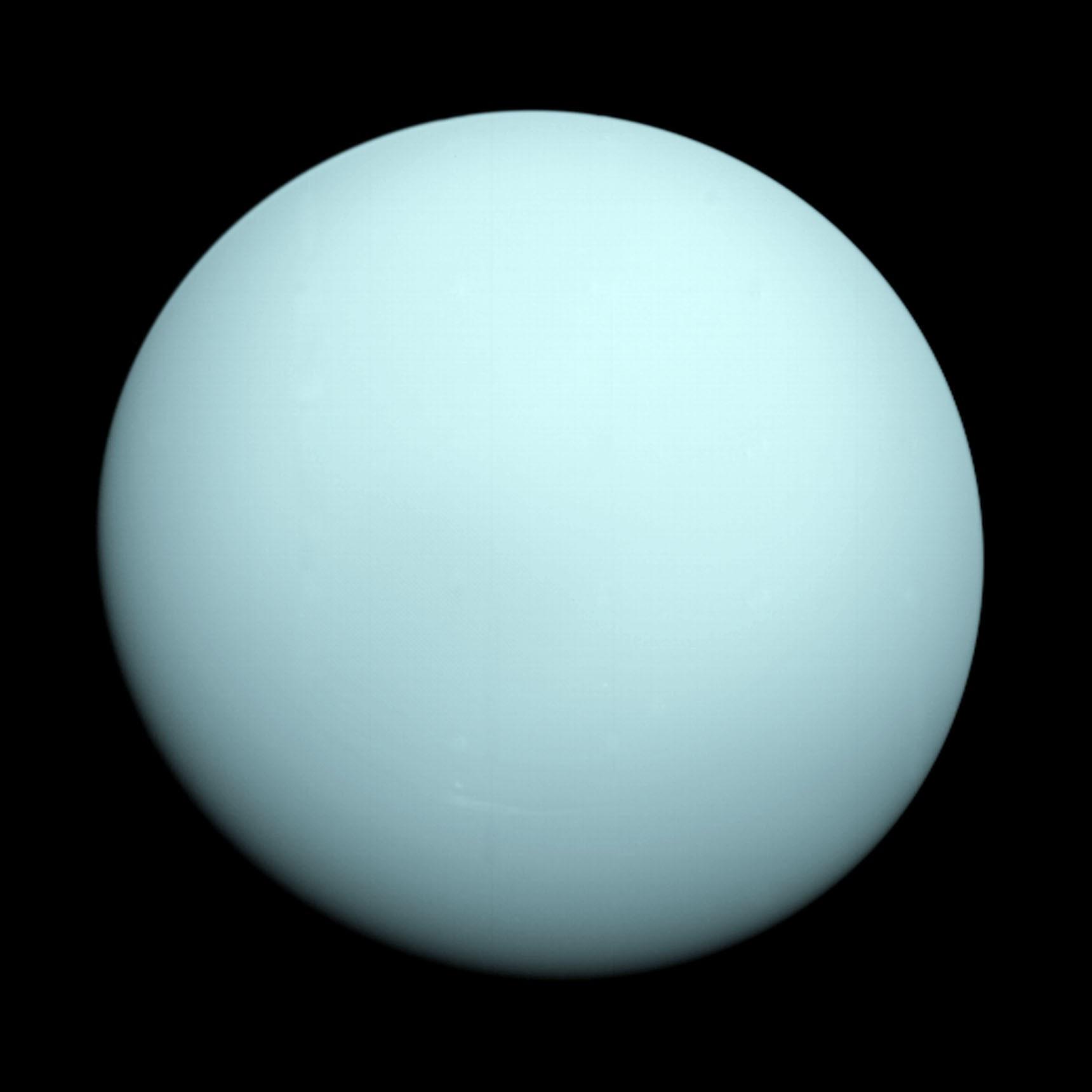
Set an early alarm for July 4. While the fireworks are still hours off, the predawn sky over your eastern horizon will host a far quieter spectacle: Mars and Uranus crowding together so tightly that a single pair of binoculars can hold both at once. The two planets pass roughly 0.1 degree apart - about a fifth of the Moon's apparent width - in a conjunction so close that observers won't see its equal again until 2053.
Conjunctions, where two planets appear to nudge up against each other from our earthbound vantage point, are a routine feature of the sky. Most are loose affairs, the planets separated by a comfortable degree or more. This one is different. At about a tenth of a degree, Mars and Uranus will sit close enough that many low-power telescopes and even steady binoculars can frame them together in the same field of view. That is an uncommon geometry, and the calendar underscores just how uncommon: the next comparably tight Mars-Uranus meeting is nearly three decades away.
A study in contrasts
Part of what makes this pairing worth the early wake-up is how mismatched the two worlds look. Mars is the obvious one - a steady, reddish point that shines roughly 60 times brighter than its companion. Uranus, by comparison, is a faint bluish speck sitting right on the edge of naked-eye visibility under dark skies, and effectively invisible from light-polluted suburbs without optical help.
That brightness gap is exactly what makes July 4 useful rather than merely pretty. Uranus is notoriously hard to locate. It is bright enough to see in binoculars but faint enough that finding it usually means star-hopping across a patch of sky with no bright landmarks nearby. On this morning, Mars solves the problem. Point your binoculars at the unmistakable red planet, and the dim bluish dot sitting right beside it is Uranus - the seventh planet, served up with a signpost. For anyone who has never knowingly laid eyes on Uranus, this is one of the easier opportunities the year will offer.
A few practical notes. Because the pairing happens before dawn, you will want a clear view low toward the east and a start time well before sunrise begins to wash out the sky. Binoculars are the minimum useful tool; a small telescope at low magnification will comfortably show both planets together and may begin to hint at Uranus's tiny disk, distinct from the star-like point of Mars.
The rest of July's planetary parade
The Mars-Uranus conjunction is the headline, but it opens a busy month. Two days later, on July 6, Earth reaches aphelion - its farthest point from the Sun for the year. It is a nice reminder that the seasons are driven by axial tilt, not distance: the Northern Hemisphere is deep into summer even as our planet sits at the far end of its orbit.
The Moon then makes a couple of appointments worth marking. Around July 11 it slides past Mars, offering a second, easier-to-spot Mars encounter for anyone who missed the July 4 conjunction. Roughly a week later, near July 17, the waning Moon pairs with brilliant Venus - always a photogenic combination in the morning twilight.
Not every planet is cooperating. Jupiter spends the month sinking toward the Sun and reaches solar conjunction late in July, disappearing from view as it passes behind our star from Earth's perspective. If you want a look at the giant planet, the first half of the month is your window before it vanishes into the glare.
There are a couple of bonuses for the more ambitious observer, too. Comet 10P/Tempel 2 becomes a reasonable target around July 13 in the evening sky, and the Perseid meteor shower - which peaks in August - begins ramping up its activity around July 14, conveniently coinciding with a new moon that leaves the sky dark for early stragglers.
Meteors versus the Buck Moon
The month's designated meteor event is the Southern Delta Aquariids, which peak around July 29-30. Under ideal conditions the shower can deliver up to about 20 meteors per hour - a modest but respectable rate. The catch this year is timing. The full Buck Moon rises on July 29, right on top of the peak, and its glare will scrub out all but the brightest meteors. Serious meteor watchers may do better hunting for the shower's faster, brighter members in the pre-peak nights, or simply accept that 2026 is not a banner year for the Delta Aquariids.
Why It Matters
Rare conjunctions are more than curiosities. A 0.1-degree Mars-Uranus meeting is a chance for casual skywatchers to see two very different planets - one warm and rocky, one cold and gaseous - resolved side by side in a single view, a juxtaposition that ordinarily requires knowing exactly where to look. For beginners, it is a genuinely practical teaching moment: using a bright, familiar planet as a guidepost to bag one of the hardest naked-eye targets in the solar system is a skill that carries over to the rest of a stargazing life. And the "closest until 2053" framing is not marketing hyperbole - it is a reminder that the clockwork of the solar system runs on human-scale timelines. Miss this one, and the next equivalent is close to thirty years out. That is reason enough to trade a little sleep for a clear eastern horizon on the morning of July 4.
