
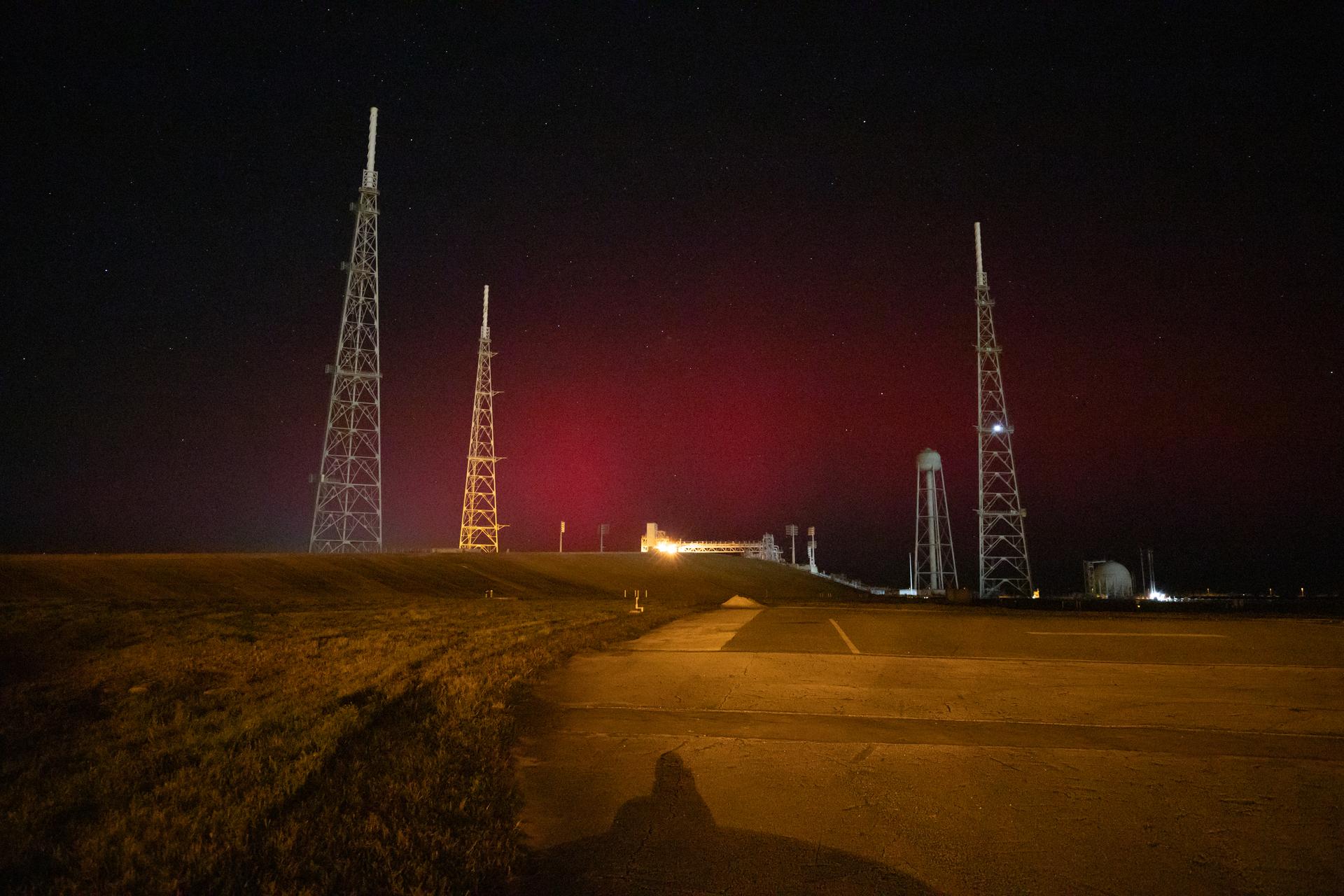
If you live along the northern tier of the United States and the sky is clear tonight, it is worth stepping outside and looking north. NOAA's Space Weather Prediction Center (SWPC) has a geomagnetic storm watch in effect for June 30 into July 1, 2026, and the ingredients for a genuine aurora display are lined up: a coronal mass ejection (CME) that left the Sun on June 26 is arriving, a second, slower CME from June 27 is trailing behind it, and the Sun itself has been unusually loud, capping off the window with an X1.1 flare late on June 30.
None of this guarantees a light show over your particular patch of sky. Geomagnetic storming is notoriously fickle, and the difference between a memorable night and a quiet one often comes down to timing, cloud cover, and a few parameters in the solar wind that nobody can pin down more than an hour or so in advance. But the setup is real, it is anchored to official U.S. forecasts, and it is worth understanding on its own terms.
What SWPC is actually forecasting
The core of the alert is a geomagnetic storm watch spanning June 30 and July 1. SWPC — the agency that issues the official U.S. real-time space-weather alerts, watches, and warnings — expects G1 (minor) storm periods to be likely, with a chance of conditions reaching G2 (moderate) as the CME launched on June 26 sweeps past Earth. A slower CME that erupted the following day, June 27, may arrive around July 1 and into July 2, potentially extending the disturbed window.
The G-scale runs from G1 (minor) up to G5 (extreme). A G1-to-G2 event is on the gentler end of that ladder, but it is precisely the range where aurora starts to become visible from the northern-tier states rather than staying penned up near the Arctic Circle. That is what makes this watch worth acting on for skywatchers who would otherwise never see the lights.
The flare that punctuated the window
Layered on top of the CME arrivals, the Sun delivered an exclamation point. According to EarthSky's running sun-news log, active region AR4479 produced an X1.1 flare — rated R3 (strong) on NOAA's radio-blackout scale — at roughly 20:50 UTC on June 30. The same region followed up with an M1.4 flare at 21:40 UTC, and AR4475 added an M1.3 flare at 01:16 UTC.
X-class is the top tier of the flare classification, so an X1.1 is a substantial event even if it sits at the low end of that class. The R3 rating refers specifically to the flare's effect here on Earth — strong flares can degrade high-frequency radio communication on the Sun-facing side of the planet and nudge navigation signals. A flare's radio-blackout punch and a CME's geomagnetic-storm punch are two different things arriving on two different clocks: the flare's radiation reaches Earth at the speed of light in minutes, while the associated cloud of magnetized plasma takes days to cross the gulf between Sun and Earth.
Three regions worth watching
What has forecasters paying attention is not just one flare but the state of the solar disk. EarthSky notes that three sunspot groups — AR4479, AR4475, and AR4478 — all carry beta-gamma-delta magnetic complexity. That label is the most tangled classification for a sunspot region's magnetic field, and it is the configuration most strongly associated with powerful eruptions. Regions with beta-gamma-delta fields have the twisted, stressed magnetic geometry that can snap and reconnect, releasing energy as flares and CMEs.
With three such regions on the disk at once, the assessment is that there is strong potential for further M- and X-class flares in the days around this storm window. In plain terms: the Sun is not finished, and additional activity from any of these regions could keep space weather elevated.
How to make the most of it
For observers at northern latitudes, tools like SpaceWeatherLive's aurora forecast are the practical companion to the official SWPC watch. The site provides real-time auroral activity and Kp-index forecasting to complement the official SWPC watch during the expected June 30-July 1 storm window. The Kp index, a 0-to-9 measure of global geomagnetic disturbance, is the number most casual aurora chasers watch: the higher it climbs, the farther south the auroral oval pushes.
A few ground rules apply regardless of the forecast. Get away from city light pollution and find an unobstructed view toward the northern horizon. Give your eyes at least 20 minutes to dark-adapt. Cameras — even modern phone cameras on a long exposure — routinely pick up color and structure that the naked eye reads as a faint gray glow, so it is worth pointing a lens north even if the sky looks unremarkable. And because storm timing can shift by hours as the CME's arrival is refined, the best strategy is to check the real-time forecast late and be ready to go out on short notice.
Why It Matters
Space weather is one of the few branches of astronomy where the forecast lands directly on your doorstep. The same CMEs that might paint the northern sky can also stress power grids, perturb satellite operations, and disrupt the high-frequency radio and navigation signals that aviation and maritime traffic rely on — which is exactly why SWPC issues these watches and warnings as an operational public service rather than a hobbyist's curiosity. A G1-G2 event is well short of the extreme storms that make infrastructure headlines, but the fact that three beta-gamma-delta regions are simultaneously capable of firing further X-class flares is a reminder that the Sun sets the schedule, not us. For skywatchers, the payoff is more immediate: a rare, legitimate chance to see the aurora from mid-northern latitudes, backed by primary government forecasts rather than social-media hype.
