
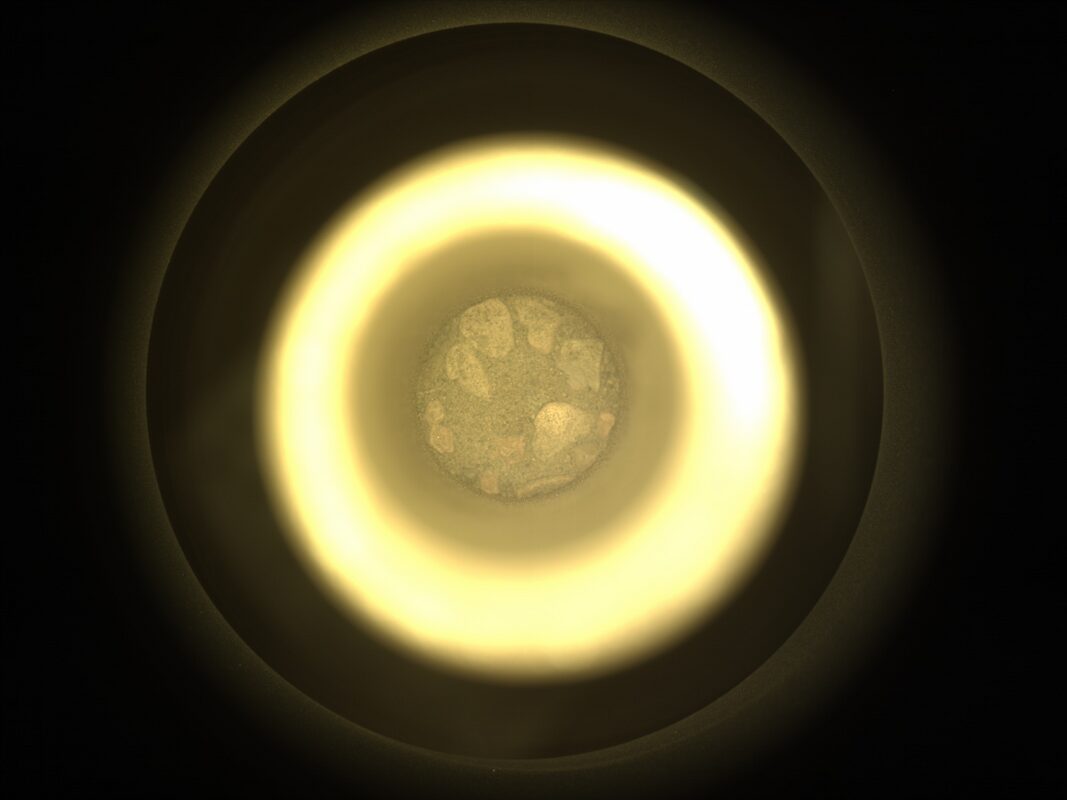
In a set of titanium tubes scattered across the floor of Jezero Crater on Mars, the most valuable cargo in the solar system is already waiting. NASA's Perseverance rover spent years selecting and sealing samples of Martian rock and soil — material that, studied in terrestrial laboratories, could settle whether Mars ever hosted life. The hard scientific work of choosing what to collect is done. What NASA cannot seem to do is agree on how to go and get it.
A program in search of a plan
Mars Sample Return was meant to be the crown jewel of planetary science this decade. Instead it has become a cautionary tale about cost and architecture. The original retrieval plan — a lander, an ascent rocket, an orbiter, and a fleet of supporting hardware — ballooned in projected cost and stretched in schedule until NASA paused to solicit cheaper alternatives. That uncertainty has now collided with the budget turmoil engulfing the agency's entire science directorate, where a proposed 47 percent cut hangs over the 2027 request. A flagship mission that cannot fix its price is a vulnerable target in a year when appropriators are hunting for savings. The samples are not going anywhere — but neither, at the moment, is the mission to fetch them.
China set a date
While Washington debates architecture, Beijing has published a timeline. China's Tianwen-3 is a dedicated Mars sample-return mission, and its planners have committed to a 2028 launch with samples back on Earth by around 2031. The program is advancing into flight-model development within 2026, with three finalist landing sites to be chosen by year's end, and the mission's science goals — explicitly including the search for signs of past life — have been laid out in the peer-reviewed literature. China's broader sample-return track record lends the schedule credibility: it has already returned material from the Moon's near and far sides, and its Tianwen-2 spacecraft is closing on an asteroid this year to grab a sample there. This is a space program that has repeatedly done the difficult thing of bringing pieces of other worlds home.
The asymmetry is stark. NASA holds a decisive scientific lead — its samples were selected by a sophisticated rover from an ancient river delta chosen precisely for its astrobiological promise, something no other mission has matched. But selection is not return. If Tianwen-3 launches on schedule and succeeds, China could deliver the first Martian samples to Earth before NASA has settled on how to retrieve its own — handing Beijing a landmark in the history of exploration regardless of whose rocks are scientifically richer.
NASA's predicament is almost entirely about retrieval architecture, not science. Perseverance did its part: it drilled and sealed samples from an ancient river delta in Jezero Crater, terrain chosen because deltas concentrate the fine sediments and organic-friendly chemistry where biosignatures, if any exist, would be preserved. Getting those tubes home, though, requires landing a craft on Mars, loading the samples, launching them off the surface — the first rocket launch ever attempted from another planet — and catching them in Mars orbit for the trip back. Every element is hard, and bolting them into one affordable mission is what has eluded NASA. The agency's solicitation of cheaper, simpler designs is an admission that the original plan priced itself out of viability. Until a replacement architecture is chosen and funded, the retrieval date stays undefined.
What's actually at stake
It would be a mistake to frame this purely as a flag-planting contest. The deeper stakes are scientific and strategic at once. The first laboratory analysis of returned Martian material will be a generational event in the search for life beyond Earth, and the nation that enables it sets the terms — which questions get asked first, which instruments and which scientists. For NASA, the painful irony is that it did the hardest part years ago and now risks being overtaken on the part that is, comparatively, an engineering problem with a price tag. The tubes in Jezero are a standing reminder that in exploration, collecting the prize and claiming it are very different achievements — and that a lead in the first does not guarantee victory in the second.
