
The Space Shuttle cost approximately $54,000 per kilogram to low Earth orbit in 2010 dollars, accounting for the program's total lifecycle costs divided by total mass delivered. The Atlas V, a more recent expendable rocket, ran at roughly $13,000 to $14,000 per kilogram. These costs were not a result of engineering inefficiency alone — they reflected the economics of expendable rockets built in small quantities by aerospace contractors, with the associated overhead of government procurement processes and the requirement to demonstrate reliability on a flight rate too low to drive iterative improvement.
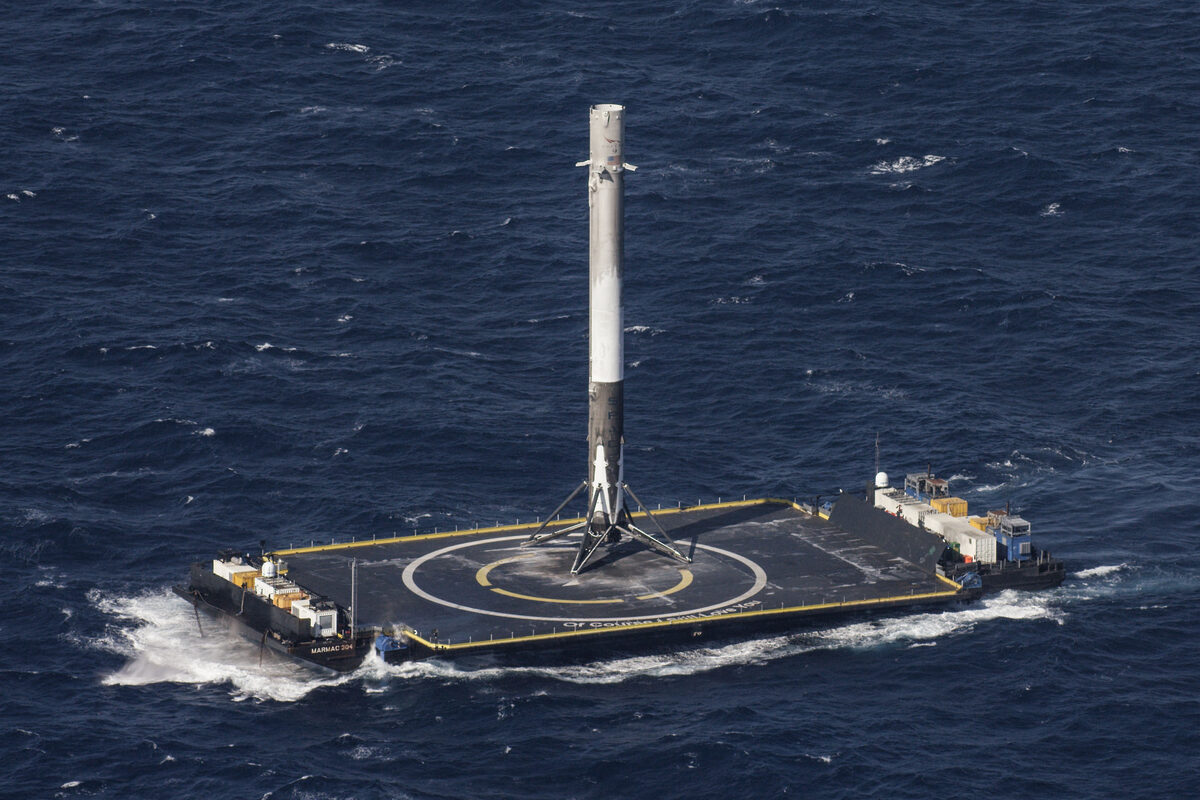
SpaceX's Falcon 9 changed the equation by introducing booster reuse. The first stage — the most expensive single component of the rocket, comprising roughly 70 percent of the vehicle's cost — returns to the launch site or a drone ship at sea after delivering its payload to orbit, lands vertically, is refurbished, and flies again. By 2026, SpaceX has reflown individual Falcon 9 boosters more than 20 times each, and the incremental cost of each additional flight is a fraction of building a new booster. The Starlink rideshare program — which offers dedicated Falcon 9 launches shared among multiple small payloads for a fixed price per kilogram — charges approximately $6,000 per kilogram for dedicated small satellite launches and has dropped the shared rideshare price below $3,000 per kilogram for standard orbits.
What changed
The most immediate effect of the price drop has been a democratization of access to low Earth orbit. Cubesats — standardized small satellites — have become accessible to universities, startups, and national space agencies that previously could not afford orbital access at all. The number of countries operating satellites has expanded significantly. Commercial Earth observation has proliferated: companies like Planet Labs, Spire, and HawkEye360 operate constellations of dozens to hundreds of small satellites that collectively revisit any point on Earth daily or more frequently, providing imagery and signals intelligence at prices that government surveillance satellites could not match. The commercial space economy — launch, services, data products — has grown from a few billion dollars annually to tens of billions.
The scientific community has benefited as well: smaller, faster instrument development cycles have become viable when a single instrument can reach orbit for millions rather than hundreds of millions of dollars. CLPS lunar landers, cubesat deep-space missions, and commercial suborbital platforms for microgravity experiments are all downstream of lower launch costs. The number of experiments conducting science annually in space has grown by orders of magnitude compared to the ISS-dependent era.
What hasn't changed
Lower launch costs have not, as of mid-2026, produced a human economy in space. The vision of in-space manufacturing at scale, asteroid mining, or orbital solar power remains economically distant. The reason is that the cost of getting mass to orbit, while dramatically reduced, is still the dominant cost in any space business model that requires large quantities of material in space — and most transformative space industries do. Asteroid mining requires not just access to orbit but access to asteroids, robotic mining, extraction and processing infrastructure, and return of material — each step compounding costs that no 90-percent reduction in launch cost fully absorbs. The price reduction has unlocked the market for observation, communication, and data; it has not yet unlocked the market for in-space industry at scale. Starship, if it reaches its projected cost targets (under $100 per kilogram), would represent the next step-change — but Starship's development timeline and operational economics remain uncertain.
The economic logic of reuse does not stop at first stages. SpaceX has also demonstrated fairing reuse — catching and reusing the two halves of the nose cone that protect payloads during ascent — reducing what was a $6 million per-mission expenditure to a refurbishment cost. Every recovered component directly reduces the price of the next flight, and the accumulation of these savings compounds as flight rates rise.
Sources
- NASA NSSDC — Astrophysics and space science: launch vehicle history and satellite deployment records
- SpaceX Falcon 9 — Wikipedia (first stage reuse, launch costs, rideshare program, and flight history)
- Commercialization of space — Wikipedia (launch cost history, market segments, and economic projections)
