
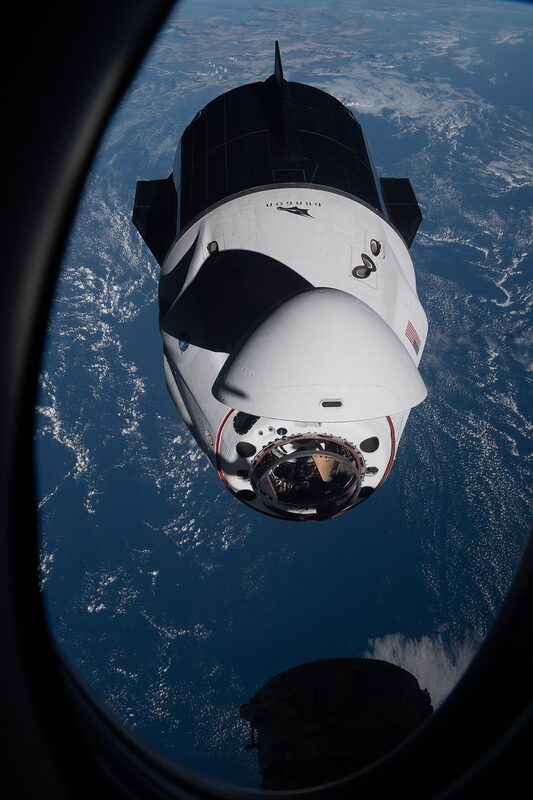
At 13:04 UTC on 5 June, flight controllers in Houston gave an order that has no routine version: don your pressure suits, board your spacecraft, and prepare to leave. Five astronauts aboard the International Space Station did exactly that, filing into the same SpaceX Crew Dragon that had carried the Crew-12 group up in February. For a few hours the station's American, and the capsule was their lifeboat. By mid-afternoon the order was rescinded and the crew returned to work. Nothing ruptured. No one was hurt. And yet the incident is worth more than the brief alarm it caused.
The leak is not new. It sits in the PrK transfer tunnel, a small vestibule on the aft end of the Russian Zvezda module that connects to the docking port used by Progress cargo freighters. Roscosmos and NASA have tracked air escaping from that tunnel since September 2019. Over the years engineers have tried nearly everything short of replacement: ultrasonic surveys to hunt for cracks, layers of sealant, and — at one point — tea leaves released into the air to trace the draft. The leak rate has fluctuated, occasionally falling, more often creeping up. The working hypothesis is metal fatigue or latent manufacturing flaws in the welds, aggravated by two decades of thermal cycling and the mechanical stress of every docking.
Why a small leak triggers a big response
A station the size of a football field does not depressurise quickly through a hairline crack, and the PrK tunnel can be sealed off from the rest of the Russian segment by a hatch. So why suit up? Because the conservative posture is the only sane one. The crew's escape vehicles — Crew Dragon on the U.S. side, a Soyuz on the Russian side — are always docked precisely so the station can be abandoned within minutes. When a leak rate spikes during an active repair, the cost of an unnecessary shelter order is a lost afternoon; the cost of waiting is unacceptable. NASA chose the afternoon.
The trigger this time was the repair itself. Roscosmos was attempting structural work on the tunnel when measurements moved in the wrong direction, and the agency paused the effort "as more measurements and data is assessed," in NASA's phrasing. With the repair halted, the leak stabilised and the evacuation footing was stood down.
The Russian side has managed the fault by containment rather than cure. For long stretches the hatch to the PrK tunnel has been kept closed except when a Progress freighter needs the port behind it, limiting how much of the station's air is exposed to the leak at any moment. That has kept the overall loss within tolerable bounds, but it is mitigation, not repair, and it has occasionally strained the partnership: NASA and Roscosmos have not always agreed publicly on how serious the underlying structural risk is, or on its root cause. What is not in dispute is that the cracks have proven stubborn. Each new sealing campaign buys time; none has closed the question.
The larger clock
The episode lands against a fixed deadline. NASA and its partners have committed to operating the ISS through 2030, after which it will be guided to a controlled destructive reentry over the South Pacific — a job NASA has contracted SpaceX to perform with a purpose-built deorbit vehicle. Every recurring fault on the ageing Russian segment is now read through that lens: not a problem to be solved indefinitely, but a risk to be managed to a finish line. The PrK tunnel does not have to be fixed forever. It has to hold, under supervision, for a few more years.
That reframing is uncomfortable but honest. The station is the most complex machine humans have ever operated continuously, and it is old. Components designed for a fifteen-year life are well past it. The replacement strategy is not a single successor station but a clutch of commercial outposts — Axiom, Vast, Orbital Reef and others — that NASA hopes will be flying before the ISS comes down. Whether that handover happens cleanly, with no gap in permanent human presence in orbit, is one of the defining logistical questions of the next five years. Afternoons like 5 June are reminders of why the timeline has so little slack.
