
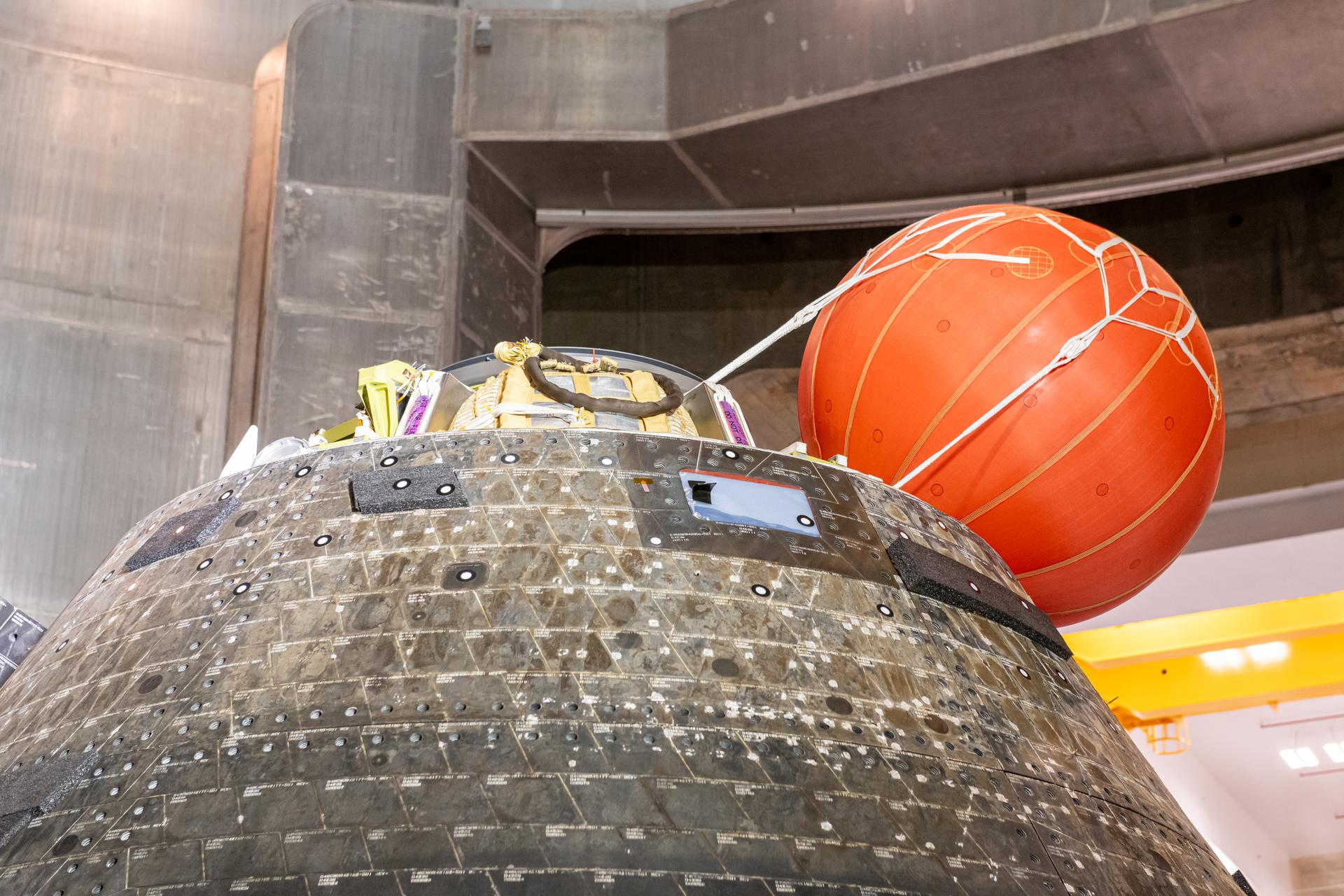
On July 12, 2026, the Indian Space Research Organisation announced it had completed three qualification tests on hardware systems for the Gaganyaan crew module — the capsule designed to carry Indian astronauts, called Gaganyatris, into low Earth orbit. None of the tests involved a rocket launch or a spectacular flight demonstration. Instead, engineers worked in test stands and pressure chambers, checking whether valves open on cue, cables separate cleanly, and a metal cover can survive being ripped off in mid-air. That unglamorous work is exactly what stands between Gaganyaan and a human crew.
According to ISRO's official release, the agency verified three distinct systems: the Crew Module Uprighting System (CMUS), the umbilical connect-disconnect mechanism between the crew module and service module, and the structural integrity of the capsule's apex cover. Each addresses a different failure mode that could otherwise turn a routine splashdown or ascent into a fatal one.
What Actually Got Tested
The Crew Module Uprighting System is arguably the least glamorous but most literally life-or-death of the three. After the Gaganyaan capsule splashes down in the ocean at the end of a mission, there's no guarantee it will land right-side up. A capsule floating apex-down or on its side, with hatches submerged or crew disoriented, is a survivability problem. CMUS uses a cold-gas system — high-pressure gas feeding a set of control valves — to inflate flotation bags that roll the capsule upright regardless of how it lands. ISRO tested the system across its full operating pressure range, and both ISRO and The Week reported that the flotation bags inflated properly and on schedule across the range of gas pressures a real splashdown might produce.
The second test targeted the umbilical connect-disconnect system, identified in ISRO's documentation by the designations CSU-1 and CSU-2. During ascent, the crew module and service module fly connected, sharing power, data, and fluid lines through umbilical connectors. At a precise moment before reentry, those connectors must separate cleanly so the crew module can detach and begin its independent descent. ISRO's test confirmed clean separation of CSU-2, with the crew module's structure remaining stable through the event.
The third test examined the apex cover, the dome-shaped shell at the top of the crew module that shields the parachute system during ascent and reentry. As Akashvani/News on Air detailed in its coverage, the apex cover has to be jettisoned before parachutes deploy — and it has to survive the aerodynamic and pyrotechnic loads of that separation without cracking or shedding debris that could tangle the chutes. Engineers loaded the cover to roughly 1.75 times the loads it's expected to encounter in actual flight, a standard qualification-testing margin meant to prove the design has headroom beyond the worst case it's designed for. ISRO reported the cover held.
Across all three tests, ISRO said the results confirmed adequate design margins — engineering shorthand for "this held up with room to spare," not merely "this survived once."
Why It Matters
None of these three systems will ever be visible in a launch broadcast the way a rocket ignition or a stage separation is. But they represent exactly the kind of unglamorous, redundant validation that separates a space program willing to fly astronauts from one that isn't. A capsule that can't right itself after splashdown, an umbilical that snags during separation, or an apex cover that fractures before parachute deployment are each independently capable of turning a successful mission into a fatal one. Testing them on the ground, repeatedly and under margin, is how agencies catch those failure modes before they show up with people aboard.
For India specifically, this is a credibility milestone as much as an engineering one. Gaganyaan would make India only the fourth nation to independently launch humans to orbit, after the Soviet Union/Russia, the United States, and China. Getting there requires clearing thousands of these smaller hurdles, and ISRO says it has now logged more than 8,000 ground tests on the program to date, according to reporting by The Week. Three more qualification tests passing doesn't guarantee a smooth run to launch, but it does narrow the list of open engineering questions ISRO has to answer before it puts a crew inside the capsule.
What's Next
These crew module tests are precursors to India's phased Gaganyaan flight sequence. The next major milestone is G1, an uncrewed test flight expected in late 2026 that will carry Vyommitra, an ISRO-built robot designed to stand in for a human crew member — letting engineers evaluate life-support and safety systems without risking a human life. G1 will be followed by additional uncrewed flights, G2 and G3, before ISRO attempts H1, the first crewed mission, currently targeted for 2027.
India has already selected and is training four Gaganyatri astronauts for that eventual crewed flight. The mission profile calls for a crew to reach roughly 400 kilometers of altitude and remain there for up to a week before returning to Earth, at which point the systems tested this week will matter most: righting the capsule after splashdown, and having safely deployed the parachutes that got it there.
Sources
- Successful accomplishment of Major Qualification Tests Crew Module systems of Gaganyaan Mission - ISRO
- Is Gaganyaan mission getting closer to launch? ISRO says 3 crucial tests completed - The Week
- ISRO successfully carries out three major tests of Gaganyaan crew module systems - Akashvani/News on Air
