
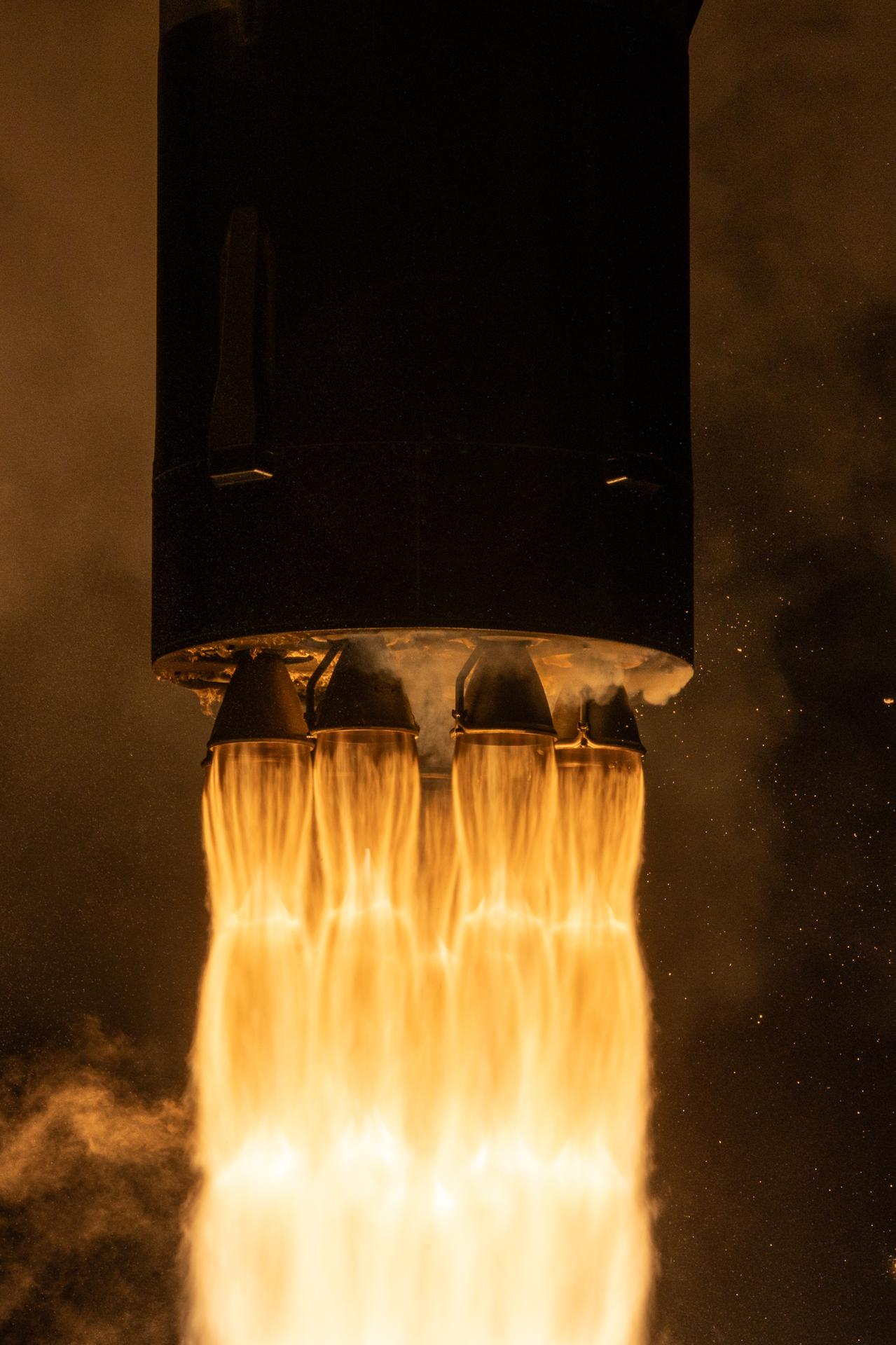
Seventeen months after Isar Aerospace's first Spectrum rocket lost control 25 seconds into flight and had to be destroyed over the Norwegian Sea, the German launch startup tried again — and this time the rocket stayed on course all the way to orbit.
The second Spectrum flight, which Isar dubbed "Onward and Upward," lifted off from Andøya Spaceport in northern Norway on September 5, 2026, following months of delays. According to coverage from Aerospace Testing International and NASASpaceflight.com, the two-stage rocket reached a Sun-synchronous orbit and released its payloads as planned, making Isar the first commercial European launch company to deliver satellites to orbit.
What Flew, and What It's For
Spectrum carried five CubeSats plus one non-separable technology demonstration, all backed by the European Space Agency's Boost! programme, which funds independent European launch capability. Per NASASpaceflight.com's reporting, the manifest was:
- CyBEEsat — built by TU Berlin
- TriSat-S — from the University of Maribor
- Platform 6 — a satellite bus from EnduroSat
- FramSat-1 — developed at the Norwegian University of Science and Technology (NTNU)
- SpaceTeamSat1 — built by TU Wien
- A Dcubed technology demonstration — an experiment payload from Dcubed, a German space hardware manufacturer
ESA's Boost! programme page frames the mission as Spectrum's "qualifying" launch — a flight meant to validate the vehicle for future institutional and commercial customers, with the CubeSat payloads riding along as real-world validation that the rocket can put usable hardware into a working orbit, not just prove out the airframe.
A Rocket That Failed to Even Clear Its Pitch-Over Last Time
Spectrum's first flight, on March 30, 2025, did not go nearly this well. According to NASASpaceflight.com's coverage of the second launch, the rocket lost attitude control just 25 seconds after liftoff, when a vent valve unexpectedly opened during the pitch-over maneuver — the point in ascent where a rocket tips from vertical flight onto its planned trajectory. Five seconds later, at T+30 seconds, the flight was terminated, and the vehicle came down unpowered into the sea near the launch site.
Early test flights are often judged less by whether the rocket survives than by how much usable data comes back before it doesn't. But a 30-second flight is a 30-second flight, and it left Spectrum, and Isar, without a demonstrated path to orbit.
That's what makes the September 5 flight the more meaningful milestone. Reaching Sun-synchronous orbit — a polar-ish orbit that keeps a satellite's ground track passing over the same local solar time on every pass, useful for consistent lighting in Earth-imaging and remote-sensing missions — means Spectrum's second stage completed a full ascent and orbital insertion, not just a controlled first-stage burn.
Why It Matters
Europe has spent years watching launch capability concentrate outside its borders — first with the retirement of Ariane 5, then with a gap before Ariane 6's debut, all while SpaceX's Falcon 9 absorbed an increasing share of the continent's own satellite launches. Spectrum's successful second flight matters less for its payload mass, which is modest by orbital-launch standards, than for what it proves about the market structure underneath it: that a privately funded, European-built small-to-medium launch vehicle can complete an orbital mission on its own.
ESA's Boost! programme exists specifically to seed that kind of independent capability. Isar Aerospace is one of five companies ESA selected for the European Launcher Challenge, which requires each participant to demonstrate an orbital launch no later than 2027 — insurance against relying entirely on non-European launch providers, or on a single vehicle family, for sovereign access to space. A qualifying flight that actually reaches orbit gives that strategy its first hard evidence rather than a roadmap.
It also matters for the CubeSat teams themselves. Missions like NTNU's FramSat-1 and TU Wien's SpaceTeamSat1 are university-built spacecraft, the kind of program that lives or dies by getting a launch slot at all. A second viable European small-launch provider, alongside the incumbents, gives that class of mission more paths to orbit rather than fewer.
None of that erases the harder truth in Isar's own flight history: a 17-month gap between a 30-second failure and a full orbital success is a long runway, and it says something about how unforgiving vent-valve-scale problems can be even on a well-funded, well-staffed new rocket program. Spectrum's second flight is a genuine milestone. Whether Isar can turn it into a cadence — repeatable, reliable, commercially bookable — is the test that starts now.
