
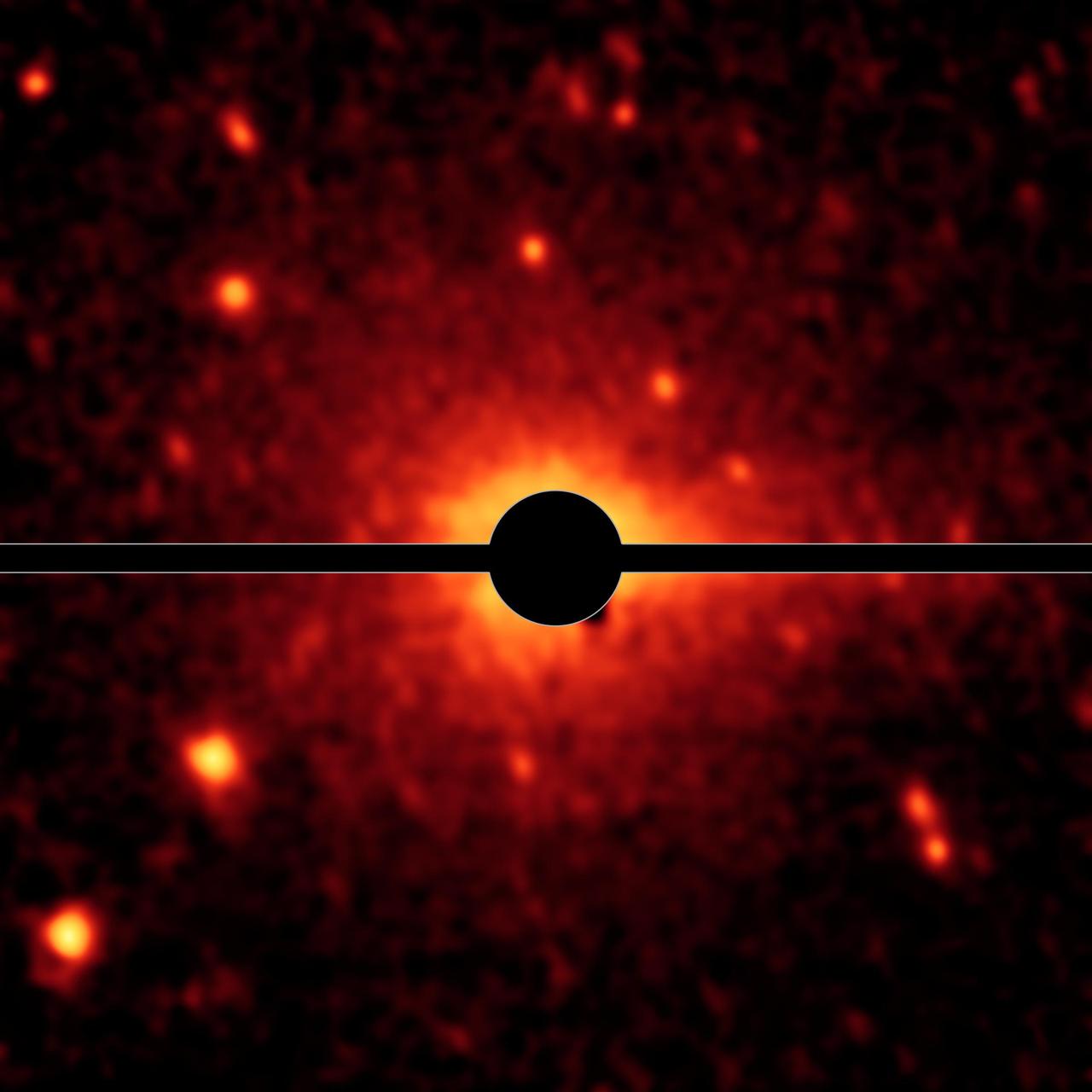
Only three objects from beyond our solar system have ever been caught passing through it, and 3I/ATLAS — the third — has received the most thorough examination of any of them. Across late 2025 and into 2026, a fleet of observatories turned the interstellar comet into a natural laboratory, and the results describe a body forged under conditions strikingly unlike our own.
A chemical fingerprint from another system
The James Webb Space Telescope captured the first mid-infrared chemical fingerprint of an interstellar object, using its MIRI instrument during sessions after the comet's closest approach to the Sun — on December 15 and 16, when 3I/ATLAS was about 205 million miles out, and again on December 27 at roughly 236 million miles. For the first time, scientists directly identified methane on an interstellar visitor.
Born in the deep cold
ALMA added a startling detail. The comet's deuterium-to-hydrogen ratio in water came in more than 30 times that of comets formed in our own solar system — and over 40 times the ratio in Earth's oceans. That points to formation in an extremely cold protoplanetary disk, with conditions very different from those that built our planets. Meanwhile XRISM and XMM-Newton detected a diffuse X-ray glow around the nucleus, making 3I/ATLAS the first interstellar comet observed in X-rays.
No one was calling
Inevitably, someone checked. A SETI search for technosignatures around the comet came up empty — as expected for a comet — but the exercise was not wasted: "The results from 3I/ATLAS show how realistic it is to detect a signal with the technology we have today," researchers noted. The richer payoff is scientific: a rare, direct sample of the chemistry of another planetary system, read at a distance.
