
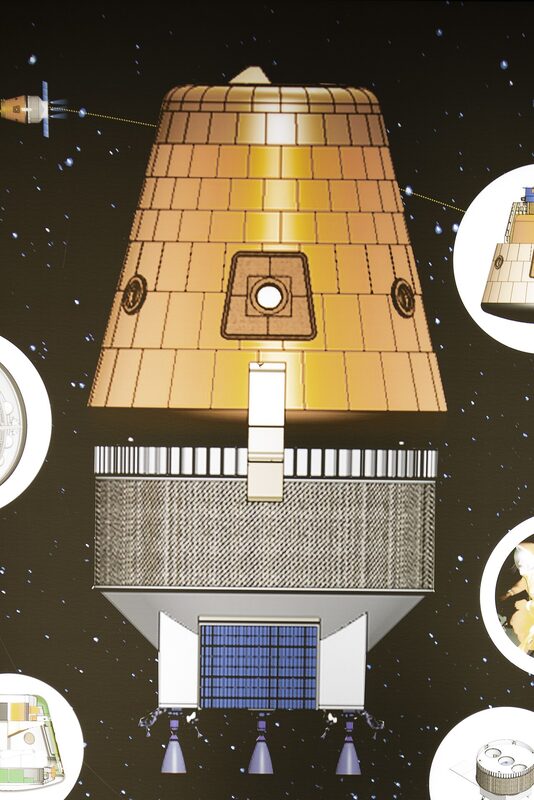
Only three nations have ever launched humans to orbit on their own rockets: Russia, the United States, and China. India intends to be the fourth, and it is closing in. The Indian Space Research Organisation is preparing Gaganyaan-1, the first uncrewed test flight of the crew vehicle it has spent years developing, as the decisive shakedown before astronauts ever climb aboard.
The robot before the crew
Gaganyaan-1 will not carry people. It will carry Vyommitra, a humanoid robot built to occupy the crew seat and exercise the systems a living astronaut depends on — monitoring cabin environment, life support, and the spacecraft's behavior through launch, orbit, reentry, and splashdown, and radioing back the data that tells engineers whether it is safe to put humans through the same ride. Flying a robotic stand-in first is the conservative, correct sequence: it wrings out the vehicle on a flight where a failure costs hardware, not lives. ISRO has targeted this uncrewed mission for the latter part of 2026, with the first crewed Gaganyaan flight to follow in 2027 if the test campaign holds.
The groundwork behind it is substantial. ISRO reports completing more than eight thousand ground tests along with the structural, propulsion, and qualification campaigns a human-rated system demands, and in April 2026 it carried out a second integrated air-drop test, validating the parachutes, descent control, and splashdown recovery that bring a crew capsule safely home. Each of these unglamorous milestones is a box that has to be checked before a human launch is defensible.
The hardware behind the program is a human-rated version of India's most powerful rocket, paired with a crew capsule and a service module and fronted by a crew-escape system designed to yank the astronauts clear in the milliseconds after a launch failure. That escape system has already been flight-tested, as has the capsule's ability to descend under parachutes and splash down for recovery — the bookends of a mission, abort at the start and reentry at the end, validated before the parts in between. Human-rating a rocket means building in margins and redundancies a satellite launcher never needs, and it is the slow, expensive work that separates lofting cargo from carrying people.
A program with a public face
India has already named its candidates. In early 2026 the four astronauts selected for the program were introduced publicly — Group Captains Prasanth Balakrishnan Nair, Angad Pratap, and Ajit Krishnan, and Group Captain Shubhanshu Shukla, the last of whom has since flown to the International Space Station, giving India's corps real orbital experience ahead of its own crewed flight. Putting faces to the program is more than ceremony; it signals national commitment to a multi-year effort that, like every human-spaceflight program, will be measured in patience as much as engineering.
The stakes extend beyond prestige. A sovereign crewed capability gives India independent access to orbit, a foundation for the larger ambitions it has sketched — a national space station later in the decade, and a lunar sample-return mission, Chandrayaan-4, targeted for around 2027. It also continues a striking pattern: India has built a reputation for achieving milestones, from a Mars orbiter to a south-polar lunar landing, on budgets that other agencies study with a mix of admiration and disbelief. Gaganyaan is the most demanding test of that approach yet, because human spaceflight forgives nothing. The uncrewed flight ahead is where India finds out whether the system it has built is ready to carry its own people — and the rest of the spacefaring world is watching a fourth independent crew capability take shape. Should Gaganyaan succeed, India would hold the full set of capabilities — launch, life support, reentry, and recovery — that define a human-spaceflight power, achieved largely on its own terms and its own budget, and it would arrive as a credible partner just as the era of commercial stations and renewed lunar exploration gets under way.
