
The Rosalind Franklin rover was supposed to land on Mars in 2021 with Russian hardware and Russian enthusiasm. By early 2022, the war in Ukraine had ended that partnership, stranded the half-completed mission on the ground in Turin, and forced ESA to rebuild its landing system from scratch. Four years later, the rover is still on Earth, still getting hardware modifications, and still targeting a launch window in 2028. Given what this mission is designed to do, that patience is probably warranted.
What Makes This Rover Different
Every Mars rover ever launched has operated on the surface. Curiosity and Perseverance carry drill bits that can core to depths of a few centimeters — enough to avoid surface radiation and sample relatively fresh mineralogy. The Rosalind Franklin rover carries the Ma_Miss instrument and, more critically, a drill capable of reaching two meters below the Martian surface.
Two meters sounds like a small number. On Mars, it is not. The Martian surface is bombarded by cosmic rays and ultraviolet radiation that destroy complex organic molecules on timescales of millions of years. If Mars ever hosted life, or if prebiotic chemistry ever reached significant complexity there, the chemical record of that history has been progressively sterilized at the surface. Two meters of shielding — provided by Martian regolith — is generally considered the depth at which organics ancient enough to be meaningful might survive.
Perseverance's astrobiology science operates at the surface and a few centimeters below. Rosalind Franklin's drill is designed to go deeper, sample at that depth, and feed that material to an onboard miniature organic chemistry laboratory called MOMA (Mars Organic Molecule Analyzer) capable of detecting the specific molecules that are markers of biological processes. The mission is, bluntly, the most direct search for extant or past Martian life ever designed.
The Russian Departure
The original ExoMars 2022 architecture relied heavily on Roscosmos. The Proton-M rocket was the launch vehicle. The Kazachok surface platform — the static lander that the rover would drive off of — was Russian hardware. Russian engineers had been co-developing the entry, descent, and landing system for years.
ESA suspended cooperation with Roscosmos in March 2022, two weeks after the invasion of Ukraine. The path forward required replacing the Kazachok lander with a European-designed landing platform, securing a new launch vehicle, and redesigning the EDL system in a compressed timeframe. ESA awarded development contracts to European industry and began what amounts to a partial redesign of roughly half the mission's hardware.
The New Architecture
The current plan uses a European carrier module for the cruise phase and a redesigned landing platform drawing heavily on European industrial capability. SpaceX Falcon Heavy is the logical candidate for the launch, though a formal selection has not been publicly announced. The 2028 launch window is determined by orbital mechanics: Mars and Earth align favorably for a transfer orbit only every 26 months. Missing 2028 means waiting until 2030, adding two more years to a mission that has already slipped twice.
ESA has stated its commitment to 2028 but acknowledged that funding pressures across the agency make every major program's schedule and budget a live negotiation. The 2025 ESA Ministerial meeting set funding levels for member states' contributions, and ExoMars remained in the approved portfolio — a signal that European space ministers consider the science worth the cost.
What Happens If It Works
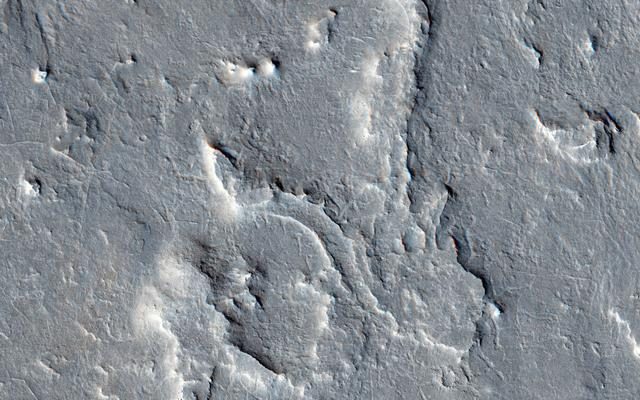
The Rosalind Franklin landing site is Oxia Planum, a clay-bearing plain near the Martian equator where ancient lake sediments have been identified from orbit. Clay minerals form in the presence of water and tend to preserve organic material over geological timescales — hence ESA's selection of the site over roughly 20 other candidates evaluated across a decade of deliberation.
If the drill reaches two meters and MOMA finds complex organics with isotopic ratios or structural features that resist abiotic explanation, the result would be the most significant discovery in the history of space exploration. If it finds nothing, that null result would itself be scientifically powerful — constraining how habitable Oxia Planum actually was and, by extension, the prospects for life in early Mars's warm, wet era.
The rover carries enough power and systems redundancy for a nominal surface mission of seven months. Given the science it's designed to do, that may be enough time to change everything we think we know about life in the solar system.
