
The European Space Agency manages a long-range science planning process called Cosmic Vision, which selects large ("L-class") and medium ("M-class") missions decades in advance to give the scientific community time to develop the instruments and the agency time to build the spacecraft. The current program has three flagship missions in development for the 2030s that together cover ground unavailable to any previous generation of space telescopes: a gravitational wave observatory, a systematic exoplanet atmosphere survey, and a dedicated Venus science orbiter. Each represents a unique scientific capability; collectively they define Europe's contribution to fundamental astrophysics and planetary science for the next fifteen years.
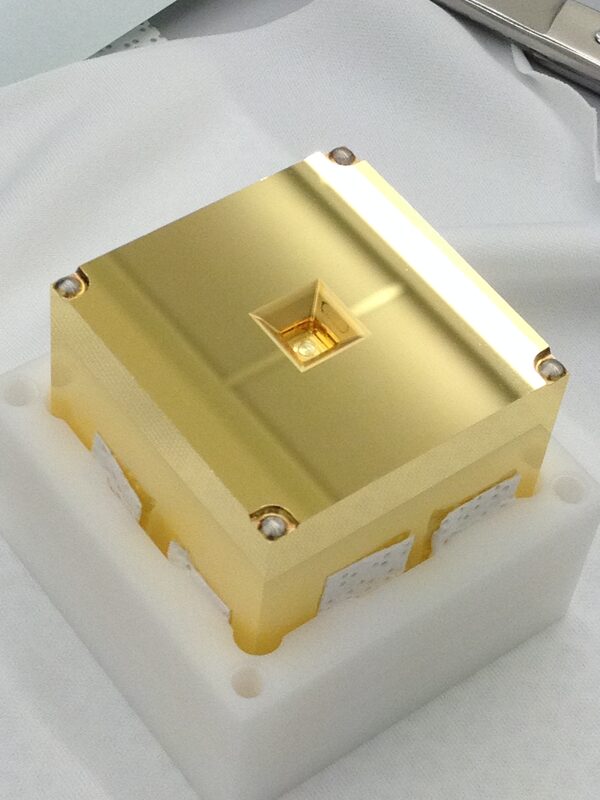
LISA — the Laser Interferometer Space Antenna — is the most ambitious. It consists of three spacecraft arranged in an equilateral triangle with sides 2.5 million kilometers long, exchanging laser beams to measure the stretching and squeezing of space caused by passing gravitational waves. LISA's sensitivity covers a frequency band (0.1 millihertz to 1 hertz) that is entirely inaccessible to ground-based detectors like LIGO and Virgo, which are limited by Earth vibrations at these frequencies. In the LISA frequency band live the gravitational wave signals from merging supermassive black holes (millions to billions of solar masses), from compact binaries in the Milky Way spiraling toward merger, and potentially from cosmological sources in the very early universe. LISA will effectively open a new window on the gravitational wave universe that ground detectors cannot access. Launch is targeted for 2035. The LISA Pathfinder mission (2015-2017) demonstrated the key technology — drag-free flight and laser interferometry at the required precision — in a single-spacecraft prototype.
Ariel: the exoplanet atmosphere census
Ariel (Atmospheric Remote-sensing Infrared Exoplanet Large-survey) targets a question that JWST is beginning to address one planet at a time: what are the atmospheric compositions of exoplanets as a class, across a wide range of planetary types and orbital configurations? Ariel will perform transit and eclipse spectroscopy on approximately 1,000 exoplanets over four years, covering infrared wavelengths that reveal water vapor, carbon dioxide, methane, ammonia, and other molecules. The goal is not to find habitable planets but to understand the systematic chemistry of planetary atmospheres — to answer why some hot Jupiters have strong temperature inversions and others don't, whether rocky planets around M dwarfs tend to retain atmospheres, and how atmospheric composition varies with distance from the host star. Launch is planned for 2029.
EnVision: returning to Venus
EnVision is a Venus orbiter designed to answer why Venus — so similar to Earth in size, mass, and bulk composition — evolved so differently. Its instrument suite includes a synthetic aperture radar to map the surface at 30-meter resolution (finer than Magellan's 1990s maps), a spectrometer to detect signs of active volcanism or atmospheric gas outgassing, and radio science experiments to probe Venus's internal structure. The central scientific question is whether Venus ever had liquid water on its surface and why it lost it. The answer has implications for understanding the inner edge of the habitable zone around other stars — the "Venus zone" — and for assessing how common habitable planets are. EnVision and NASA's VERITAS mission (currently on extended hold) address complementary aspects of the same question; ESA is proceeding regardless of VERITAS's status. Launch is targeted for the early 2030s.
The three missions together represent the maturation of ESA's science program from primarily opportunistic (launching when funding and technology align) to systematically architected around fundamental science questions. The Cosmic Vision planning process forces a discipline that individual mission proposals lack: it requires that each mission contribute to a coherent portfolio answering questions at the frontiers of physics, and it provides the long funding horizon — fifteen to twenty years from selection to launch — that the most complex space instruments require. LISA, Ariel, and EnVision were each selected in competition with other proposals and have survived the rigorous engineering reviews that determine whether the physics is achievable within a realistic mass, power, and cost budget. Their existence in the program represents a considered bet that gravitational wave astronomy, exoplanet atmospheric science, and Venus climate history are three of the highest-value scientific frontiers of the 2030s — a bet the European space science community has made deliberately and has funded to execute.
