
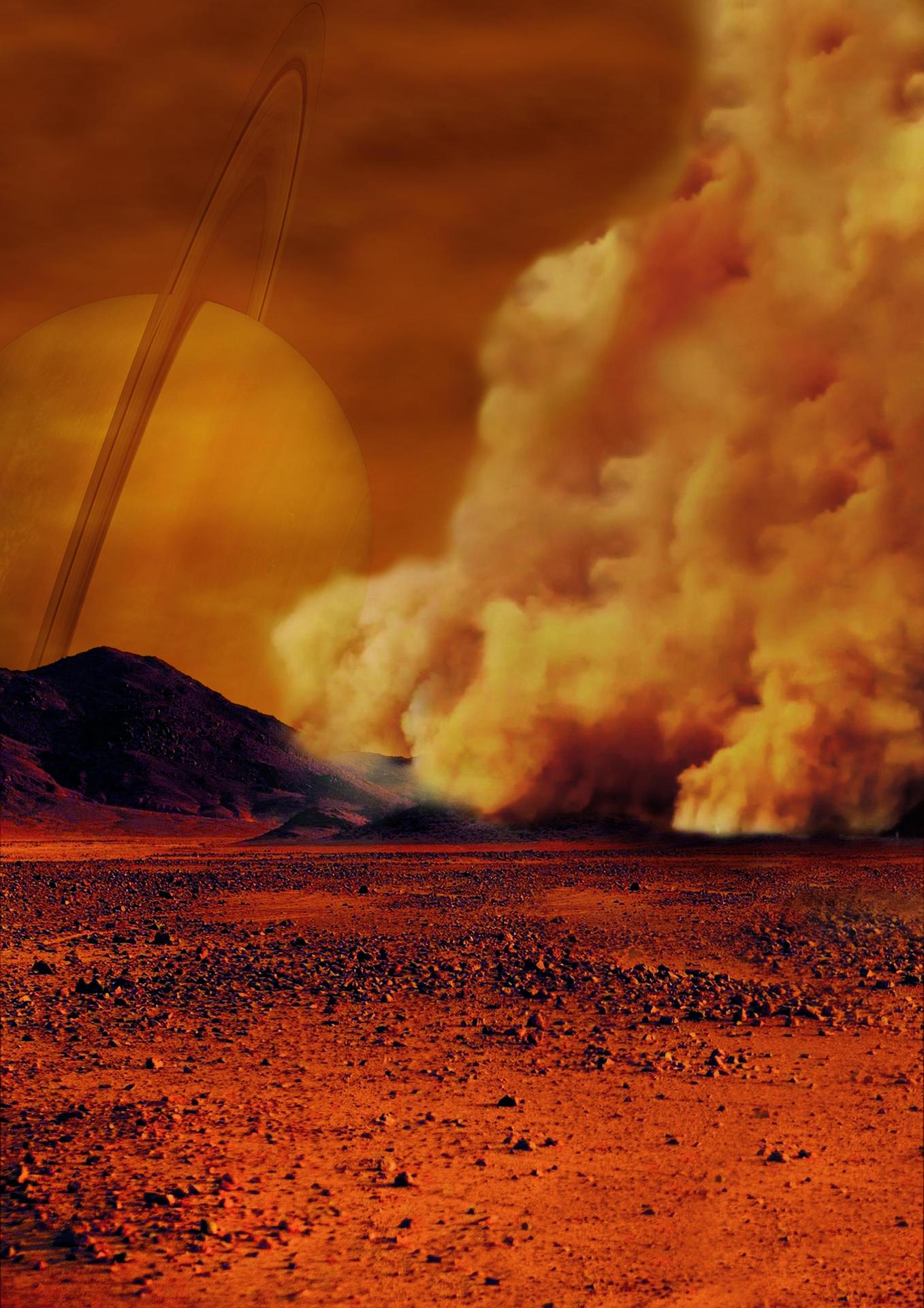
Dragonfly's first flight at Titan will have no pilot and no help from Earth. The car-sized, nuclear-powered rotorcraft will separate from its entry-system backshell, scan the dune fields below, choose a safe place to land, turn, descend and touch down, all on its own. On October 23, NASA said the mission team had just run that sequence from start to finish in the most comprehensive rehearsal so far. The flight happened only in software, but on flight-like avionics testbeds.
The test ran on flight-like computer testbeds at the Johns Hopkins Applied Physics Laboratory (APL) in Laurel, Maryland, where the spacecraft is being built and integrated for NASA. According to the NASA Science Dragonfly blog, it was the most comprehensive test to date of the mission's "first flight," run in real time and incorporating most of the systems and maneuvers the rotorcraft will use when it arrives at Titan in 2034.
What was actually tested
Earlier rehearsals built up to this one. The team has developed Dragonfly's flight capabilities incrementally, starting with simulations of simple activities such as spinning a single rotor, then a short "reposition" flight and a partial scouting flight, adding sensors and capabilities at each step. This test brought flight software and avionics together with simulated input from the sensors Dragonfly will use at Titan, including its newly installed navigation cameras, inertial measurement units and lidar. NASA describes lidar as the system Dragonfly will use to measure terrain altitude and slope and to identify potential hazards, and said adding it provided the final piece needed to fully simulate what the rotorcraft will encounter.
Nobody can show those sensors the real Titan, so the team supplied it. The team generated simulated terrain for the lidar and created, in real time, the images the navigation cameras would see. A custom camera emulator used graphics processing units to render each simulated Titan scene in roughly the same 20 to 70 millisecond exposure times the cameras will use during flight. Running the complete sequence on flight-like hardware let the team see how all those pieces interact, including details measured in milliseconds as information moves between different processes aboard the lander.
"The cool thing about first flight is that it's our most challenging flight," said Zach Putnam, Dragonfly mobility subsystem lead engineer at APL, in NASA's account. He said it "uses every piece of flight sensor hardware on the lander."
That is why this flight is a useful one to rehearse. Because it exercises every flight sensor, it is the test that shows most completely whether the sensors, the software and the links between them work together. "These tests provide an important validation that everything works together," Putnam said.
What it was not
It is worth being precise about what was shown. An independent write-up from TS2 Tech points out that the rehearsal used artificial terrain and artificial sensor data, and that nothing physically flew. NASA itself notes the run was on a testbed, not on the rotorcraft's actual flight system. Two major steps are still to come, according to TS2 Tech: flight-avionics runs and deliberate fault tests.
NASA's post sets out those steps. Next, the team plans to run first flight on Dragonfly's actual flight system, using the rotorcraft's avionics, test other flight profiles, and deliberately introduce faults to make sure Dragonfly can respond autonomously if something goes wrong. "That autonomy is essential at Titan, where Dragonfly will have to fly without real-time help from Earth," Putnam said. The fault testing will probably say the most about whether the system is ready. Showing that a system works when everything behaves is necessary, but the harder engineering question is whether it fails safely when something doesn't.
Work on the hardware is also continuing outside the simulator. Testing is underway on the "pose" mechanism, which lowers the rotorcraft from its stowed position inside the backshell to where it can safely start its rotors before separating from the entry system and beginning its final descent. Engineers at Lockheed Martin, where elements of the cruise stage and the entry, descent and landing assembly are coming together, have run static tests with representative mass and deployment tests to see how smoothly the mechanism lowers and whether it locks securely into place. The tests also consider how the backshell may swing beneath its parachute.
Where this sits in the build
The simulation milestone comes about seven months after Dragonfly moved from design into assembly. In March, APL announced that integration and testing had begun in its clean rooms, starting with power and functional tests on the Integrated Electronics Module, the vehicle's "brain," and its Power Switching Units.
"This milestone essentially marks the birth of our flight system," principal investigator Elizabeth Turtle said at the time. APL also said the aeroshell and cruise-stage assemblies are moving forward with integration and testing at Lockheed Martin Space in Littleton, Colorado, and that a thorough aerodynamic test series was completed in the wind tunnels of NASA's Langley Research Center. APL's plan then called for integration and testing at APL through 2026 and into early 2027, system-level testing at Lockheed Martin, final space-environment testing at APL late in 2027, and shipment to Kennedy Space Center in spring 2028 for launch on a SpaceX Falcon Heavy that summer.
The schedule is fixed by orbital mechanics. Dragonfly is set to launch no earlier than 2028; TS2 Tech cites NASA's mission page as targeting no earlier than July 2028. A six-year voyage follows, with arrival at Titan in 2034, late that year according to the mission page as cited by TS2 Tech. Once there, the plan calls for about three years of flying between sites. TS2 Tech, again citing the mission page, gives 3.3 years of surface operations, with flights every one or two Titan days. A Titan day lasts about 16 Earth days.
That pace is slow by the standards of a terrestrial drone. TS2 Tech also cites a Space.com estimate from March putting the mission's cost at $3.35 billion.
Why It Matters
Dragonfly depends on an ambitious idea: a rotorcraft that lands, does science, takes off again and moves on to new sites, with no real-time human control. Every later flight builds on the confidence gained in the first, and the first flight is the one that uses every piece of flight sensor hardware at once.
Running the full first-flight sequence on flight-like hardware with the navigation sensors in the loop is one way a team builds justified confidence in that kind of autonomy before launch. It also shows how the confidence is built. You don't fly to Titan to find out. You recreate Titan with GPU-rendered scenes and simulated sensor data, then test the system under controlled conditions. This test is the "works together" step. The planned fault injection and the runs on the real flight system's avionics are the tests that will show whether Dragonfly can respond autonomously when something goes wrong.
For a mission with a launch no earlier than 2028 and an arrival in 2034, there is time to do that work. Each simulated flight on the ground is a chance to find problems before the one real first flight at Titan.
