
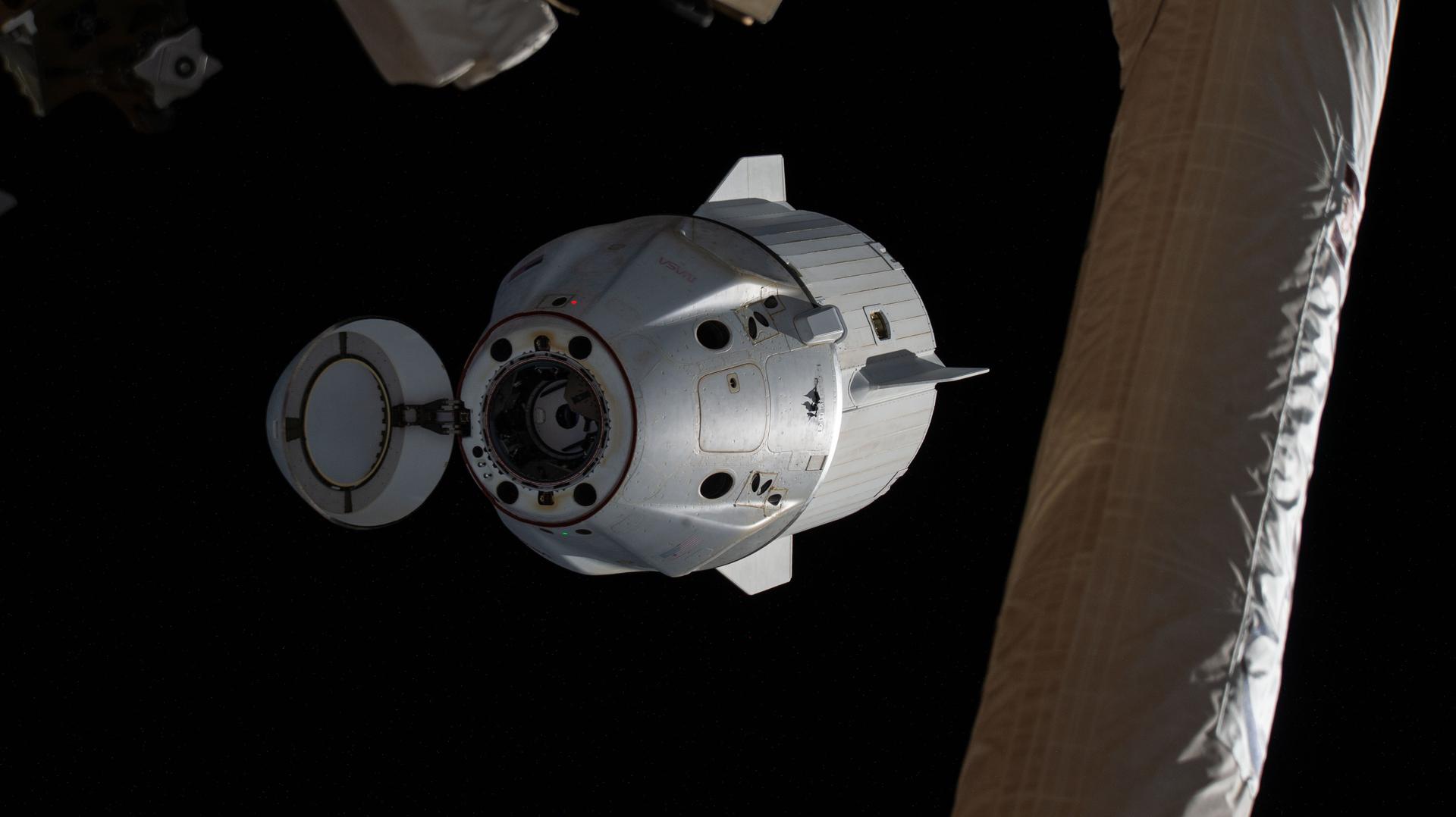
The International Space Station is in the middle of a crew handover. Four people are getting ready to leave, and four new arrivals are still learning their way around. NASA said on Oct. 5 that it and SpaceX are targeting undocking of the Crew-12 Dragon no earlier than 8:05 a.m. EDT on Wednesday, Oct. 7, pending weather conditions. If that holds, the capsule would splash down off the coast of California at approximately 11:34 a.m. on Thursday, Oct. 8.
Four people are on the ride home. NASA astronaut Jessica Meir is the commander and NASA astronaut Jack Hathaway is the pilot. ESA (European Space Agency) astronaut Sophie Adenot and Roscosmos cosmonaut Andrey Fedyaev fly as mission specialists.
A date with conditions attached
"No earlier than" carries real weight here. According to NASA's announcement, undocking depends on spacecraft readiness, recovery team readiness, weather conditions in the Pacific off the coast of California, and other factors. Mission managers continue to monitor conditions in the recovery area. If the weather off California turns bad, the schedule can move.
NASA's timeline puts hatch closing at 6:20 a.m. EDT on Wednesday and undocking at 8:05 a.m. The deorbit burn is planned for 10:46 a.m. on Thursday, with splashdown at 11:34 a.m. The gap between undocking and splashdown is just over 27 hours. NASA says it will stream the return and splashdown live, and all times are subject to change based on real-time operations.
The Crew-12 members have been aboard for a long stretch. Spaceflight Now reports they are wrapping up a mission that began with a Falcon 9 launch on Feb. 13, which it counts as a 235-day mission. Meir, a two-flight veteran with seven spacewalks to her credit, told the outlet she is most looking forward to seeing her three-and-a-half-year-old daughter, and Hathaway said a long hot shower was near the top of his list.
Who just arrived
The replacement crew is already on board. NASA reports that Crew-13 launched at 11:10 a.m. EDT on Thursday, Oct. 1, from Space Launch Complex 40 at Cape Canaveral Space Force Station in Florida. Spaceflight Now lists the crew:
- Jessica Watkins (NASA), commander
- Luke Delaney (NASA), pilot
- Sergey Teteryatnikov, Roscosmos cosmonaut
- Joshua Kutryk, Canadian Space Agency astronaut
Three of the four are flying for the first time. Watkins flew on a Crew Dragon in 2022, while Spaceflight Now counts Delaney, Kutryk and Teteryatnikov as the 296th through 298th people to fly aboard the ISS. The launch also ran late. It had originally been planned for mid-September but slipped to Oct. 1 so a leaking valve in Dragon's propulsion system could be replaced.
There is a personal side to the mission too. Spaceflight Now reports that Kutryk and his wife Heather, who already have two children, are expecting their third child around Thanksgiving, about two months into the mission. It describes them as set to become the fourth couple in space history to have a child born while one parent was off the planet.
NASA says Crew-13 will use microgravity to produce human stem cell-derived tissues for improved personalized medicine, disease modeling and pharmaceutical testing for conditions such as heart disease and Parkinson's. The crew will also explore crop production with a new, mostly autonomous plant growth system and continue human-health studies on blood-flow abnormalities in microgravity. The agency describes the mission as part of its Low Earth Orbit Program.
Crew-13 joins the Expedition 75 crew, which NASA says includes NASA astronaut Anil Menon and Roscosmos cosmonauts Pyotr Dubrov and Anna Kikina, already aboard the station.
Adenot's busy two weeks outside
ESA has used the end of the mission to highlight Adenot's spacewalks, and the numbers stand out. In a video retrospective, the agency says she performed three spacewalks, or EVAs (extravehicular activities), in less than 15 days and spent a total of 19 hours and 42 minutes outside the station.
The work itself was station upkeep. ESA says that she and her crewmates replaced critical station hardware, installed a new communications antenna, carried out maintenance and prepared experiments for future work. ESA notes that she led her third spacewalk as EV1, the lead spacewalker, in a sequence ESA describes as starting with her very first steps into space.
Why It Matters
Crew rotations get little attention, but they keep the station staffed and working. In its launch coverage, Spaceflight Now describes an expedited handover, in which Meir and her crewmates show their replacements the ins and outs of station operations before heading home. The Crew-13 launch slipped from mid-September to Oct. 1 for the valve replacement, so a clean undocking and splashdown this week would close out that handover on a tight schedule.
Both crews are also international. Crew-12 includes a European astronaut and a Russian cosmonaut. Crew-13 includes a Canadian astronaut and another cosmonaut. On both missions, astronauts from several partner agencies are flying on a commercial American spacecraft. Adenot's spacewalks are a reminder that station maintenance, such as replacing hardware and installing an antenna, is carried out by crew members from partner agencies as well as NASA astronauts.
Finally, Crew-13's research focus on stem cell-derived tissues, personalized medicine and drug testing shows how NASA presents the station's value as part of its broader Low Earth Orbit Program. Whether that research leads to results on the ground will take years to judge. Getting crews up and down on schedule is what makes that research possible, and the same goes for the spacewalks that keep the station's hardware current.
For now, it is a weather call. If conditions off California cooperate, Meir, Hathaway, Adenot and Fedyaev should be back on Earth by midday Thursday.
