
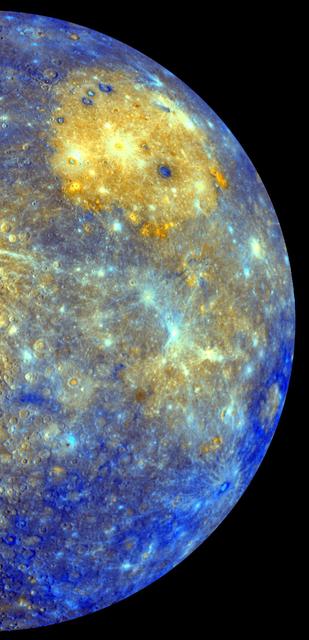
Getting to Mercury is hard, and stopping there is harder. On Nov. 21, 2026, after a trip of more than eight years, the joint European-Japanese BepiColombo mission finally managed to stop. An orbit-insertion burn was scheduled to begin at 1:24 p.m. EST (1824 GMT) and last 37 minutes, according to Space.com. Once contact with the spacecraft came back, ESA's operations team posted the confirmation everyone was waiting for: "Flight Dynamics already has confirmed it achieved orbital capture around Mercury."
The mission had been "approaching" Mercury for a long time, so the difference matters. BepiColombo has flown past the planet six times since 2021. This is the first time it has stayed. EarthSky notes that NASA's MESSENGER, which ended its mission in 2015, was previously the first and only craft to orbit Mercury, which makes BepiColombo the second.
A long way around
BepiColombo launched on Oct. 20, 2018. It did not head straight for Mercury, because a straight path was never an option. A probe falling toward the Sun picks up speed the whole way, and that speed has to be shed before a small planet can capture it. The mission paid that bill with gravity assists. ESA's factsheet lists them: one Earth flyby on Apr. 10, 2020, Venus flybys on Oct. 15, 2020 and Aug. 11, 2021, and then six passes of Mercury itself between 2021 and 2025. The last of those came on Jan. 8, 2025.
The trip also ran longer than planned. Space.com reports that a solar-panel problem cut the power available to the electric thrusters on the Mercury Transfer Module (MTM), the power and propulsion element that carried the stack through the inner solar system. With less power to the thrusters, the flight time grew by a year. Mission planners still got the spacecraft to Mercury. It just took longer.
The MTM's job ended on Sept. 3, 2026, when it released the two science spacecraft. That started the arrival phase that reached its milestone with the Nov. 21 capture.
Two orbiters, one ride
BepiColombo is really two spacecraft built by two agencies. ESA supplied the Mercury Planetary Orbiter (MPO). JAXA supplied the Mercury Magnetospheric Orbiter, called Mio.
The numbers in ESA's factsheet show how much of the launch mass went into simply getting there. The full stack weighed 4,100 kilograms at launch, and 1,400 kg of that was propellant. The MPO is the bigger of the two orbiters at 1,230 kg, including 85 kg of science payload. Mio weighs 255 kg and carries 45 kg of instruments. Together the two orbiters carry about 130 kg of science instruments on a spacecraft that left Earth weighing more than four tonnes.
For now, the two orbiters are still stacked together. They are due to separate on Dec. 9-10, 2026. Each will then go its own way: the MPO will conduct a series of engine burns until it reaches its final polar science orbit on Mar. 10, 2027. Science operations are scheduled to begin on Apr. 6, 2027.
What happens next
Capture is only the first step. The insertion burn put BepiColombo into orbit, but not yet into the orbits the science teams need. The next few months are a series of handoffs:
- Late November: ESA Operations said a fuller status update would come early in the week after the burn, as EarthSky reported.
- Dec. 9-10, 2026: The MPO and Mio separate.
- Mar. 10, 2027: The MPO arrives in its final polar orbit.
- Apr. 6, 2027: Science operations begin.
Space.com describes the whole arrival phase as lasting about six months, so the work is not over. With capture confirmed, though, the remaining schedule is about moving the two orbiters into their science orbits.
Why It Matters
Mercury is one of the least-visited planets in the solar system. Before BepiColombo, EarthSky says, the only spacecraft to have visited Mercury were NASA's Mariner 10 and MESSENGER. As EarthSky notes, BepiColombo will provide the first closeup look at the planet since MESSENGER's mission ended in 2015. That is an eleven-year gap.
BepiColombo also differs from earlier missions in its basic design. It puts two orbiters, built by two space agencies, around Mercury. Space.com says the two probes will gather complementary data from their two different vantage points. The mission is also a test of a long-term partnership: ESA and JAXA built separate spacecraft, launched them as a single stack, and flew them through the inner solar system together for eight years, including a propulsion power problem that added a year to the schedule.
The real payoff will start next spring, when science operations begin. But a mission can only return science if it reaches orbit first, and as of Nov. 21 BepiColombo has.
