
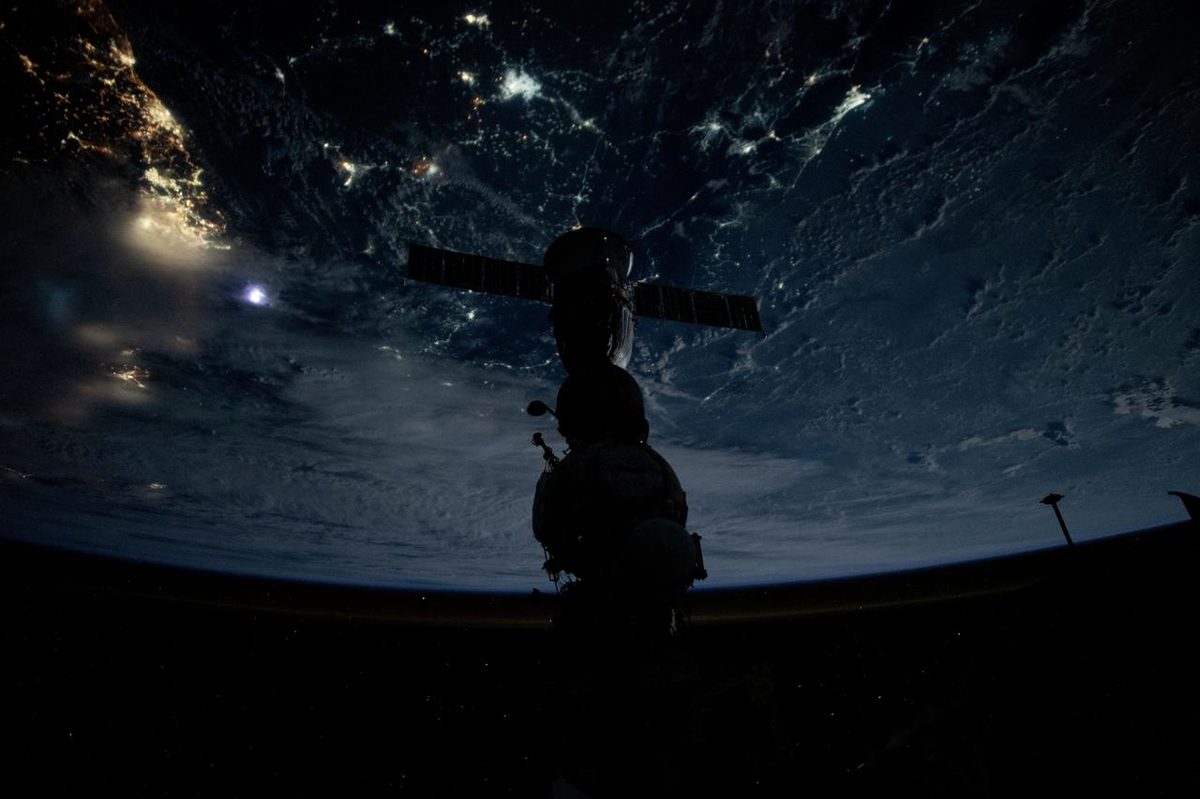
There's a tendency in Western space coverage to treat Tiangong as a geopolitical symbol first and an orbital laboratory second. That framing does a disservice to what China has actually built. The station is real, it is operational, it is staffed by rotating crews of three taikonauts every six months, and it is producing scientific output across a range of disciplines that the China Manned Space Agency (CMSA) is only beginning to publish in detail. The more interesting story isn't whether Tiangong exists to challenge the ISS — it does, in the most literal sense — but what the station reveals about the maturation of China's human spaceflight program and where it is headed.
What Tiangong Actually Is
Tiangong — "Heavenly Palace" — reached its permanent configuration in late 2022 with the docking of the Mengtian and Wentian laboratory modules to the central Tianhe core. The three-module T-shaped architecture bears a deliberate resemblance to early Mir, which is not accidental. China studied the Soviet and post-Soviet station programs carefully, inheriting their logic of a pressurized connecting node flanked by specialized science modules, each with its own robotic arm. Tianhe houses the crew quarters, life support systems, and the primary propulsion stack. Wentian — "Quest for the Heavens" — carries the life sciences payload suite, a second robotic arm, and serves as a backup command node. Mengtian — "Dreaming of the Heavens" — is the physics and technology module, containing a locked external experiment platform and a cargo airlock that allows hardware to be deployed to the station's exterior without a suited EVA.
The station orbits at roughly 340–450 km altitude in a 41.5-degree inclination — chosen specifically to maximize coverage of China's territory and key latitudes rather than the higher inclinations the ISS flies. That inclination choice has real consequences for the science possible from the station's external platforms: the ground tracks it covers are different from those the ISS sees, meaning Tiangong's Earth observation instruments sample different atmospheric and oceanic regions in their repeat cycles.
The total pressurized volume is approximately 340 cubic meters — about a quarter of the ISS — with six docking ports capable of hosting Shenzhou crew vehicles and Tianzhou cargo freighters simultaneously. CMSA has been explicit that the design allows for future expansion modules, and a Xuntian space telescope, designed to fly in formation with Tiangong and periodically dock for servicing, is expected to launch in the 2026–2027 timeframe. Its 2-meter primary mirror will give it a field of view roughly 300 times wider than Hubble's at comparable resolution — a significant capability if commissioning goes as planned.
The Science Being Done
The Shenzhou-17 mission, which returned to Earth in April 2024, was the first crew rotation entirely focused on station-in-use operations rather than assembly verification. The crew logged over 200 days aboard, conducted multiple spacewalks to install external experiment hardware, and oversaw repair of micrometeorite damage to a solar array — notably, they completed that repair without ground-side templates, improvising a patch methodology on orbit. That moment of genuine in-situ problem solving was a quiet milestone for the program.
Shenzhou-18, which launched in April 2024 and returned in October, pushed the science cadence harder. CMSA reported that the crew conducted experiments across four broad areas: microgravity fluid physics, materials science (particularly semiconductor crystal growth), space life sciences including rodent studies in the Wentian module's dedicated animal habitat, and technology demonstrations tied to in-space manufacturing. The rodent work is less glamorous than the headlines it gets, but it's substantively important: understanding how mammals respond to long-duration microgravity at the organ and cellular level is foundational for any credible Mars planning, and Tiangong's facilities allow experiments that Shenzhou short-duration flights could never support.
The materials science thread is where Tiangong may end up producing its most commercially significant results. Crystal growth in microgravity — particularly of compound semiconductors like gallium arsenide and indium phosphide — has been a target for orbital research since Skylab, but the ISS has been throttled by the sheer volume of competing priorities and crew time constraints. CMSA has positioned Tiangong's Mengtian module's automated experiment racks as capable of running crystal growth campaigns with minimal crew intervention, letting the furnace hardware run overnight cycles while taikonauts sleep. Whether this produces commercially viable crystals at scale remains unproven, but the infrastructure commitment is real.
The Closed Door Problem
Any honest accounting of Tiangong's science output has to confront the transparency deficit. The ISS benefits from a culture — imperfect, but genuine — of open publication. NASA, ESA, JAXA, and Roscosmos researchers are expected to publish findings in peer-reviewed journals, and the ISS National Lab actively encourages external researchers to propose experiments. CMSA publishes selectively. Some results appear in Chinese-language journals rapidly, some in international journals after significant delay, and others — particularly anything touching on technology demonstration payloads — appear not at all.
This is not unique to China's space program. The U.S. classified significant portions of early shuttle science. But it creates a genuine epistemic problem for the broader spaceflight research community. When a Tiangong materials science result does appear in the literature, there's no way to assess what the selection bias is — whether the published results are representative of the program's findings or a curated highlight reel. That uncertainty cuts both ways: it prevents independent validation, but it also means Western commentary frequently underestimates what Tiangong is producing by simply not seeing it.
The station is also, formally, closed to foreign participation. The U.S. Congress has barred NASA from bilateral cooperation with China under the Wolf Amendment, and CMSA has not opened ISS-style multilateral access to the station's experiment slots. There have been discussions of allowing researchers from developing nations to fly experiments, and CMSA signed a memorandum of understanding with the United Nations Office for Outer Space Affairs to offer payload slots to member states — but as of 2025, the number of non-Chinese experiments that have actually flown is negligible. The openness narrative and the operational reality are not yet aligned.
Where This Is Going
The Xuntian telescope, if it launches on schedule, will be the most consequential near-term addition to China's orbital capability. A wide-field survey telescope in formation with a crewed station — serviceable, upgradeable, kept current by the same logistics infrastructure supporting the taikonauts — is an architecture that no other nation currently operates. Hubble was serviced by shuttle crews but was never designed as part of a station ecosystem. If CMSA executes the formation-flying and servicing concept cleanly, it will be a genuine first in astronomical infrastructure, not merely a follow-on to existing Western programs.
Beyond Xuntian, CMSA has published roadmaps suggesting a Tiangong successor — a larger station with greater power, more module volume, and presumably more ambitious science infrastructure — in the 2030s. The cadence of Shenzhou missions suggests they are committed to maintaining continuous human presence and learning the operational lessons that come only from actually living somewhere in orbit for years. That steady accumulation of crew-hours, EVA experience, and logistics knowledge is unglamorous and does not generate the kind of press that rocket launches do. It is also, historically, the thing that separates programs that go somewhere from programs that don't.
Tiangong is not a propaganda achievement dressed up as a space station. It is a functioning orbital laboratory with real hardware, real crews, and real research programs, operating under institutional constraints that limit what the outside world can verify. Treating it as less than that because the political context is uncomfortable is an analytical failure. The station exists. The question worth asking is what its operators are learning from it — because that learning will inform everything China attempts beyond it.
