
On September 3, 2026, flight controllers at ESA's mission control in Darmstadt, Germany, gave the official "GO" for separation at 12:00 CEST. Two hours later, at the moment separation was expected, the Mercury Transfer Module — the propulsion stage that had hauled BepiColombo across the inner solar system for nearly eight years — let go of the composite spacecraft it had been carrying. There was no dramatic footage, no fireball, nothing a casual observer could point to. A preliminary Doppler shift in the spacecraft's radio signal gave the first hint that separation had occurred, and full confirmation arrived nearly two hours after that, once the light-delayed signal was picked up by ground stations roughly 200 million kilometers away. But for a mission that has spent most of a decade just getting to the point where it could actually start exploring Mercury, that quiet handoff was the moment everything changed.
BepiColombo — a joint mission of the European Space Agency and the Japan Aerospace Exploration Agency — launched in October 2018 on a trajectory that, by design, took the long way around. Getting to Mercury is notoriously difficult: the innermost planet sits so deep in the Sun's gravity well that a spacecraft aimed directly at it would simply accelerate into a fast, useless flyby rather than settle into orbit. So instead of a straight shot, BepiColombo spent nearly eight years bleeding off velocity through a sequence of nine gravity-assist flybys — of Earth, Venus, and Mercury itself — while its ion thrusters fired for long stretches in between. Total distance covered: roughly 9.9 billion kilometers, more than 65 times the distance from Earth to the Sun.
What Just Happened, and Why It Was Necessary
The Mercury Transfer Module was never meant to go into orbit. Its job was to carry the electric propulsion system, solar arrays, and the bulk of the propellant needed to fly the whole stack — the module itself plus the two science orbiters it carried piggyback, ESA's Mercury Planetary Orbiter (MPO) and JAXA's Mio magnetospheric orbiter — through that long gravitational choreography. Once separation was confirmed, its work was done. With no antenna or onboard computer of its own, the now-inoperable transfer module will remain in a stable orbit around the Sun, while the composite spacecraft of MPO and Mio, still bolted together, transitioned into what mission planners call the arrival phase.
Confirming that the separation had actually happened wasn't as simple as watching a video feed — Mercury-arrival distances put BepiColombo far too far from Earth for that kind of real-time visual confirmation. Instead, ESA's deep-space antennas in Spain and Argentina tracked the spacecraft's radio signal and looked for a Doppler shift: a change in the signal's frequency consistent with a sudden, small change in the spacecraft's velocity and mass as the heavier transfer module fell away. That shift showed up exactly where engineers expected it, giving mission control the confirmation it needed.
What Comes Next
Separation is a milestone, not the finish line. The composite spacecraft still has to actually get captured by Mercury's gravity, and that won't happen until November 21, 2026, when BepiColombo is scheduled to perform Mercury orbit insertion. Even after that, MPO and Mio will remain stacked together for a couple more weeks, sharing propulsion and power, before they finally separate from each other on December 9–10, 2026. Mio is expected to move into its own dedicated orbit around that time, while MPO keeps maneuvering under its own chemical propulsion for months longer, not reaching its final science orbit until March 2027.
Even then, the mission isn't ready to start collecting the data it was built for. Mercury's proximity to the Sun means its orbiters have to be checked out, calibrated, and eased into their working configuration before instruments can be trusted with real observations. According to ESA, the dedicated science phase isn't expected to begin until April 2027 — more than four months after orbit insertion, and roughly eight and a half years after launch.
Why It Matters
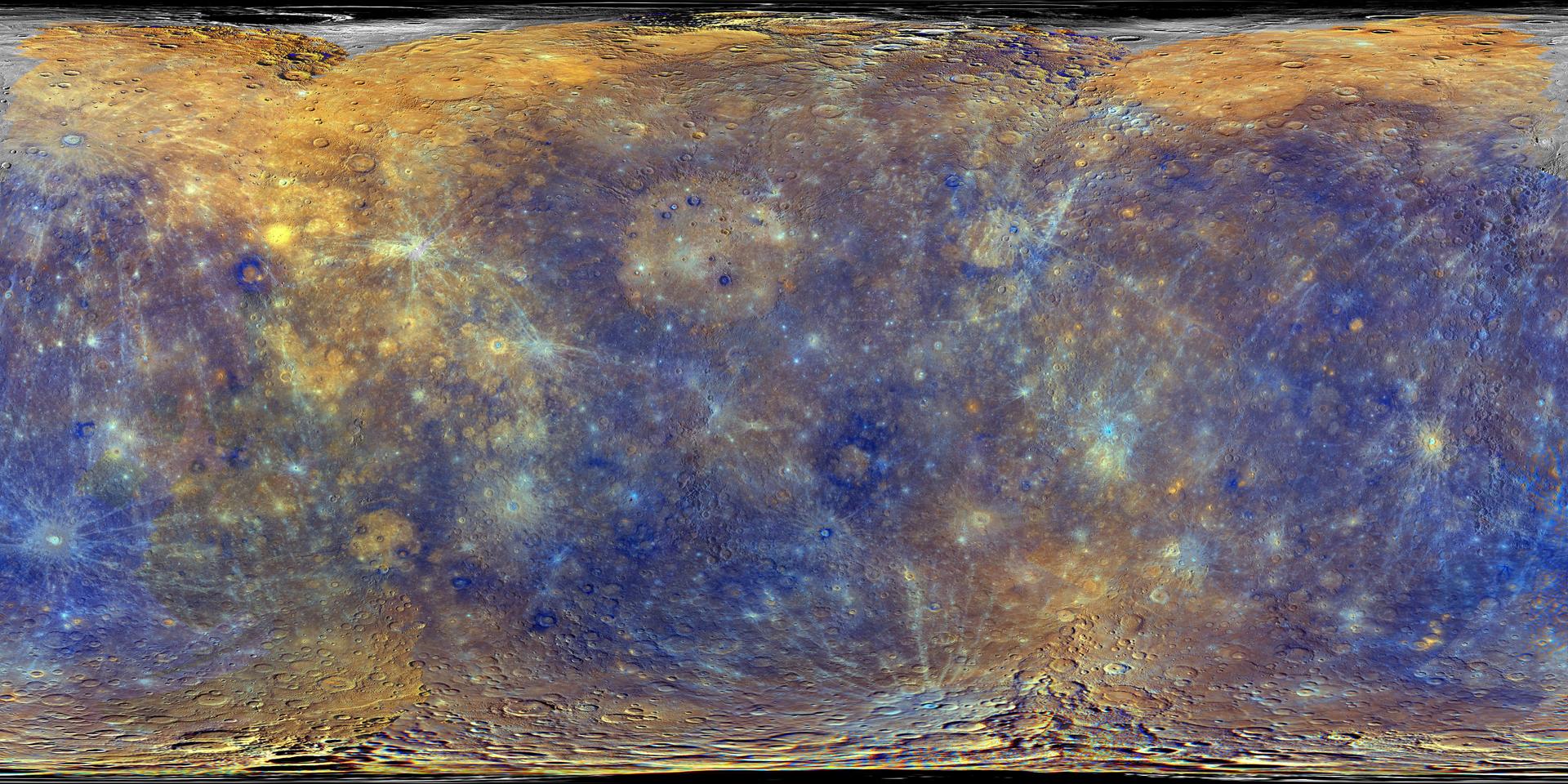
Mercury is the least-explored planet in the inner solar system, and for good reason: everything about getting there and studying it is harder than it looks. Its closeness to the Sun means punishing heat and intense solar radiation, and orbital mechanics make it genuinely more difficult to reach than far more distant targets — a spacecraft has to shed enormous amounts of energy to avoid simply swinging past it. Only one prior mission, NASA's MESSENGER, ever settled into orbit around Mercury for an extended survey; NASA's Mariner 10 managed only flybys of the planet, back in 1974.
BepiColombo is designed to pick up where MESSENGER left off, with two orbiters instead of one, studying Mercury's surface, interior structure, composition, and its magnetic field — a subject researchers are still working to fully explain. Answering that kind of question matters beyond Mercury itself: it's a test case for how rocky planets form, cool, and hold onto (or lose) their magnetic shields, with implications for how we think about the early solar system and rocky exoplanets elsewhere. The September 3 separation doesn't deliver any of that science on its own, but it clears the last structural obstacle standing between an eight-year cruise and the mission BepiColombo was actually launched to fly.
