
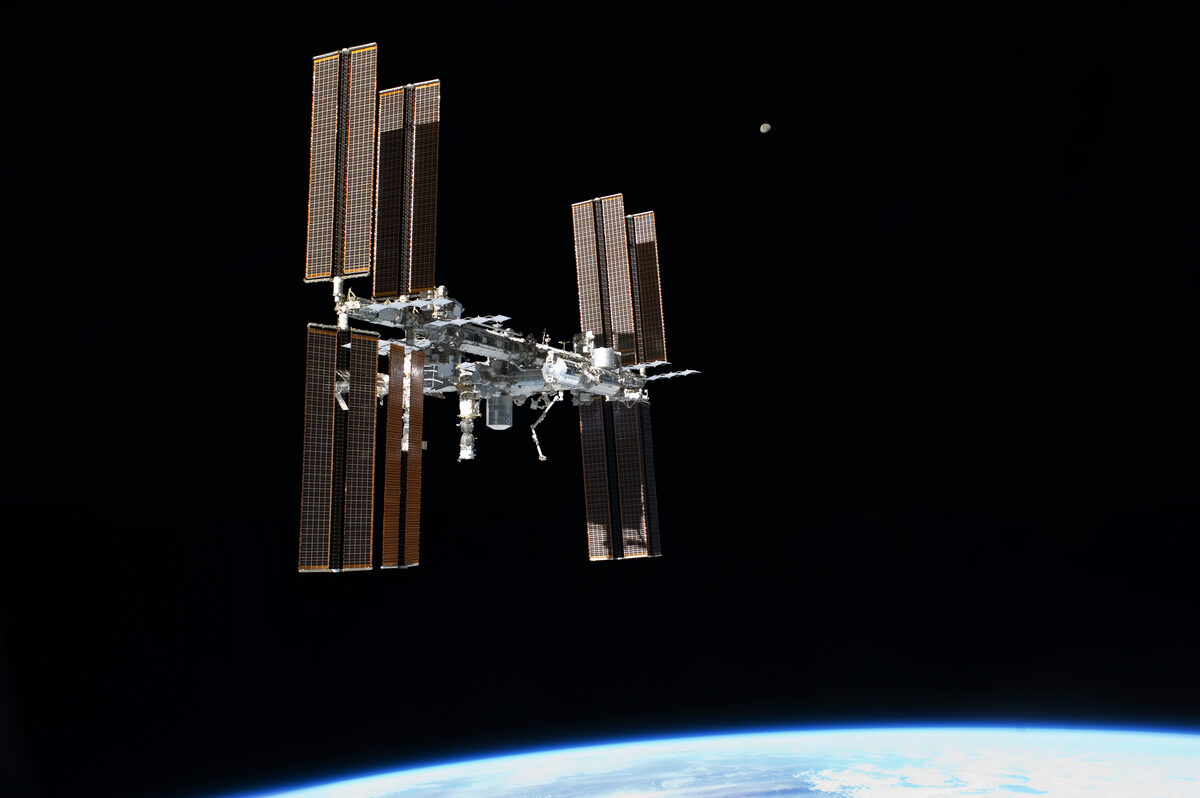
The International Space Station is scheduled to be deorbited in 2030. NASA is aware that this creates a gap: if nothing replaces it, the United States will have no access to low Earth orbit for human spaceflight and microgravity research. The agency's answer is not to build another government-owned station. It is to fund commercial companies to build stations instead, and then buy access to those stations as a customer — the same model that worked for crew transport when SpaceX's Dragon replaced the Space Shuttle. The most advanced of those commercial station companies is Axiom Space, and it is pursuing an entry strategy that no space station company has ever attempted: it is attaching itself to the ISS before the ISS dies, so that its modules are already orbital and inhabited when the station beneath them is decommissioned.
Axiom was founded in 2016 by Michael Suffredini, who had served as the NASA ISS Program Manager for ten years and understood both the station's operational details and the political dynamics of its eventual retirement. Suffredini's insight was that building a commercial station from scratch — the traditional approach — required assembling a fully new structure in orbit with no revenue until the day it opened. By attaching to the ISS instead, Axiom could bring modules to orbit incrementally, use the existing station's life support and power infrastructure during the build-out, and generate cash flow from private astronaut missions before the first Axiom module ever launched.
The private astronaut model
Axiom Mission 1, in April 2022, sent four private astronauts to the ISS for ten days aboard a SpaceX Dragon — the first fully private crewed mission to the station. Three of the crew members paid for their seats; the fourth, former NASA astronaut Michael López-Alegría, served as commander. Axiom has since flown three more missions: Ax-2 in May 2023 (commanded by Peggy Whitson, the American with the most time in space), Ax-3 in January 2024 (with a Saudi, a Swede, and an Italian), and Ax-4 in mid-2025. The missions are not tourism in the Virgin Galactic sense — they involve real scientific experiments, technology demonstrations, and outpost operations. But they are commercial: customers pay in the tens of millions of dollars for a seat, and Axiom takes the margin.
The model is profitable enough to fund station development, but Axiom's long-term revenue is not primarily from selling seats. It is from selling time in the research environment — microgravity manufacturing, pharmaceutical crystallization, materials science — to companies and government agencies that need access to zero gravity without owning the facility. The ISS has done this for decades under NASA management. Axiom is betting that a commercially operated facility can do it more efficiently, at lower cost per experiment, and with more flexibility on mission duration and experiment configuration.
AxEMU and the Artemis contract
In 2022, NASA awarded Axiom a contract to develop the Axiom Extravehicular Mobility Unit — the spacesuit astronauts will wear on the Artemis III and later Moon surface missions. The contract is a significant revenue source and a credibility signal: NASA is trusting Axiom with the hardware its astronauts will wear on the lunar surface, hardware with more direct safety implications than any research module. The AxEMU development has been public enough to show a suit that accommodates a broader range of body types than the Apollo-era suits and includes a helmet-mounted display with heads-up information about consumables and mission status.
The Axiom Station module that will attach to the ISS — Axiom Module 1 (AxM-1) — is still in development, targeting a launch before 2030 on a SpaceX Falcon 9 and attachment to the ISS's forward port. It will initially be dependent on the ISS for power and life support, with Axiom's own power and environmental control systems added in subsequent modules. When the ISS is deorbited at the end of the decade, NASA's plan is for the Axiom modules to detach as a self-contained station and continue operating independently. By that point, Axiom expects to have at least three modules connected — enough internal volume for a crew of up to eight.
Whether this plan survives the realities of module development timelines, NASA's budget pressures, and the political complexity of ISS partner agreements (ESA, JAXA, CSA, and Roscosmos all have stakes in what happens to the station) is genuinely uncertain. But the approach is more pragmatic than any previous commercial station proposal: rather than asking the market to fund an unproven facility from zero, it is grafting a commercial future onto an already-flying asset and hoping that continuity is enough to carry it across the gap.
