
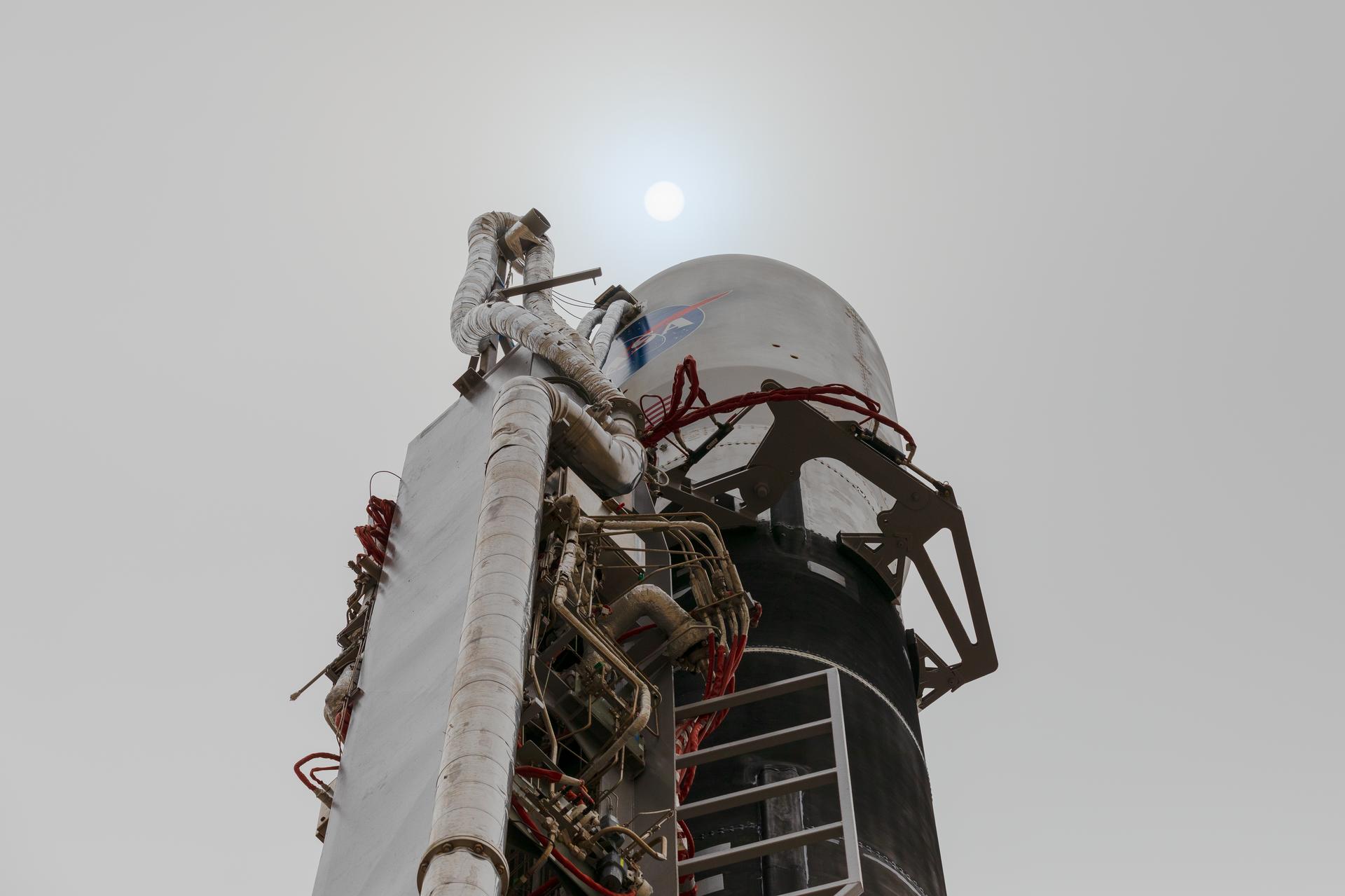
Satellite operators usually buy rockets. They don't build them. On November 6, AST SpaceMobile said it plans to do both. In a press release filed with the SEC as an exhibit to a Form 8-K, the company announced Blacklift, a reusable 20-ton rocket meant to carry up to five of its BlueBird broadband satellites per flight. Launches would begin in late 2028. Blacklift will not use engines AST designed itself. It will be powered by Firefly Aerospace's Miranda and Vira engines, under a set of agreements worth roughly $1.3 billion in total.
The announcement is ambitious and expensive. Ars Technica's headline put it more bluntly: "You know the launch market is tough when satellite companies start building rockets."
What AST is actually buying
The deal with Firefly has three parts, according to AST's release:
- A perpetual license to manufacture Miranda and the vacuum-variant Vira engines at a new US facility. AST will pay about $800 million upfront: $400 million in cash plus 10 million to 14 million shares of Class A common stock.
- Engines for the first three rockets, delivered by Firefly, for $250 million.
- Three years of engineering services from Firefly, for another $250 million paid over that period.
Space.com treats the engine and services payments as a single $500 million "supply and services" agreement covering the first three launches, with the license priced at about $800 million, split roughly half cash and half stock. Either way the total is about $1.3 billion. Under this structure, AST is buying the engines it needs to start and the right to build every engine after that.
According to Space.com, Miranda powers the booster and Vira powers the upper stage. AST says Miranda has completed more than 175 hot-fire tests totaling over 4,200 seconds, is a 230,000 pounds-force engine, and has been tested at 110 percent of rated performance. AST's Blacklift web page gives a smaller number: "over 150 hot fire tests," also including full-power tests at 110 percent. The gap probably reflects different update dates or counting methods, but the two figures don't match.
Test-stand time is not flight experience. Space.com notes that neither engine has flight experience, even though AST describes the engine architecture as having flight heritage. Firefly's own Alpha rocket uses different engines, the Reaver in its booster and the Lightning in its upper stage. Ars adds that Miranda likely remains at least two years from its first flight on Firefly's Eclipse rocket. AST is betting on engines that have shown promise on the ground but have not yet flown.
The rocket itself
The details released so far are mostly about the mission. AST describes Blacklift as purpose-built for BlueBirds and "reusable by design," able to carry up to five stacked satellites per mission. Space.com and Ars both put its capacity at 20 tons to low Earth orbit, and Ars calls it a medium-lift vehicle. For comparison, Space.com says SpaceX's Falcon 9 carries about 25 tons to LEO. Ars adds that Falcon 9 could lift only about 10 tons in its initial form.
AST says Blacklift will complement its existing launch providers, not replace them. The company also says it has agreements with external providers covering more than 100 BlueBirds in total between 2027 and 2028. Because Blacklift is not due to fly until late 2028, it cannot carry that near-term deployment. Ars asks the obvious question: if those agreements already cover more than 100 satellites, what is Blacklift for? AST plans to unveil the vehicle at an event in New York City on November 12.
The company's release includes statements from AST founder and CEO Abel Avellan, Firefly CEO Jason Kim, and AST President Scott Wisniewski. Kim calls the deal "a bold transformational deal for Firefly, for AST SpaceMobile, and for the space industry." Wisniewski says the Miranda engine will let AST "leapfrog the traditional five-to-ten-year development cycle."
Why build instead of buy?
AST's constellation is growing. Space.com reports that the company has launched 13 BlueBirds, including eight of the larger Block 2 satellites, whose antenna arrays cover about 2,400 square feet. These satellites have flown on three different rockets so far. Ars says AST has been struggling to find rides to space and needs to launch about 90 more BlueBirds.
The bigger reason is the market. Space.com notes that SpaceX plans to phase out Falcon 9, which could bring a launch crunch for satellite operators. Ars describes two related trends. Operators planning large constellations need to secure launch capacity years in advance, and some are now considering building their own rockets. And investors are recognizing the worsening launch crisis, so there is capital available for new entrants into the medium-lift market.
Seen this way, Blacklift is AST insuring itself against a shortage, with some upside if it works. If outside launches become scarce or expensive late this decade, a company that controls its own rocket and engine production is protected. If the shortage never comes, AST will have spent a lot of money and engineering time on something it could have bought.
The timeline problem
Ars calls the late-2028 target "wildly, fantastically, and stupidly optimistic," and the comparison it gives explains why. SpaceX holds the record for the fastest time to orbit for a new medium-lift rocket, taking 4.7 years to develop Falcon 9, and Ars notes it had significant advantages, including experience with the Merlin engine. Ars finds that developing a new medium- or heavy-lift rocket has generally taken five to nine years from public announcement to first orbital launch. AST is a satellite company with no history of building rockets. It plans to set up a new engine factory, stand up a launch vehicle program, and start flights in about two years.
Licensing proven engine designs and paying for Firefly's engineering support should save some time. AST doesn't have to design propulsion from scratch, and its first three rockets get engines from Firefly instead of a factory that doesn't exist yet. Ars says nine Miranda engines will power Blacklift's first stage. But Ars estimates that buying Miranda engines will save "a year or two, not five," because it does not eliminate the enormous engineering, manufacturing, testing, and regulatory effort required to develop a medium-lift rocket.
Blacklift is also not the only new rocket aiming for 2028. Both Ars and Space.com note that Cowboy Space's Big Iron targets the same first-flight year, which suggests that 2028 has become a common target for new entrants trying to fill the medium-lift gap.
Why It Matters
When a satellite operator commits about $1.3 billion to build its own rocket, it is a strong sign of where the launch industry stands. A satellite constellation needs rides to orbit, and AST's decision shows how seriously at least one large operator takes the risk of not getting them.
The deal also changes the picture for engine makers. Firefly is licensing its engine designs in addition to selling engines and launches. If that works, other satellite companies that want some launch independence could look at the same approach.
Doubts are reasonable, though. Ars calls the timeline "profoundly disconnected from the historical record" of comparable rocket programs this century. A 20-ton reusable rocket from a first-time builder, on engines that have not flown, in about two years, would be a remarkable feat. The external launch contracts for more than 100 BlueBirds in 2027 and 2028 mean AST's next phase does not depend on Blacklift. The New York unveiling on November 12 should show how much hardware exists. The flight schedule will show whether the 2028 target holds.
Sources
- AST SpaceMobile Form 8-K Exhibit 99.1 press release, Nov. 6, 2026 (SEC EDGAR)
- AST SpaceMobile announces new 'Blacklift' rocket, targets 2028 launch debut (Space.com)
- You know the launch market is tough when satellite companies start building rockets (Ars Technica)
- Blacklift (AST SpaceMobile company page)
