
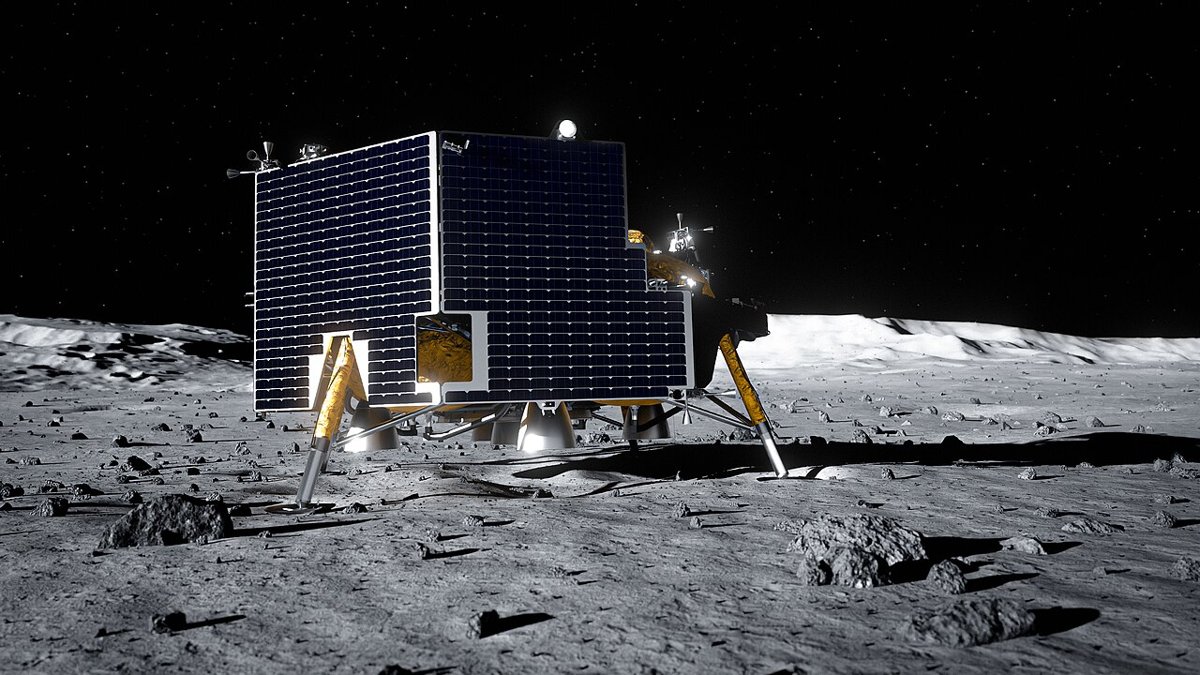
Building a machine that can survive the violence of a rocket launch, the vacuum of deep space, and the unforgiving surface of the Moon is not a task for the faint of heart. Astrobotic, the Pittsburgh-based lunar logistics company, took a significant step toward proving its hardware can do exactly that when it showcased its Griffin-1 lunar lander and announced its move to California for environmental testing.
The milestone marks one of the most consequential phases of any spacecraft's development cycle — the point where engineering models and computer simulations give way to physical abuse. Environmental testing subjects flight hardware to the thermal extremes, vibration loads, acoustic punishment, and electromagnetic interference it will face during launch and transit. If Griffin-1 can survive the test chambers, it stands a far better chance of surviving the real thing.
What Environmental Testing Actually Means
For the uninitiated, "environmental testing" might sound like an ecologically conscious audit. In the aerospace world, it is anything but gentle. The process is designed to break things — or, more precisely, to prove that they won't break when it counts.
A typical environmental test campaign for a lunar lander involves several brutal stages. Thermal vacuum testing places the spacecraft inside a chamber that simulates the temperature swings of space, cycling between searing heat when sunlight hits the vehicle and deep cold when it falls into shadow. On the lunar surface, those swings can range from roughly 120 degrees Celsius in direct sunlight to minus 180 degrees Celsius in permanent shadow. Every joint, seal, wire harness, and electronic component must function across that entire range.
Vibration testing replicates the shaking a spacecraft endures during launch. The lander is mounted on a massive shaker table that reproduces the specific vibration profile of its launch vehicle, rattling the hardware at frequencies and intensities that can loosen fasteners, crack solder joints, and reveal structural weaknesses invisible to even the most rigorous analysis. Acoustic testing bombards the vehicle with the deafening sound pressure levels generated by a rocket engine at full throttle — levels that can physically deform thin panels and damage sensitive instruments.
Electromagnetic compatibility testing ensures that the lander's own electronics don't interfere with each other or with ground and mission control communications. A stray signal from a power converter that jams the navigation system would be a mission-ending failure discovered far too late if it only showed up in flight.
The fact that Astrobotic is moving Griffin-1 to California for this campaign signals that the lander has completed its integration and assembly phase and is ready for the gauntlet. It is a meaningful transition — one that separates paper designs from flight-worthy hardware.
Griffin-1 in Context
Astrobotic has been a prominent player in the emerging commercial lunar economy. The company's approach centers on providing delivery services to the Moon — transporting scientific instruments, technology demonstrations, and commercial payloads to the lunar surface on behalf of customers that include NASA and private-sector clients.
Griffin-1 represents Astrobotic's larger lander platform, designed to carry heavier and more complex payloads than the company's smaller Peregrine lander. The Griffin platform is built to support more ambitious missions, including those that require precision landing, extended surface operations, or delivery of rovers and other mobile assets.
The showcasing of Griffin-1 ahead of its California testing campaign gave stakeholders — engineers, partners, payload customers, and the broader space community — their clearest look yet at the hardware that will attempt a Moon landing. These reveal events are more than public relations exercises. They serve as informal reviews where the broader engineering community can assess build quality, integration completeness, and overall readiness. In aerospace, showing your hardware is a statement of confidence.
NASA's Expanding Lunar Ambitions
Griffin-1's progress comes at a time when NASA's lunar surface technology development is accelerating across multiple programs. The agency has been investing heavily in a range of capabilities — from advanced rovers designed to explore the Moon's south polar region to instruments that will prospect for water ice and other resources. NASA's strategy has increasingly relied on commercial partnerships to deliver these technologies to the lunar surface, a model that distributes risk and drives down costs compared to traditional government-led missions.
The agency continues to expand its commercial partnerships for space missions and data acquisition, awarding contracts that leverage the capabilities of companies like Astrobotic. This approach treats commercial landers as a transportation layer — NASA builds the science instruments and technology payloads, then books rides on privately developed vehicles to get them where they need to go.
It is a model borrowed, in spirit, from the commercial cargo and crew programs that revolutionized access to the International Space Station. Just as SpaceX and Northrop Grumman now routinely deliver supplies to the station under NASA contracts, companies like Astrobotic aim to provide routine delivery services to the Moon. The difference is that lunar delivery is still in its infancy, and every test campaign like Griffin-1's represents a step toward making that routine service a reality.
The Testing Gauntlet Ahead
Environmental testing campaigns for spacecraft of this complexity typically run for weeks to months. The process is methodical and unforgiving. Engineers run the vehicle through each test condition, then conduct detailed inspections and functional checkouts before moving to the next phase. If an anomaly is discovered — a cracked bracket, a sensor that drifts out of calibration, a thermal blanket that doesn't perform as modeled — the team must diagnose the problem, implement a fix, and often re-run the test to verify the correction.
This iterative process is one of the reasons spacecraft development timelines are notoriously difficult to predict. A single unexpected failure during vibration testing can add weeks or months to a schedule as engineers redesign, rebuild, and retest the affected component. The aerospace industry is littered with missions that sailed through design reviews only to stumble during environmental testing when reality diverged from simulation.
For Astrobotic, a clean pass through environmental testing would be a powerful validation of the Griffin-1 design and build quality. It would also clear one of the final major hurdles before the lander can be integrated with its launch vehicle and prepared for flight. A troubled test campaign, conversely, would force difficult decisions about schedule, budget, and design modifications.
The company's decision to conduct this testing in California places Griffin-1 at one of the major aerospace testing hubs in the United States. California is home to several facilities with the specialized chambers, shaker tables, and acoustic rooms required for full spacecraft-level environmental testing — infrastructure that represents tens of millions of dollars in investment and decades of institutional knowledge.
Why It Matters
Griffin-1's environmental testing campaign is more than a checkbox on a project management timeline. It represents a critical inflection point for both Astrobotic and the broader commercial lunar industry.
For Astrobotic, successfully passing environmental testing would demonstrate that the company can build flight-worthy hardware at a scale and complexity that goes beyond small demonstration missions. It would validate years of design, analysis, and manufacturing work and position Griffin-1 for its Moon delivery mission.
For NASA, Griffin-1's progress is a tangible return on the agency's bet that commercial partnerships can accelerate lunar exploration. Every dollar NASA invests in commercial lunar delivery services is a dollar not spent developing its own lander from scratch — but that investment only pays off if the commercial vehicles actually work. Environmental testing is where that question starts to get answered with data rather than promises.
For the commercial space industry more broadly, Griffin-1 is a bellwether. The lunar economy that investors, entrepreneurs, and policymakers have been discussing for years depends on reliable, affordable access to the lunar surface. That access requires vehicles that can survive the journey, land safely, and deliver their payloads intact. Environmental testing is the crucible where those capabilities are proven — or where their absence is exposed.
As Astrobotic's Griffin-1 enters the test chambers in California, the stakes extend well beyond a single company's balance sheet. The results will shape confidence in commercial lunar delivery, influence NASA's future procurement decisions, and help determine whether the Moon becomes the next frontier for sustained human and robotic activity — or remains a destination that only government-funded missions can reach.
