
On the evening of April 13, 2029, a chunk of rock about 375 metres across — roughly the length of three football fields — will pass within 32,000 kilometres of Earth's surface. That is closer than the ring of geostationary satellites that carry our television and weather data, closer than any asteroid of its size is expected to come for a very long time. For a few hours, the asteroid Apophis will be bright enough to see with the unaided eye, a slow-moving star tracked across the sky by an estimated two billion people in Europe, Africa, and western Asia. And it will miss us completely.
From feared to fascinating
Apophis has a history. When it was discovered in 2004, early calculations gave it a frightening, briefly non-trivial chance of striking Earth in 2029, and it became the poster child for the asteroid-impact threat. Better observations have since erased that danger entirely: astronomers have ruled out any impact in 2029 and have all but eliminated the possibility for the next century. The asteroid that once symbolized cosmic dread has been reclassified as a once-in-a-millennium scientific opportunity. A natural object of this size simply does not pass this close very often, and never before in the era when we had the spacecraft to meet it.
An approach this close by an object this large is genuinely rare. Asteroids the size of Apophis typically come within range of Earth only on the order of once every several thousand years — and never before during the age of spaceflight, when we have both the telescopes to study one in detail and the rockets to send spacecraft to meet it. The 2029 flyby is, in effect, nature delivering a substantial asteroid to our doorstep for close inspection, sparing the enormous cost and years of travel a mission to the asteroid belt would otherwise demand. That convenience is precisely why scientists are determined not to waste it.
A free experiment in planetary defense
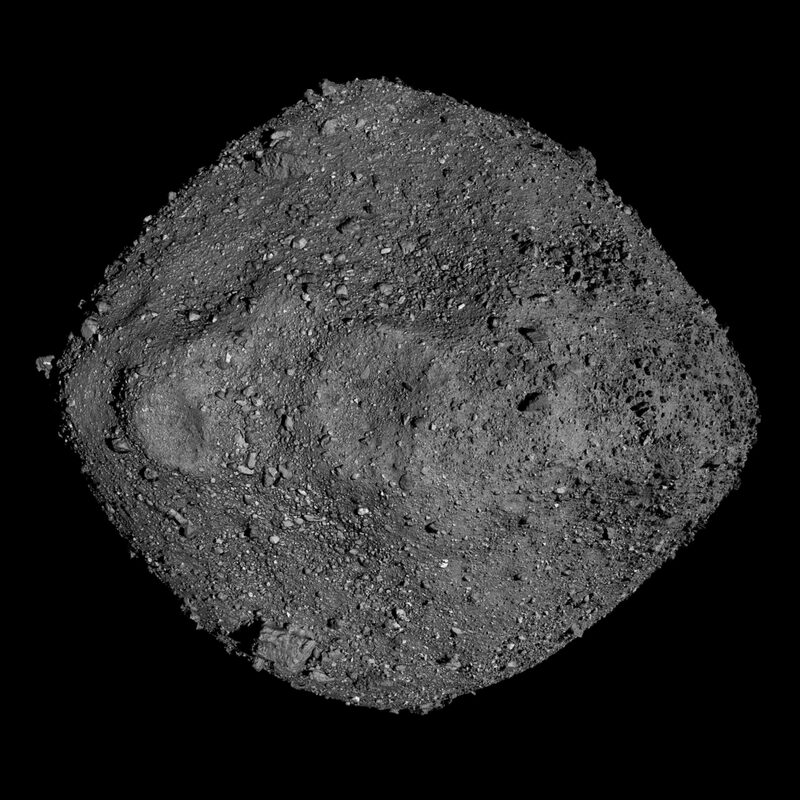
The reason scientists are scrambling to be there is that Earth's gravity will not leave Apophis unchanged. As the asteroid skims past, the tidal pull of our planet may tug at it — potentially triggering landslides on its surface, shifting boulders, altering its spin, or even reshaping it slightly. Watching that happen is a once-free experiment in how a real asteroid responds to external forces, exactly the kind of knowledge needed to deflect a genuinely dangerous one someday. So two missions are converging on it. NASA's OSIRIS-APEX — the spacecraft formerly known as OSIRIS-REx, which already returned a sample from the asteroid Bennu — is on a trajectory to chase Apophis, arriving shortly after the flyby for an 18-month investigation of how the encounter changed it. The European Space Agency, meanwhile, is developing a mission called Ramses, intended to reach Apophis before the flyby, capturing the crucial "before" picture so the "after" can be measured against it.
The combination is the prize. One spacecraft arriving early and one already in pursuit means scientists could get a detailed before-and-after portrait of an asteroid being kneaded by a planet's gravity in real time — its shape, spin, internal structure, density, and cohesion, all the properties that determine how an asteroid would respond if humanity ever had to push one off a collision course. These are not abstract questions. The strategy of deflecting a hazardous asteroid by ramming it, tested by NASA's DART mission in 2022, depends entirely on knowing how the target is put together, and Apophis offers a chance to study those properties on a far larger body than DART's small moonlet.
For the public, 2029 will be a spectacle — a bright point of light gliding overhead, a visceral reminder that the solar system is a dynamic place and that Earth shares its neighbourhood with moving objects. For scientists, it is a deadline. The flyby will happen on schedule whether or not the spacecraft are ready, which is why the planning is already well under way years in advance. Apophis is coming, harmlessly, and the field of planetary defense intends to make the most of the visit.
