
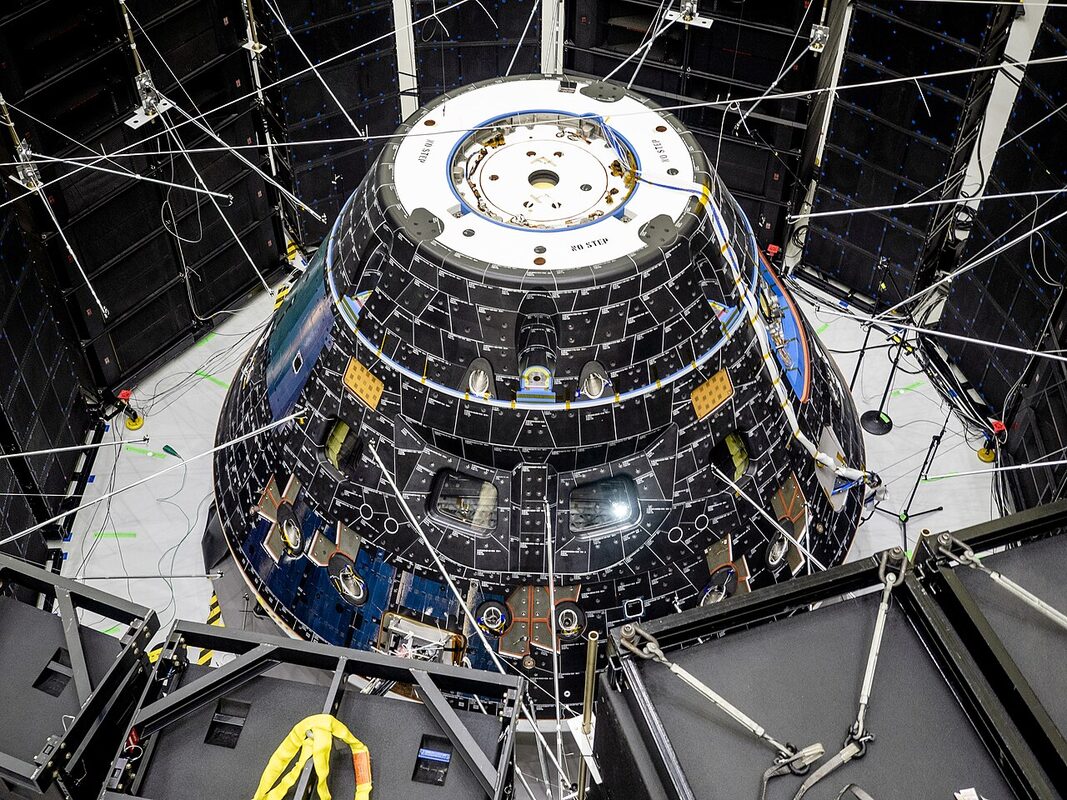
NASA introduced the four astronauts of its Artemis III mission on June 9 at Johnson Space Center in Houston, ending months of speculation about who would fly one of the program's pivotal test flights. The crew: Randy Bresnik of NASA as commander, Luca Parmitano of the European Space Agency as pilot, and NASA's Andre Douglas and Frank Rubio as mission specialists. NASA called the flight "one of the most complex missions in history" — a description that has more to do with what the crew will attempt than where they will go.
An experienced crew, and a European first
The most striking thing about the roster is its depth of flight experience. Frank Rubio holds the American record for the longest single spaceflight — 371 consecutive days aboard the International Space Station, an endurance run that began as a six-month assignment and stretched past a year after a coolant leak disabled his ride home. Luca Parmitano is a veteran of two long-duration station missions and a former commander of the ISS, an Italian Air Force test pilot who once survived water pooling inside his helmet during a spacewalk. Randy Bresnik has flown twice before, on a space shuttle assembly mission and a station expedition he commanded. This is not a crew of newcomers being eased into a gentle flight; it is a roster built for a demanding one.
Parmitano's selection carries particular weight. He is the first European Space Agency astronaut assigned to a crewed Artemis flight — Artemis II carried a Canadian, Jeremy Hansen, but no European — and naming him as pilot, the mission's second-in-command, is a concrete signal of how international the return to the Moon has become. Europe builds the service module that powers NASA's Orion spacecraft; putting a European in the pilot's seat ties the hardware partnership to a human one.
The mission they actually drew
Here is the detail most likely to surprise: Artemis III, long imagined as the flight that would put boots back on the Moon, is not a landing. The crew will launch atop NASA's Space Launch System rocket inside the Orion capsule and remain in the vicinity of Earth, where their central task is to rendezvous and dock Orion with one or both of the commercial lunar landers being developed by SpaceX and Blue Origin. It is, in effect, a full-dress rehearsal of the single maneuver a landing depends on — joining two separately launched crewed vehicles in space — performed before anyone trusts that maneuver to precede a descent to the surface.
The reason for the change is sequence, not timidity. A crewed landing needs a lander that has proven it can launch, refuel in orbit, and carry astronauts down and back — and the landers are the long pole in the schedule. Rather than let the entire program wait on that hardware, NASA split the difference: fly the crew, prove the docking, and reserve the first surface landing for Artemis IV, now targeted near the lunar south pole in 2028. Artemis III is targeted for 2027. Its success is what unlocks the landing that follows.
Where this sits in the program
The announcement lands on a foundation that is, for once, more than paper. Artemis II already flew its four-person crew around the Moon and back in April 2026, validating Orion and the SLS rocket with people aboard for the first time. Artemis III inherits that confidence and adds the next untested link in the chain. Each mission is a deliberate step: Artemis II proved the ride; Artemis III proves the docking; Artemis IV attempts the landing. Naming a crew years in advance is itself a statement — it commits four people to years of training and signals NASA's confidence that the flight will happen on a horizon worth preparing for.
Plenty about the broader program remains uncertain. The commercial landers are wrestling with their flagship rockets, the agency's science budget faces repeated threats, and multi-administration timelines have moved Artemis dates before. But the crew is now real, the mission is defined, and the people who will fly it have names and faces. Bresnik, Parmitano, Douglas, and Rubio will spend the next stretch of years rehearsing a rendezvous in orbit that, if it goes well, clears the way for the first human footprints on the Moon in more than half a century. The landing is still Artemis IV's to make. But the road to it just got a crew.
