
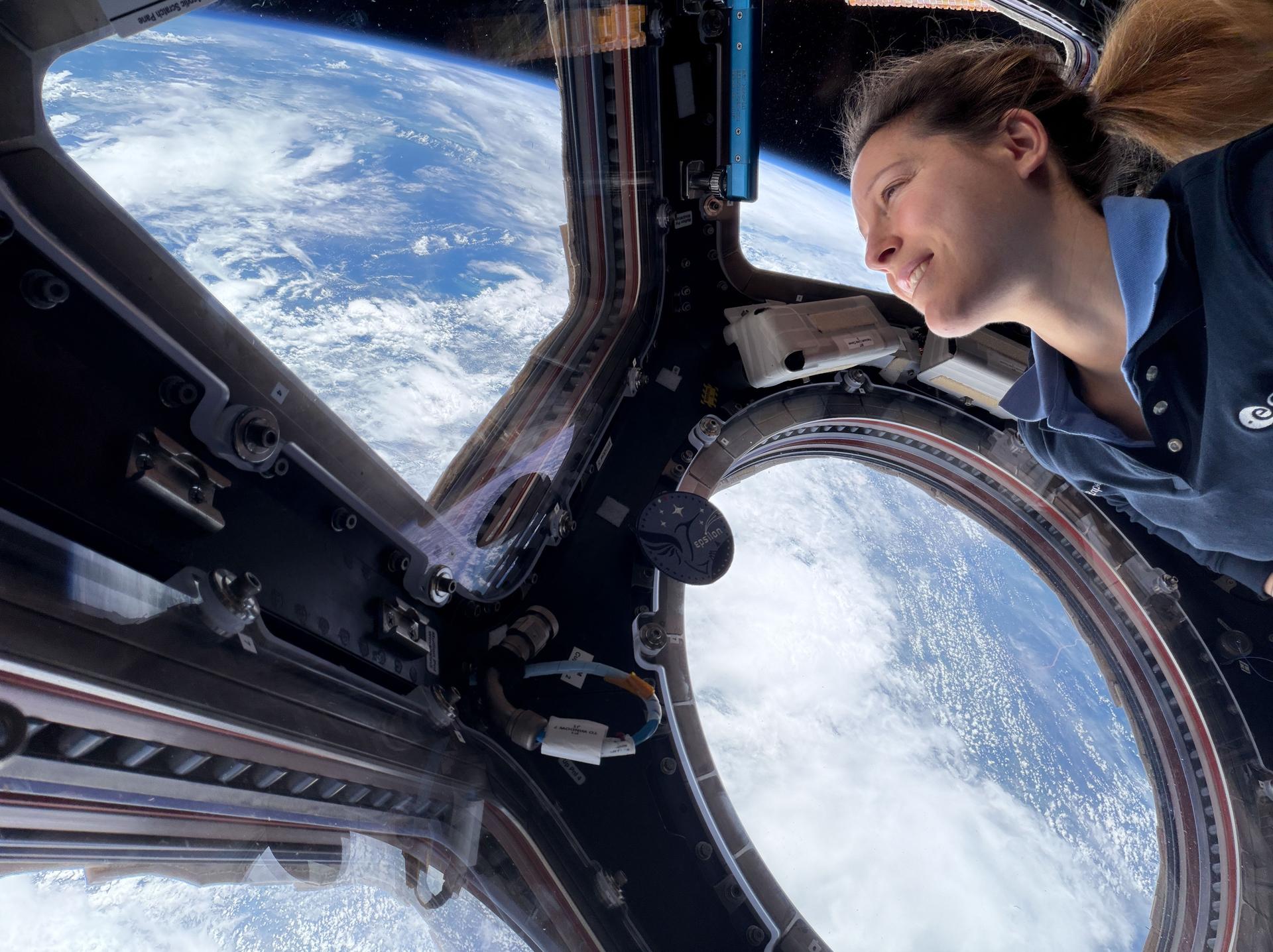
Most ESA Council meetings make little noise outside the agency. The 350th one, held at ESA headquarters in Paris on October 21 and 22, mattered more than most. Delegates used it to prepare the Intermediate Ministerial Meeting in Rome on December 15, which ESA calls IMM26. On the agenda was a proposal from Director General Josef Aschbacher titled "Europe's Future in Space Exploration." Four days later, Euronews reported the figure that may decide its fate: about EUR 10 billion over ten years for a European system to carry astronauts to space and back.
ESA has not confirmed that number in its own published outcome of the meeting. It is still the clearest sign yet of what ministers may be asked to back.
What the Council actually did
ESA's press release on the meeting is careful. It says the Council "advanced preparations" for IMM26 and for the road to the next full ministerial Council, CM28. It then describes the Director General's proposal as a scalable path in low Earth orbit, on the Moon and towards Mars. The path would combine greater European autonomy with international cooperation through what ESA calls a "realistic and financially sustainable approach."
The wording reflects how ESA plans to move forward. ESA presents IMM26 as a key step towards the programme and financial decisions at CM28, while enabling early preparatory activities within existing financial envelopes. In other words, Rome looks like a political checkpoint. Ministers can signal which direction they favour and approve some early groundwork, but the programme and financial decisions are slated for CM28.
The Brussels Times, in its October 23 summary of the release, picked up on the same restraint and headlined the "realistic" framing. Agencies about to ask governments for a lot of money often talk this way. They offer a plan that can grow or shrink depending on what finance ministers will pay for.
The EUR 10 billion question
According to Euronews, Aschbacher's proposal compares two ways forward over the same ten-year period:
- Build: about EUR 10 billion for a European system to carry astronauts to space and back.
- Buy: about EUR 5 billion to keep purchasing those services from foreign providers.
Seen that way, autonomy costs roughly twice as much as dependence. Euronews describes these as projections, not funds already allocated. It also notes that the International Space Station is due to end operations by 2030. When the station retires, the arrangements that have given European astronauts regular access to orbit are likely to change. Whatever replaces them will be negotiated under new terms, and a partner that cannot fly its own crews may have less leverage in those talks.
A caveat applies. Cosmic Herald was able to review the Euronews report only through a summary, not the full text. The figures above should be read as Euronews's reporting of the proposal, not as numbers ESA has published.
An industrial base that is starting to show up
The proposal is arriving at a busy moment for European launch and spacecraft companies, and Euronews lists several recent milestones:
- Isar Aerospace's Spectrum rocket reached orbit on September 5, 2026, placing five small satellites and an experiment into orbit.
- On September 10, ESA awarded The Exploration Company EUR 760 million for the next phase of the ALADDIN programme, which is developing the Nyx capsule. That total breaks down as EUR 310 million for a demonstration mission and EUR 450 million for two further missions that still have to be confirmed.
- Vega-C launched the FLEX and Sentinel-3C Earth observation satellites in September.
- MaiaSpace is among the European firms running reusable-rocket programmes, and Avio is working on new propulsion and launcher-recovery solutions.
None of these is a crewed vehicle. Together, though, they suggest why a European astronaut programme may sound less far-fetched than it once did. A capsule programme worth three-quarters of a billion euros in its latest phase, a new orbital launcher from a private company, and several reusability efforts amount to an industrial base that a crewed programme could, in principle, build on.
The Brussels subplot
The Council also spent time on something less glamorous: how ESA and the European Union divide up space. ESA's release mentions the first Sherpas meeting of the European Commission's Space Team Europe initiative, the EU's next long-term budget (the Multiannual Financial Framework for 2028-2034), negotiations on the European Competitiveness Fund, the EU Space Act, and the regulation governing EUSPA, the EU's space programme agency. ESA says it is monitoring these discussions for their implications for the governance and implementation of future European space activities, and it wants a "clear and efficient division of responsibilities" that avoids duplication.
That is relevant to the crewed proposal as a matter of inference. ESA and the EU are separate institutions with different member lists and different funding rules. A ten-year crewed programme would need money from ESA member states, and possibly from EU instruments too. Which body leads, which one pays, and who controls what gets decided could shape the programme as much as any engineering choice.
New faces at the top
The Council also approved two directorate appointments, both starting January 1, 2027. Andrzej Banasiak becomes Director of Commercialisation and Industry Partnership, and Nicolaus Hanowski becomes Director of Space Operations. The commercialisation post in particular could sit close to any plan that relies on companies like the ones listed above, though ESA's release does not say so.
Why It Matters
For decades, European astronauts have reached orbit on other countries' vehicles, and the ISS has been the shared destination. Its planned retirement by 2030 changes that picture. Europe can pay less, about EUR 5 billion over a decade by Euronews's account, and stay a customer. Or it can pay about twice that and develop its own capability, with more control over its schedule and a stronger hand in negotiations.
The Rome meeting on December 15 is not where the programme and financial decisions are expected. ESA has framed IMM26 as a step towards those decisions at CM28. Rome will show whether member states are willing to start down that road, beginning with preparatory work under existing financial envelopes. Watch the wording ministers agree to. Phrases like "realistic," "scalable," and "financially sustainable" give governments room to commit cautiously, while keeping the larger question open for CM28.
