
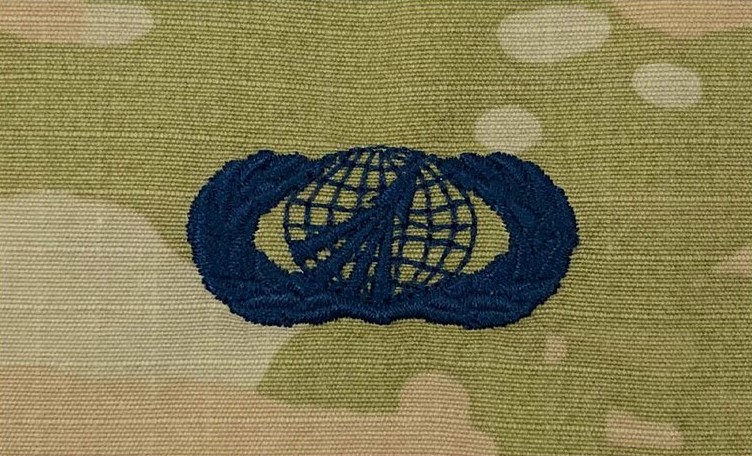
When the United States Space Force was established in December 2019 as the sixth branch of the US military, the announcement was met with a mixture of genuine strategic interest and late-night comedy. The name sounded science fictional. The logo bore an uncomfortable resemblance to Star Trek's Starfleet insignia. The jokes wrote themselves. But the laughter missed the point entirely, and three years later the strategic logic behind the Space Force has become harder to dismiss as the role of satellites in warfare has been demonstrated with clarity in Ukraine, where Russian and Ukrainian forces have contested satellite communications, GPS jamming, and reconnaissance capabilities from the first days of the conflict.
The Space Force did not spring from nothing. It was reorganized primarily from Air Force Space Command, which had been operating military satellites, launch ranges, and space surveillance systems since 1982. What changed with the new branch is organizational priority and budget autonomy: space is no longer a support function within an air warfare service, but a domain with its own leadership, doctrine, and dedicated personnel structure. The Guardians, as Space Force personnel are called, currently number approximately 9,700 — the smallest US military branch by a significant margin, but one managing assets whose value exceeds that of most entire national militaries.
What those assets actually do
The most consequential Space Force mission is one that most people use every day without thinking about it: the Global Positioning System. The GPS constellation — 31 operational satellites managed by Space Force's 2nd Space Operations Squadron at Schriever Space Force Base in Colorado — provides the positioning, navigation, and timing signals that underpin not just consumer navigation but military precision weapons, financial transaction timestamps, air traffic control, and the synchronization of power grid operations. Degrading or destroying GPS would not just complicate driving directions. It would destabilize financial systems, disrupt aviation, and degrade the precision strike capability that the US military has built its operational doctrine around for three decades.
The Space Force's missile warning mission is equally critical and less visible. Satellites in geosynchronous orbit operated by the Space Force's Next Generation Overhead Persistent Infrared (Next Gen OPIR) program and its predecessors detect the heat signatures of ballistic missile launches within seconds of ignition. These satellites are the first sensor in the nuclear warning chain: their data flows to NORAD and Strategic Command before any ground-based radar can detect an incoming missile. The warning time they provide — potentially 25 to 30 minutes for an intercontinental ballistic missile — is the margin between a coordinated response and catastrophe.
Contested space: what China and Russia are building
The strategic reason for elevating space to its own military branch is that the United States is no longer the only country with the capability to threaten satellites. China has demonstrated a direct-ascent anti-satellite missile capable of reaching satellites in low Earth orbit — it destroyed one of its own weather satellites in 2007, creating a debris field that is still present in orbit. Russia has tested similar capabilities and has deployed satellites described by US officials as capable of maneuvering close to other satellites in what could be either inspection or attack operations.
Both China and Russia have invested heavily in electronic warfare capabilities designed to jam or spoof GPS signals, to jam satellite communications downlinks, and to blind electro-optical reconnaissance satellites with ground-based lasers. These capabilities do not require destroying a satellite — they can deny its utility without creating a debris field or triggering the escalation that kinetic attacks would produce. Space Force's defensive mission includes monitoring these threats, hardening US satellites against them, and developing alternative positioning and communications capabilities that can operate when GPS and military satellite communications are degraded.
Space domain awareness
The Space Force tracks every object larger than roughly 10 centimeters in orbit — currently about 27,000 objects — using a network of ground-based radars and telescopes called the Space Surveillance Network. This catalog is maintained not just for military purposes but for the safety of all orbital operations: collision warnings from the Space Force's Combined Space Operations Center are used by commercial and civil satellite operators globally. The military interest in this mission is obvious: understanding where every satellite is at all times, which ones are maneuvering, and which new launches are occurring is foundational intelligence for space operations.
As commercial satellite constellations — Starlink, OneWeb, Kuiper — populate low Earth orbit with thousands of additional objects, the computational demands of maintaining this catalog and computing collision probabilities are growing substantially. The Space Force is investing in new ground sensors and software to keep pace.
The quiet infrastructure of modern life
The broader public perception of the Space Force as a punchline reflects a genuine failure of communication about what military space operations actually entail. The branch does not operate space fighters or orbital weapons platforms. It operates satellites, ground stations, launch ranges, and surveillance networks that make the rest of the military's precision operations possible — and that the civilian economy has become deeply dependent on without most people understanding the dependency. When those capabilities are tested, as they will be in any future great-power conflict, the Space Force's obscurity will become very difficult to maintain.
