
The International Space Station's docking ports are in steady use this month. On the morning of Oct. 7, Crew-12's Dragon undocked from the station. That frees a spot for a cargo Dragon that NASA and SpaceX plan to launch less than a week later, and its most important cargo is a set of solar arrays.
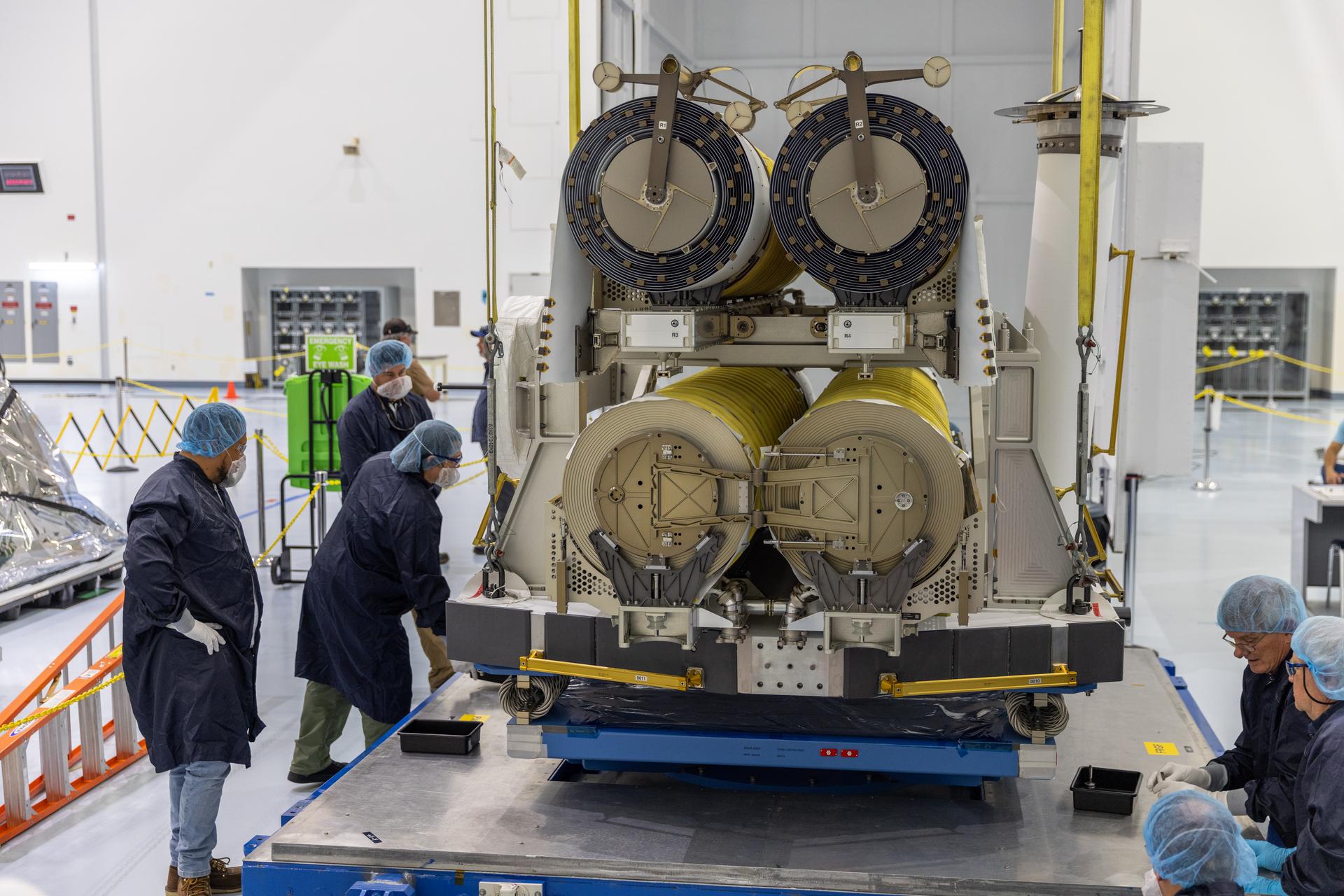
NASA is targeting 6:33 a.m. EDT on Tuesday, Oct. 13 for SpaceX's 35th commercial resupply mission (CRS-35) for the agency. A Falcon 9 will launch the Dragon spacecraft from Space Launch Complex 40 at Cape Canaveral Space Force Station. Dragon will carry more than 6,300 pounds of cargo, and the agency says that includes the final ISS Roll-Out Solar Arrays.
Clearing the port
Dragon is headed for the space-facing port of the Harmony module, and until this week Crew-12 was using it. According to NASA's station blog, the Crew-12 Dragon undocked from Harmony at 8:05 a.m. EDT on Oct. 7. NASA's return coverage resumes at 10:20 a.m. on Oct. 8, and splashdown off the California coast is expected around 11:34 a.m.
Crew-12 consisted of NASA astronauts Jessica Meir and Jack Hathaway, ESA astronaut Sophie Adenot and Roscosmos cosmonaut Andrey Fedyaev. Spaceflight Now reported that their departure frees Harmony's space-facing port for the cargo Dragon arriving after the Oct. 13 launch. NASA's Oct. 8 briefing at 1:15 p.m. covers both events: Crew-12's return and the upcoming resupply flight.
If the launch goes on schedule, Dragon will dock on its own at about 11 a.m. on Thursday, Oct. 15. It is scheduled to stay at the station until mid-November and then return to a splashdown off California.
The last of the IROSAs
The solar arrays get top billing on this flight, and NASA's mission overview explains the reason. According to the agency, the final pair of IROSAs that will be installed on the station completes the augmentation of its power system to support critical operations, including its safe and controlled deorbit.
That gives the hardware a second meaning. The arrays are part of the station's power system for day-to-day operations, and NASA also connects this final upgrade to the station's planned end of life.
Getting the arrays to the station is only the first step. Spaceflight Now reports that the final two IROSA sets will be installed during spacewalks in late October and early November. That leaves roughly two weeks between the planned Oct. 15 docking and the first of those excursions.
What else is in the trunk and cabin
Much of the remaining manifest is science, and a lot of it is biomedical. NASA lists:
- Hardware to manufacture artificial retinas in orbit.
- 3D heart tissue models.
- Brain organoids for research into Alzheimer's disease, Parkinson's disease and multiple sclerosis.
- Glass-formation materials for materials-science work.
A mission like this also carries routine maintenance and logistics gear. According to NASA's overview, this flight includes:
- A Collapsible Contingency Urinal and supporting hardware, described as a demonstration and test unit supporting NASA's Artemis III mission.
- A toilet dose pump and a toilet pretreat quality sensor.
- A robotic micro-conical tool used for station maintenance and utilization tasks.
- A large foam clamshell that will fly empty to return the failed Canadarm2 joint that astronauts replaced during a June 30 spacewalk.
The clamshell exists for one purpose: bringing the failed joint home. NASA says teams will analyze the joint on the ground after its return to Earth.
The trip home matters too
When Dragon returns in mid-November, NASA says it will bring back the failed Canadarm2 joint for analysis and refurbishment, a spacesuit for ground refurbishment, a fluid- and pressure-control pump assembly from the urine processor, and a filtration unit for the water processor assembly. Returning hardware like this puts it in the hands of teams on the ground, who can examine or refurbish it.
Why It Matters
CRS-35 is part of a busy stretch for the station, and the IROSAs make it more than a routine supply run. NASA describes the final pair of arrays as completing the augmentation of the station's power system, which supports critical operations including its safe and controlled deorbit. The path from launch to docking to the spacewalks in late October and early November is therefore the last stretch of that upgrade.
The flight also shows how much traffic the station handles. Spaceflight Now notes that a Northrop Grumman cargo ship is expected in December and Russian Progress freighters in November and February. Crew-12 had to leave Harmony's space-facing port before this Dragon could dock there.
Finally, the mix of retinal manufacturing hardware, brain organoids for neurodegenerative disease research and an Artemis III test item shows that the ISS is still hosting research and hardware testing tied to lunar missions, even as NASA completes the station's power upgrade.
