
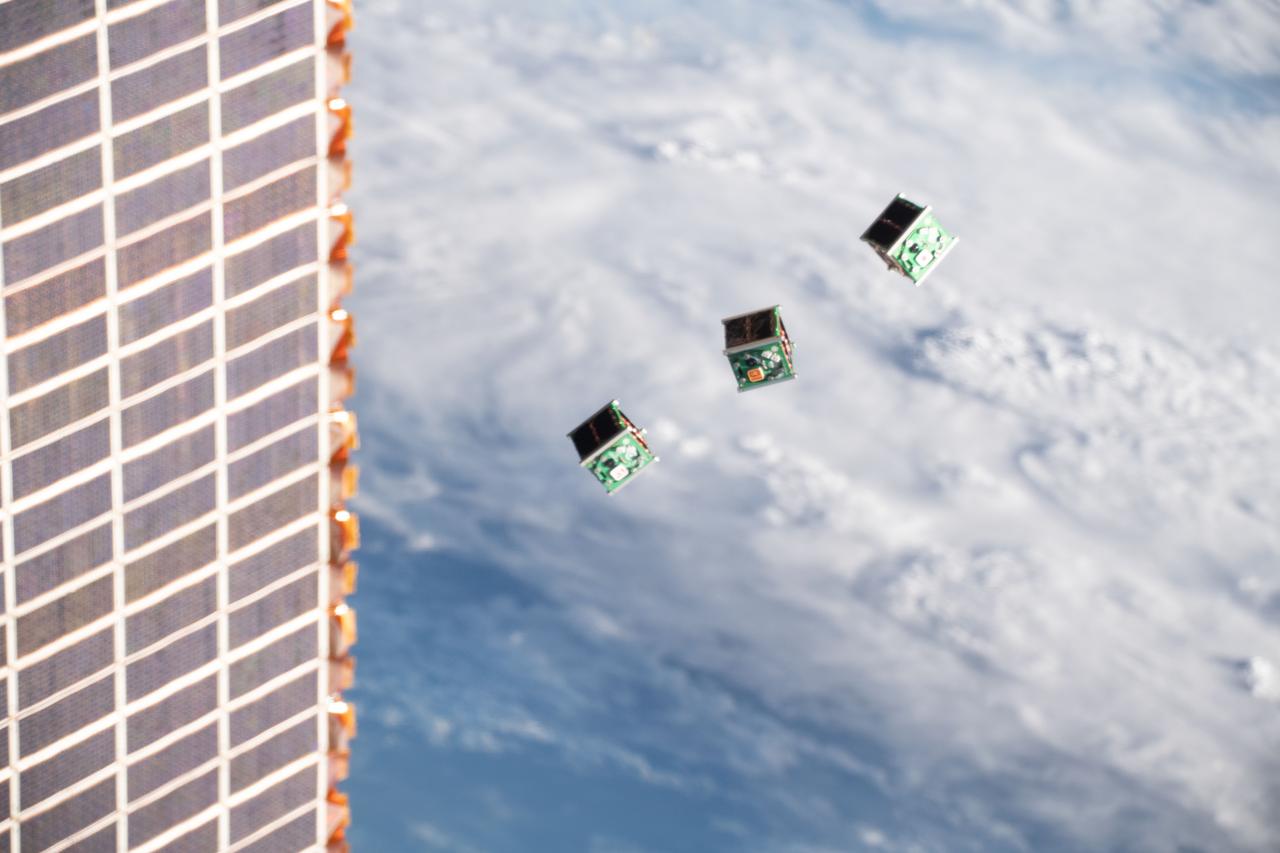
The U.S. Space Force has moved quickly to get its new military communications layer into orbit. In a Nov. 21 release, the service said three successful launches had put the first satellites of the Space Data Network Backbone, or SDN-Backbone, into orbit. It said the constellation should provide regional capability by the end of the year and global support next year. According to Air & Space Forces Magazine, which reported the release, the announcement confirmed that the network will be government-owned and government-controlled.
The release itself was short on detail, so the satellite count comes from launch trackers. They show Falcon 9 flights from Vandenberg Space Force Base in California on Nov. 6, Nov. 11 and Nov. 20. Space-Track.org, a public database maintained by the Space Force, catalogued 23 satellites from each flight, which comes to 69 spacecraft in about two weeks.
The fast deployment comes as Congress is pressing the program on competition. In its fiscal 2027 defense bill, the Senate Appropriations Committee adds billions of dollars for the space data network. Draft language reported by the trade press also tells the Space Force to maintain multiple vendors rather than rely on sole-source awards.
What went up, and when
SpaceX is building satellites for the program under a $2.29 billion contract signed in May, Air & Space Forces Magazine reported. The Federal Aviation Administration listed the payloads on the three November launches as R-4, R-5 and R-6. Earlier Space Force launches with payloads marked R-1, R-2 and R-3 took place on Aug. 15, Sept. 10 and Sept. 26. The Nov. 21 announcement does not say whether the November launches were the first for the backbone, and the service has said little publicly about what the earlier launches carried.
The most recent flight drew wider attention. Space.com reported that a Falcon 9 lifted off from Vandenberg at 11:20 p.m. EST on Nov. 20 (0420 GMT on Nov. 21) on a classified Space Force mission called USSF-317. The first-stage booster, B1100, was making its 11th launch and landing, and touched down on the drone ship Of Course I Still Love You. Space.com counted it as the 121st Falcon 9 launch of 2026 and the third mission SpaceX has launched for the Space Force in November. Because the mission is classified, the payload was not disclosed. Some experts told Space.com they think it may have carried a batch of Starshield satellites, SpaceX's militarized line, for the Space Force's Space Based Sensing and Targeting portfolio.
The date and launch site match the third launch that trackers count toward the backbone, although Space.com did not link USSF-317 to the SDN-Backbone. Air & Space Forces Magazine noted that it is unclear whether Starshield satellites will serve the backbone, and that Space Systems Command has said only that the program will "leverage commercially derived technologies and platforms." Neither the Space Force nor SpaceX has publicly described what the satellites look like or what they can do.
What the backbone is for
The Space Force has described the backbone as the "foundational data backhaul layer" for the Space Data Network, providing "high-throughput, low-latency" connectivity. The network is meant to give U.S. forces a new way to move data securely around the globe, and to combine military and commercial satellites. It merges two requirements once viewed as separate: the Space Development Agency's Transport Layer, conceived for secure tactical communications, and MILNET, envisioned to move large data streams.
The government-ownership point is significant. A system the government owns and controls gives the military more direct say over how the network is set up, secured and prioritized. The likely tradeoff, though this is an inference rather than something the service has stated, is that the Space Force carries more of the cost of building it and depends on whoever builds the hardware.
The money, and the catch
The Senate is willing to pay for a lot more of it. A bill summary from the Senate Appropriations Committee describes the fiscal 2027 defense bill as giving the Space Force $13.8 billion for procurement and $32.3 billion for research and development. That includes an increase of $3.3 billion "for the continued deployment of the space data network (SDN)." The bill also adds $2 billion for continued development of a space-based airborne moving target indicator capability, or AMTI, a separate effort to track aircraft from orbit.
The money comes with a demand. Air & Space Forces Magazine reported that a draft appropriations bill released this month said the Space Force appeared to "abandon meaningful competition in favor of sole-source awards" for the SDN-Backbone and Air Moving Target Indication programs, and directed service officials "to maintain multiple vendors" for both. The public bill summary that Cosmic Herald reviewed confirms the funding increases but does not include that competition language, so the wording on vendors comes from the trade press account of the draft.
Space Force officials have insisted that competition will remain a key part of the Space Data Network, Air & Space Forces Magazine reported, and the service added five other vendors to the project through small initial contracts in August.
The criticism is easy to understand. SpaceX holds the $2.29 billion backbone contract and flies the satellites on its own rockets. That gives one company a very large role in a network the Space Force calls government-owned. By pairing more money with a call for more vendors, appropriators appear to be saying they like the pace but do not want the Pentagon dependent on one supplier for a core part of its space communications.
Why It Matters
Putting 69 satellites in orbit across three launches in about two weeks shows how far frequent, reusable launch has changed the Pentagon's options: a constellation can be deployed in weeks instead of years. That speed is the main argument for the approach. If the regional capability arrives by the end of the year as planned, the Space Force will have gone from a May contract award to an operating network in about seven months.
That same speed is what concerns the Senate. The fastest way to build a constellation is to give one company with its own rockets and production line the whole job. The slower, more expensive way is to split the work so the government has alternatives when prices rise or problems appear. Appropriators are asking for some of both: billions more to keep deployment going, plus a requirement to keep multiple vendors. How the Space Force reconciles those two goals, and whether the competition language survives negotiations with the House, will help decide whether the SDN-Backbone becomes a broad government capability or remains mostly a SpaceX system that the government owns.
There is also a transparency question. The launches were tracked, catalogued and counted largely by outside observers working from Space-Track entries and FAA filings, while the Space Force's own announcement offered few specifics. A network that Congress is being asked to fund at $3.3 billion more in one year will probably face pressure for more public detail than the program has released so far.
