
The U.S. Space Force has a growing collection of ground-based electronic warfare hardware, and it wants one piece of software to run it. Space Systems Command and Combat Forces Command have awarded three prototype agreements for the Space Electromagnetic Warfare Operating Location, or SEWOL. The service describes it as a single cloud-native command-and-control (C2) application, meant to replace and better align current Space EW tools, with a unified Common Operating Picture built to orchestrate hundreds of remote electromagnetic warfare systems.
The three companies are Anduril Industries, Booz Allen Hamilton and Peerless Technologies Corporation. SpaceNews reported the selection on Nov. 13, describing the work as a competition to build a cloud-based command system for the service's network of electronic warfare weapons. The details below come mostly from Space Systems Command's own announcement. The .mil site returned a 403 error when we tried to load it, so we read the release through a Wayback Machine snapshot.
What is actually being bought?
At this stage, nothing operational. This is Phase I: a three-month competitive prototyping phase valued at approximately $10 million, awarded through the Space Enterprise Consortium's Other Transaction Authority (OTA) vehicle. Phase I is part of a $60 million prototype program to modernize the nation's space electromagnetic warfare capabilities, which makes it roughly a sixth of the total.
According to Space Systems Command, each of the three vendors will develop a minimum viable product (MVP), described as a functional prototype of the core SEWOL framework and mission applications, along with a software development kit (SDK). The MVPs will be evaluated in a hands-on environment with government technical experts and operational users. Then the field drops to one: at the end of the three months the service plans a formal down-select to a single vendor, which will go on to build the first operational version of the system. Program manager Maj. Dennis "Nomad" Sieber put it bluntly: "This is not a paper-based competition; we are paying these vendors to build working software."
The SDK requirement is easy to skip past, but it says something. Asking for a development kit alongside the application suggests the Space Force expects other parties, whether other contractors or its own developers, to build on or plug into whatever platform wins. That reading fits the release, in which Col. Bryon McClain says the competitive approach is meant to "break vendor lock" and that common interfaces and Modular Open Systems Approach (MOSA) standardization are part of the design. The release also says the program has pivoted to the Software Acquisition Pathway, which it describes as a move away from traditional single-vendor contracts and toward a competitive "fly-before-you-buy" model.
What would SEWOL control?
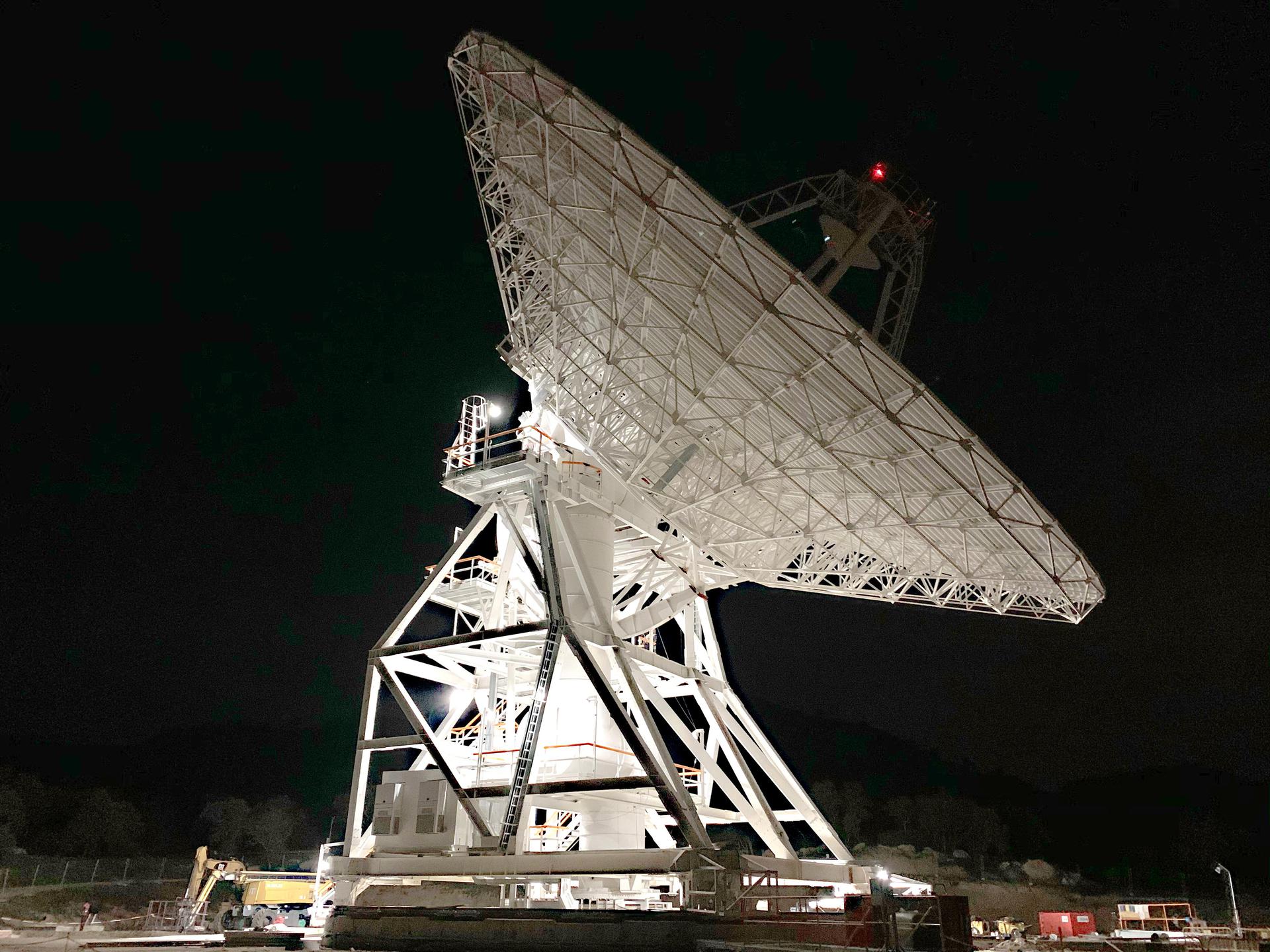
The release does not name specific systems, so any list is our inference from the service's current inventory. One obvious candidate is Meadowlands, a ground-based satellite jamming system made by L3Harris Technologies. Air & Space Forces Magazine describes it as a mobile system that can temporarily detect, identify, deny, disrupt and degrade adversary satellite communications and radars. The magazine reported that Combat Forces Command announced operational acceptance of Meadowlands in June, meaning it can be used in combat missions.
The key word in that description is "temporarily." The effects described are reversible, and nothing in the description suggests anything is destroyed in orbit. This is a kind of warfare built on radio spectrum and ground stations, not on interceptors.
Meadowlands is also not the only system in the inventory. Air & Space Forces Magazine reported that the Space Force's new 1st Electromagnetic Warfare Squadron is the service's first EW unit equipped with two different weapons, Meadowlands and Bounty Hunter, which the magazine describes as a listening post and defensive EW system used to detect, characterize, geolocate and report electromagnetic interference and signal jamming. One system is built to attack and the other to defend, and a single squadron operates both. The squadron's personnel are spread across five locations. Multiply that across sites and units and you can see why Space Systems Command wants a single application to manage "hundreds of remote EW systems."
Why one app instead of many?
The release does not lay out the current state of EW command and control in detail, so we can only infer the problem from what the service is asking for. A "unified Common Operating Picture" is military shorthand for a single shared view of the battlespace, in this case the electromagnetic environment. Requiring one cloud-native application to provide that view and to orchestrate the systems implies that today's arrangement is more fragmented than the service wants. The release says the application will replace and better align current Space EW tools, and that the goal is "drastically reducing crew workload and accelerating decision-making."
The word "remote" matters here too. Orchestrating hundreds of systems from a single operating location suggests operators would not need to be physically present at each jammer. That is what makes cloud-native software attractive: tasking and monitoring can, in principle, be centralized while the hardware stays spread out.
The release quotes three officials on the effort: Col. Bryon McClain, acting Portfolio Acquisition Executive for Space Combat Power; Col. Angelo Fernandez, commander of Combat Forces Command's Mission Delta 3 (Space Electromagnetic Warfare); and Maj. Sieber, the program manager. Fernandez said the move to an agile software pathway puts Guardians "directly in the driver's seat alongside developers." That both an acquisition executive and an operational Mission Delta commander are on the record suggests the project is meant to serve both the people buying the system and the people who will use it.
The competitors
The three-way field is an interesting mix. Anduril Industries is a defense technology company, Booz Allen Hamilton is a long-established government consulting and technology contractor, and Peerless Technologies Corporation is the third vendor. Neither Space Systems Command nor the portion of SpaceNews' report we could read explained what each company is proposing. With MVPs due at the end of the three-month phase, the differences should show up quickly once the service evaluates them.
Why It Matters
Public discussion of "space weapons" often centers on dramatic hardware: anti-satellite missiles, co-orbital interceptors, lasers. The systems described in this story look different. They are ground-based systems such as the Meadowlands jammer and the Bounty Hunter listening post. SEWOL is a bet that how well those systems work depends as much on the software coordinating them as on the radios themselves.
The way the contract is structured also matters. A short competitive phase, a required SDK, a down-select and a move to the Software Acquisition Pathway are, in the service's own words, a deliberate step away from traditional single-vendor contracts. At $10 million for Phase I and $60 million for the overall prototype program, SEWOL is small by space-program standards. If it works, though, it could become the main command layer for the Space Force's electromagnetic warfare fleet, which would make the vendor picked at the down-select far more important than the dollar figure suggests.
Sources
- Space Force to Tackle Electromagnetic Threats with New Unified Cloud C2 Initiative (Space Systems Command press release, via Wayback Machine snapshot)
- Space Force picks three firms to develop cloud software to control electronic jammer fleet (SpaceNews, Nov. 13, 2026)
- New Space Force EW Unit Pairs Multiple Weapon Systems in a First (Air & Space Forces Magazine)
