
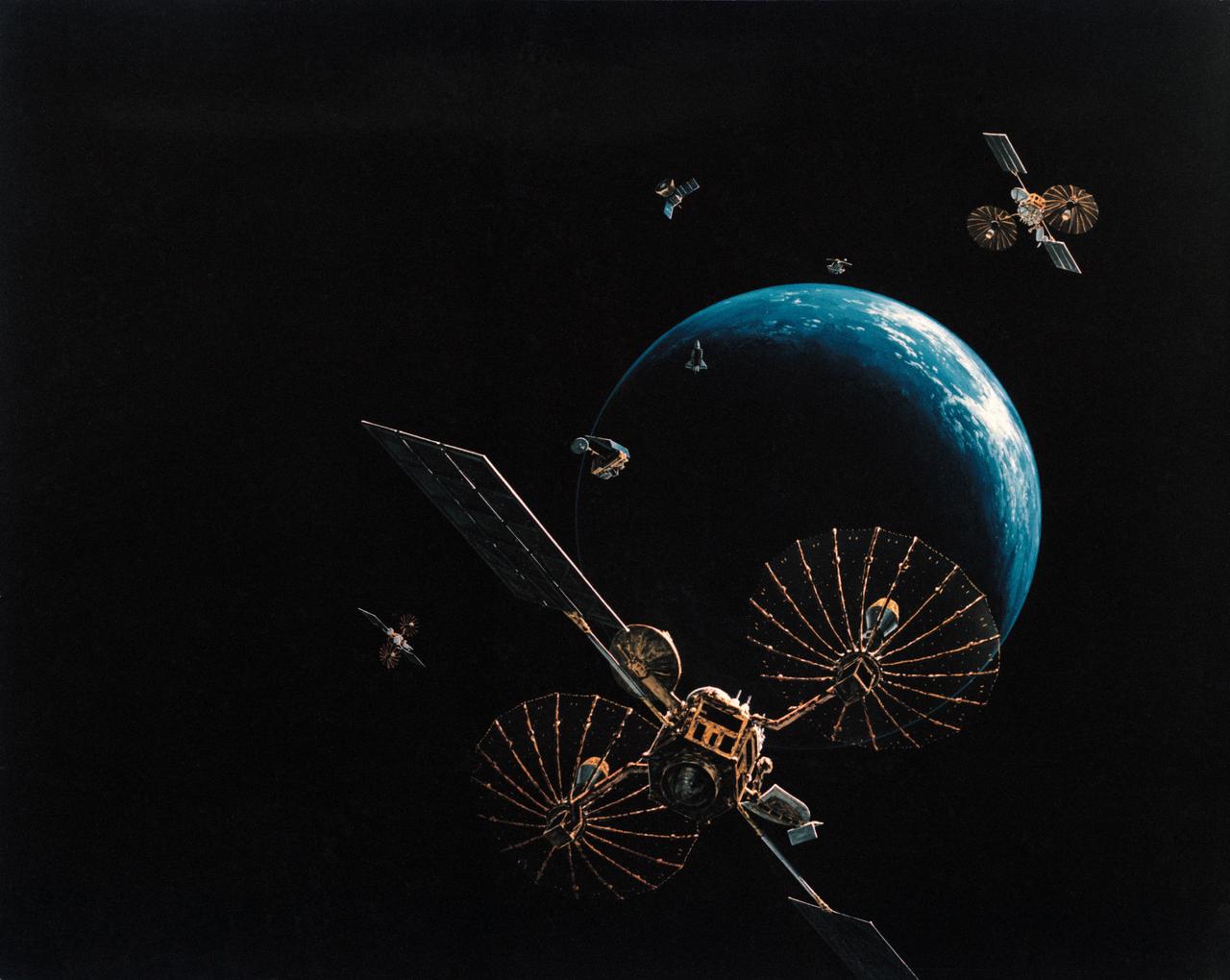
The Defense Intelligence Agency's newest unclassified space-threat assessment is direct about Russian nuclear ambitions in orbit. In a section titled "Russia Developing Nuclear Weapon for Space," the agency says Russia is developing a satellite designed to carry a nuclear weapon, despite its obligation under the 1967 Outer Space Treaty.
The report, Challenges to Security in Space 2026: Congestion, Competition, and Cooperation, uses information through July 2026 and was released in October. It got wider attention after Space.com's Nov. 20 coverage. This is the third edition of the assessment. It focuses on China, Russia, Iran and North Korea, and looks at what is happening in Earth orbit and beyond, including cislunar space, the region between Earth and the Moon.
What the DIA actually says
The core claim is short, and the consequences it describes are large. The DIA says such a capability could cause the "rapid and sudden loss or degradation of thousands of satellites" operated by countries and companies around the world, along with the communications, navigation, scientific, meteorological, commercial and national security services they provide. The damage would not end with the blast. A nuclear detonation in space would leave lingering radiation belts that could persist for years and damage satellites that were initially only temporarily disrupted.
Space.com, summarizing the report, adds that a nuclear detonation in space could be tailored to affect satellites in most orbits: low Earth orbit, home to commercial and reconnaissance satellites, geosynchronous orbit, which carries critical communications, and medium Earth orbit, where navigation and timing satellites sit. In plain terms, almost no orbital regime would be out of reach of this kind of weapon.
That is why a nuclear device is a different kind of threat from a kinetic anti-satellite missile. The report notes that ASAT missiles can produce large amounts of debris that remains in orbit for decades or even centuries, but a nuclear burst would also reach satellites far beyond a single target, regardless of whose they are.
The Cosmos 2553 thread
The report points to Cosmos 2553, which Russia launched in February 2022 into what the DIA describes as an unusual and isolated orbit not used by any other spacecraft. Moscow said at the time that the satellite was testing the effects of space radiation on electronic systems. Defence Industry Europe, reporting on the assessment on Oct. 31, confirmed both the DIA's language on the nuclear satellite and the Cosmos 2553 detail.
The report's account doesn't say Cosmos 2553 carries a weapon. It does put the satellite in the same section as the nuclear program. An isolated orbit and a stated focus on radiation effects is a combination analysts will keep looking at.
The diplomatic backdrop
The DIA also cites the December 2024 UN General Assembly vote on a resolution on weapons of mass destruction in outer space. It passed 167 to 4, with six abstentions. The four no votes came from Iran, Russia, North Korea and Syria.
The Outer Space Treaty prohibits placing objects carrying nuclear weapons or other weapons of mass destruction into orbit around Earth. The DIA's assessment amounts to saying that Russia is developing a satellite designed to carry a nuclear weapon despite that obligation.
Why It Matters
Peter Garretson of the American Foreign Policy Council told Space.com that the most significant positive change from earlier DIA appraisals is the explicit assessment that Russia is developing a satellite designed to carry a nuclear weapon. He also flagged what he called a consequential omission: the disappearance of the 2022 report's treatment of research competition, surveillance beyond geosynchronous orbit and the potential military use of deep space.
The report also notes that cheaper, smaller and simpler satellites and expanding commercial launch services are driving the rapid integration of commercial space alternatives to support national security. A weapon that could disable thousands of satellites at once therefore threatens services that both civilian economies and national security users depend on.
Russia's view of the problem points the same way. According to Defence Industry Europe's reading of the DIA assessment, Moscow sees American dependence on satellites for precision strikes and military operations abroad as a vulnerability it could exploit during a conflict. Russian doctrine calls for a range of ways to attack those systems, from temporary jamming and sensor blinding to the destruction of spacecraft and ground infrastructure. The war in Ukraine reinforced Russia's interest in disrupting commercial satellite services, and Moscow has designated terminals and satellites supporting Ukraine as legitimate military targets.
Taken together, Russian doctrine treats American satellite dependence as a weak point, the war has made commercial space an explicit target, and the DIA now says Russia is developing a satellite designed to carry a nuclear weapon.
Not just Russia
The nuclear finding gets the headlines, but the report covers more than one country. Its up-front finding is that China, Russia, Iran and North Korea are developing, testing, deploying and using space capabilities in a way that threatens the security of all space systems. The counterspace threats it describes include jamming, cyberattacks, directed-energy weapons and anti-satellite missiles. China and Russia, the DIA says, are developing "a formidable spectrum" of offensive capabilities, from kinetic destruction to sophisticated jamming and cyber operations.
The cislunar material looks further ahead. China has stated a goal of developing a cislunar space economy by 2045. The report says China may be exploring military applications from cislunar space, and that PRC officials have discussed pursuing military capabilities there, even as China portrays its interest as peaceful.
What to watch
An unclassified assessment can only go so far. It states what the U.S. intelligence community is willing to say in public, not necessarily everything it knows. Still, the agency has chosen to say directly that Russia is developing a satellite designed to carry a nuclear weapon. For satellite operators, insurers and the governments that rely on both, the risk of a sudden, wide-ranging loss of satellites is now part of an official U.S. assessment. The DIA's own outlook is that space will almost certainly remain an increasingly competitive and crowded environment, and that growing Chinese, Russian, Iranian and North Korean counterspace capabilities will complicate operations in the coming decade.
Sources
- Challenges to Security in Space 2026: Congestion, Competition, and Cooperation, Defense Intelligence Agency (via Wayback Machine snapshot)
- Russia is developing a nuclear space weapon, US intelligence report finds (Space.com, Nov. 20, 2026)
- Defense Intelligence Agency says Russian nuclear satellite program could threaten thousands of spacecraft (Defence Industry Europe, Oct. 31, 2026)
