
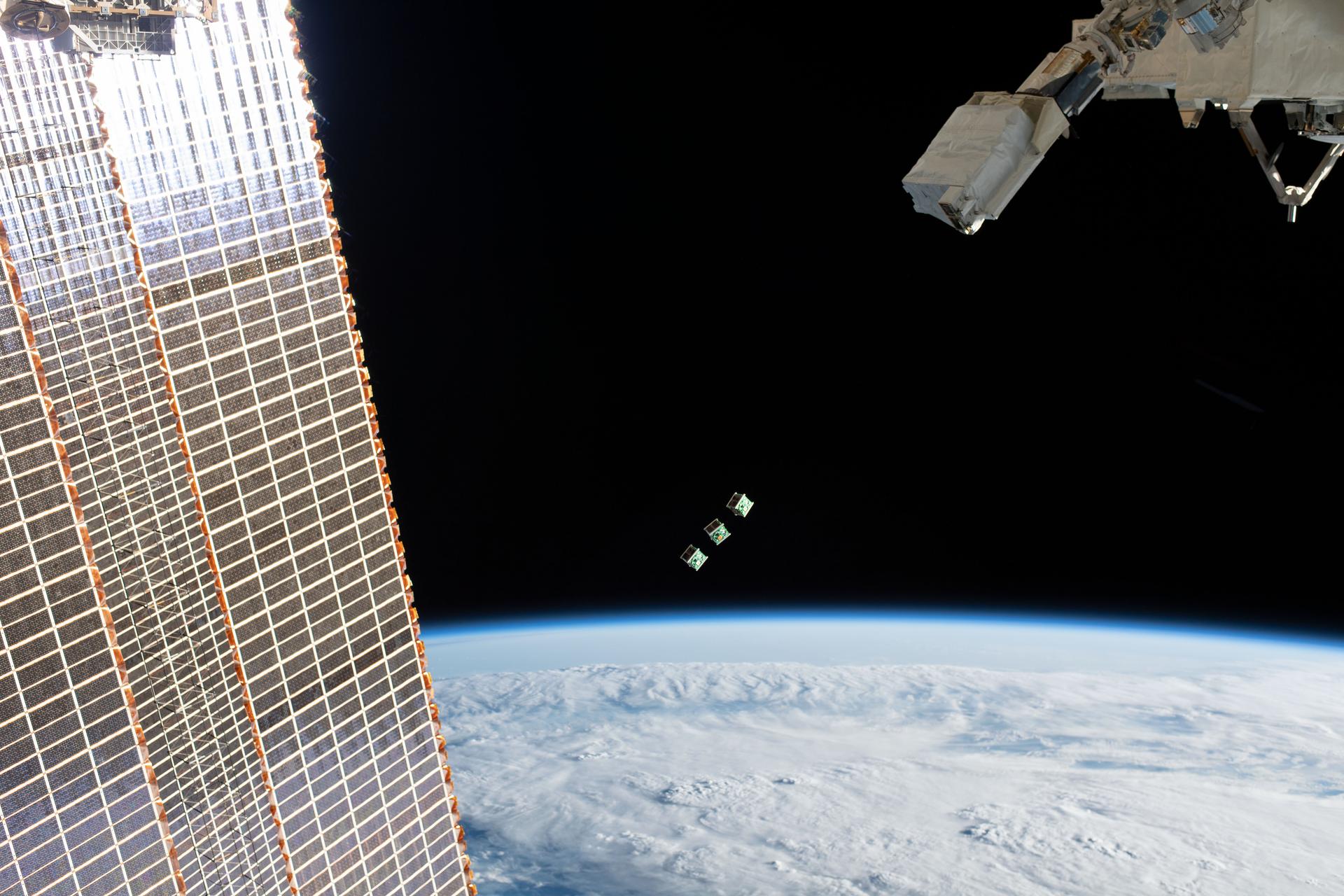
On August 10, 2026, a Japanese H-3 rocket lifted off from Tanegashima Space Center carrying QZS-7, the newest satellite in Japan's Quasi-Zenith Satellite System (QZSS). Tucked inside was a piece of American hardware that had nothing to do with navigation: a space domain awareness sensor built by MIT Lincoln Laboratory, designed to watch geosynchronous orbit — the crowded ring roughly 22,000 miles up where communications and early-warning satellites live — over the Indo-Pacific region.
With that sensor now in orbit, the U.S. Space Force and Japan's National Space Policy Secretariat have completed what Defense News described as the first national security space partnership of its kind between the United States and Japan: the QZSS-Hosted Payload effort, or QZSS-HP. News of the program's completion circulated August 14–17, 2026, as SpaceNews and Defense News published detailed accounts alongside the Space Force's own release.
What Just Launched
QZSS is Japan's answer to a familiar problem: GPS signals from the American constellation can struggle in Japan's mountainous terrain and dense urban canyons. QZSS satellites sit in orbits that keep at least one spacecraft nearly overhead of Japan at all times, supplementing GPS accuracy for civilian and government users.
But QZS-7 also does something the constellation wasn't originally built for. Riding along as a "hosted payload" — a secondary instrument sharing the satellite bus with the primary navigation mission — is a U.S.-owned space domain awareness sensor designed and built by MIT Lincoln Laboratory, hosted aboard a QZS-7 satellite built by Mitsubishi Electric in Kamakura, Japan. It's a sovereign American payload, meaning the U.S. retains ownership and operational control even though it's riding on Japanese hardware, launched on a Japanese rocket, from Japanese soil.
That sensor isn't alone. It's the second half of a pair: the first flew aboard QZS-6 in February 2025. Together, the two form the complete QZSS-Hosted Payload program, with MIT Lincoln Laboratory having designed and built both U.S. payloads.
Why Geosynchronous Orbit, and Why the Indo-Pacific
Geosynchronous orbit is prime real estate. Satellites parked there stay fixed relative to a point on Earth's surface, which is why it's home to communications relays, missile-warning satellites, and weather platforms for multiple nations. It's also far enough away that tracking what's up there, and what's maneuvering near it, is a persistent challenge for space-surveillance operators — one a Pacific-based sensor is well positioned to help address.
Data from the QZS-6 and QZS-7 payloads feeds directly into the U.S. Space Surveillance Network, giving the Space Force near-real-time tracking of objects in geosynchronous orbit from a Pacific-based perch. The payloads are operated by Mission Delta 2, the Space Force's space domain awareness unit under Combat Forces Command, which will use the sensors to identify and track objects in orbit and help operators understand potential threats or opportunities.
"QZSS-HP is a key contributor to help us meet the threat of peer adversaries in space," said Col. Gina Peterson, deputy commander of Mission Delta 2 – Space Domain Awareness, according to SpaceNews' reporting. The phrase "peer adversaries" is standard Space Force shorthand for China and Russia.
A separate Space Force official, Col. Bryon McClain, the service's portfolio acquisition executive for Space Combat Power, said the QZS-7 launch "is a powerful testament to the enduring strength and rapid modernization of the U.S.-Japan alliance," per Defense News' coverage.
How the Partnership Came Together
The arrangement traces back to an agreement signed in December 2020 between the U.S. Space Force and Japan's National Space Policy Secretariat. Hosting a foreign military sensor on a national navigation satellite is not a trivial ask — it requires years of technical integration, security arrangements, and diplomatic sign-off before a single bolt gets tightened. That the first payload didn't fly until February 2025, more than four years after the agreement was signed, reflects the scale of that coordination.
The approach follows a hosted-payload model used elsewhere in allied space programs: rather than launching a dedicated satellite, a partner nation offers spare capacity on a satellite it's already building and launching for its own purposes. Japan gets a functioning QZSS satellite; the U.S. gains a sensor in an orbital neighborhood without funding a standalone launch.
Why It Matters
Space domain awareness — the ability to know what's in orbit, where it is, and what it's doing — has become one of the U.S. military's stated priorities amid what Space Force officials describe as growing threats from "peer adversaries" in orbit. Geosynchronous orbit is particularly hard to watch: it's far from Earth and increasingly home to both civil and military assets that adversaries have an incentive to shadow or disrupt undetected.
The QZSS-HP program takes a different approach to closing that gap: hitching a ride on an ally's existing satellite program rather than building new infrastructure from scratch. As Defense News noted, it's the first national-security space partnership of its kind between the United States and Japan — embedding U.S. sensors on foreign-owned, foreign-launched satellites under a bilateral agreement. With QZS-6 and QZS-7 both operational, the completed two-satellite pair gives Mission Delta 2 sustained, ally-hosted coverage of geosynchronous orbit over the Indo-Pacific.
Sources
- U.S. Space Force and Japan successfully launch U.S. sovereign space domain awareness payload aboard QZS-7 satellite — Space Systems Command Newsroom
- U.S. Space Force adds second surveillance sensor to Japanese constellation — SpaceNews
- US Space Force, Japan launch sensor to bolster space surveillance above Indo-Pacific — Defense News
