
The formation of a satellite industry trade association might sound like routine Washington inside baseball. But when a new group of constellation operators forms and the single largest operator on the planet is conspicuously absent, something more consequential is happening.
A new trade association for non-geostationary satellite orbit (NGSO) operators has launched without SpaceX among its founding members. The group says it remains open to SpaceX joining — but for now the industry's dominant player has stayed out, and that absence says as much about where the commercial satellite industry is headed as the group's stated policy agenda does.
The organization positions itself as an advocate for the cohort of operators competing in the growing NGSO market: companies running broadband, Earth observation, and data relay constellations that orbit below the traditional geostationary arc at 35,786 kilometers. That market has expanded dramatically over the past decade, and so has the regulatory friction. Spectrum allocation, orbital slot coordination, and interference rules have become contested terrain as hundreds — and in some cases, thousands — of satellites crowd into similar orbital regimes.
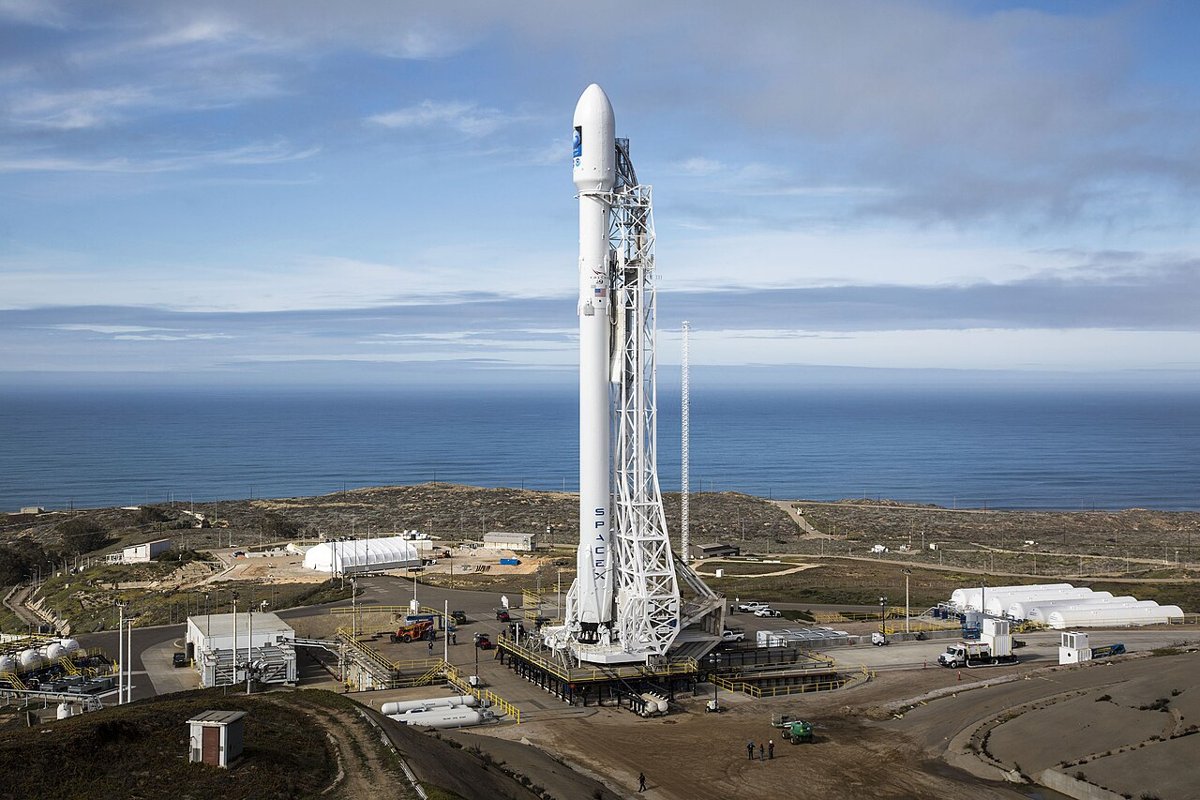
SpaceX's Starlink, which has deployed more satellites than any other single operator, is notably absent from the new group. That absence isn't incidental.
The Spectrum Fault Line
NGSO operators have a complicated relationship with each other and with regulators. Unlike the geostationary belt, where orbital positions are discrete and internationally coordinated, NGSO constellations share spectrum and orbital space in ways that require ongoing negotiation — both at the International Telecommunication Union level and domestically through agencies like the FCC.
The problem is that operators with very different constellation sizes have very different regulatory interests. A company running a few hundred satellites in low Earth orbit has different concerns about spectrum coordination than one operating several thousand. What looks like legitimate interference protection to a smaller operator can look like an artificial market access barrier to a larger one — and vice versa.
SpaceX's Starlink constellation is the starkest example of this asymmetry. With thousands of satellites already in orbit and tens of thousands authorized or applied for across multiple orbital shells, Starlink's spectrum and coordination footprint dwarfs those of its competitors. An industry trade group that includes Starlink risks being steered by Starlink's interests, which may conflict directly with what smaller NGSO operators need from regulators.
Forming a group without SpaceX is, at its core, a recognition that coherent advocacy for mid-tier operators is not possible when the dominant constellation holds a seat at the table — and potentially an outsized voice in the room.
The Policy Agenda
The new association's focus areas are spectrum access, orbital rights, and regulatory policy — the core infrastructure-layer concerns of any satellite operator trying to build a commercially viable business.
Spectrum access is particularly fraught. Radio frequencies are a finite resource, allocated internationally through the ITU and domestically through licensing agencies. Securing and protecting spectrum rights requires sustained regulatory engagement across multiple jurisdictions, and the stakes are high: a constellation that loses spectrum protection loses its ability to serve customers without interference. Trade associations exist precisely because this kind of regulatory work is expensive and benefits from collective resources and a unified voice.
Orbital rights — the ability to operate satellites in specific shells without collision risk or harmful interference from other operators — are becoming a more urgent concern as LEO becomes more congested. Coordination frameworks developed for a world with dozens of satellites in low Earth orbit are straining under the reality of thousands.
The broader regulatory policy agenda covers licensing timelines, technical standards, spectrum sharing frameworks, and the question of how agencies should treat large-constellation operators differently — or not — from smaller ones. These are not abstract questions. They determine who can operate, on what timeline, with what protections.
The non-SpaceX trade group is betting that it can shape this regulatory environment more effectively without Starlink's interests skewing the collective agenda.
Consolidation Is Already Underway
The group's launch comes against a backdrop of accelerating commercial space industry consolidation. European satellite manufacturer OHB recently raised capital specifically for expansion and acquisitions — a move that signals established hardware and services players are positioning for a shakeout phase in which scale increasingly determines survival.
That consolidation dynamic has direct implications for trade association politics. As the commercial satellite market matures, companies that survive will be those that can compete on cost, technical capability, and regulatory access. Effective representation in spectrum and orbital rights proceedings is increasingly a competitive advantage, not just a member benefit.
A trade group that credibly represents mid-sized NGSO operators in ITU filings, FCC proceedings, and international coordination talks is filling a genuine market gap. The question is whether it can maintain internal coherence as member interests diverge over time — a familiar problem for industry coalitions in maturing markets.
The Government Demand Signal
One measure of how much commercial operators have at stake is NASA's sustained investment in buying satellite data from the private sector. The agency recently selected eight commercial satellite data providers for awards under its Commercial Smallsat Data Acquisition On-Ramp 2 program — a clear signal that government customers are actively building and expanding purchasing relationships across the commercial satellite sector.
That federal demand creates real, recurring revenue opportunity for NGSO operators in Earth observation, communications relay, and related data services. It also raises the regulatory stakes: operators who cannot reliably protect their spectrum rights and orbital access cannot reliably deliver data products to government customers. The trade association's policy agenda connects directly to commercial viability in a way that goes beyond abstract regulatory principle.
Why It Matters
The formation of a satellite trade group that explicitly excludes the dominant constellation operator is not a minor procedural event in Washington. It reflects a structural tension that has been building in the commercial space industry for years: the interests of large and small NGSO operators are not aligned, and attempting to paper over that misalignment within a single association would likely produce either a paralyzed organization or one quietly captured by the largest member.
The new group is betting on a different model — focused advocacy for a specific constituency, even if that constituency is partly defined by what it isn't. In regulatory proceedings at the FCC and ITU, that kind of targeted representation can be more effective than a broad coalition riven by internal conflicts.
The early tests will come in active spectrum and orbital coordination proceedings, where the specifics of advocacy positions reveal whose interests are actually being served. If the group can maintain discipline on positions that genuinely disadvantage Starlink while benefiting its members, it will have validated the founding logic. If members start defecting toward positions that accommodate Starlink to preserve other commercial relationships, the coalition will have proved the skeptics right.
For now, the clearest signal is embedded in the founding decision itself: when the biggest operator in the market doesn't belong to the industry's trade group, the industry is telling you something important about power, competition, and the limits of coalition politics in a sector where one player's scale changes the math for everyone else.
