
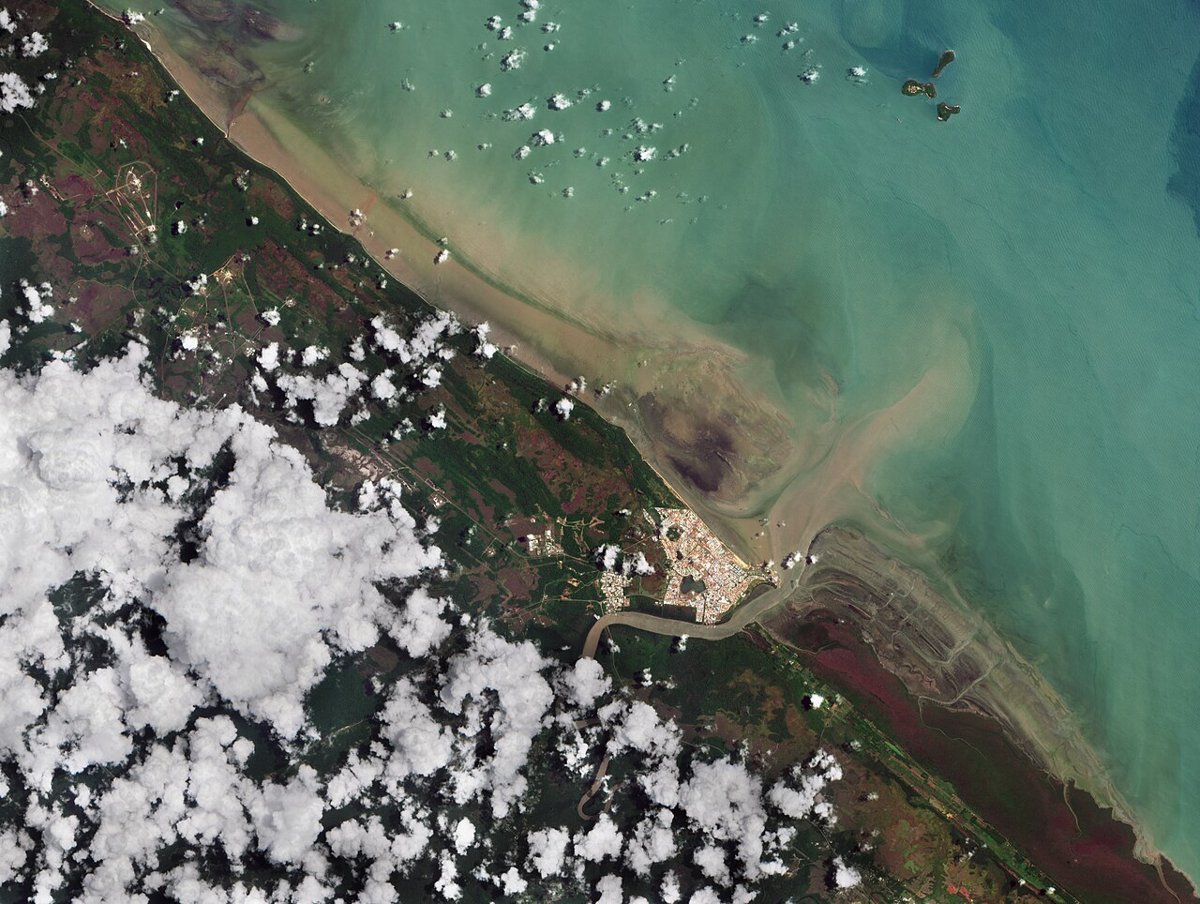
For much of the past decade, the story of American spaceflight has been one of acceleration. Launch rates that once seemed extraordinary have become routine. New rockets have entered service. New satellite constellations have multiplied. New commercial operators have crowded onto ranges that were originally built for a different era's pace of operations. Now NASA's own Office of Inspector General has put a name to what insiders have quietly acknowledged for some time: the nation's launch infrastructure is approaching its limits.
In a report that cuts through the usual boosterism surrounding the American space sector, the IG warned that US launch sites are nearing capacity as the combined cadence of commercial and government launches reaches record levels. The assessment is blunt. The infrastructure that supports American access to space — the launch pads, the range safety systems, the ground support facilities, the qualified workforce that operates all of it — was not designed or funded to sustain the volume of activity now being demanded of it.
This is a different kind of problem than a mission failure or a budget shortfall. It is a structural friction that compounds quietly over time, manifesting first as scheduling delays, then as cost overruns, and eventually as a hard ceiling on what the United States can put into orbit each year regardless of how many rockets are sitting on assembly floors ready to fly.
A Record Pace From All Directions
What makes the current pressure on American launch sites distinctive is that it is arriving from multiple directions simultaneously. Government agencies have their own launch requirements — science missions, national security payloads, technology demonstrations, crew and cargo to low Earth orbit. Those have not diminished. What has changed dramatically is the parallel surge in commercial launch activity layered on top of the government baseline.
Commercial operators are deploying satellite constellations at scale, with individual constellation builds involving dozens or hundreds of spacecraft that all need to reach orbit on schedules driven by investor timelines, competitive pressures, and service commitments. The mathematics are unforgiving: more satellites means more launches means more pad time, more range windows, more safety coordination, more of every finite resource the launch infrastructure provides.
Range operations are not simple to scale. Launch sites require years of planning, permitting, environmental review, construction, and certification before they can accept a new vehicle type or expand their cadence. The workforce that operates range safety systems, coordinates flight paths, and manages the technical complexity of a modern launch requires years of training and institutional knowledge that cannot be manufactured on demand. When launch cadence increases faster than the underlying infrastructure and workforce can expand, the gap between demand and capacity begins to close.
The IG's warning is a signal that this gap is now closing in a way that warrants serious attention — not after the constraint becomes acute, but now, while there is still time to plan and act before the system begins visibly straining under the load.
NASA's Own Programs Are Part of the Demand Equation
There is an element of institutional self-examination in the IG's assessment worth noting. NASA is not merely an observer of launch capacity pressure — it is, through its own expanding programs, one of the forces driving it.
NASA's Commercial Satellite Data Acquisition program recently completed its On-Ramp 2 selection process, awarding contracts to eight commercial satellite data providers. The CSDA program reflects a strategic posture that has become central to how NASA approaches Earth observation: rather than operating dedicated satellites for every function, the agency increasingly purchases data from commercial constellations funded, built, and launched by private operators.
This is sensible policy on its face. Commercial operators can often provide data at lower marginal cost to the government than dedicated agency missions would. But the CSDA model carries a launch consequence that is easy to overlook. Every commercial operator selected under On-Ramp 2 operates or intends to operate satellites that must reach orbit — satellites whose launches contribute directly to the total commercial launch cadence that the IG identifies as approaching infrastructure limits. NASA's expanding commercial satellite programs are explicitly among the drivers intensifying spaceport capacity pressure.
NASA is, in effect, both responding to launch capacity pressure and contributing to it. This is not a criticism of the CSDA program, which reflects rational procurement strategy. It is an acknowledgment that policy choices made in one part of the space sector propagate through the entire system in ways that can be easy to miss when viewing each program in isolation. The interaction between NASA's commercial data strategy and the launch infrastructure it depends on is a systemic dynamic, not a series of independent decisions.
Organizational Adaptation Inside the Agency
The growing complexity of managing NASA's expanding portfolio is also prompting organizational change within the agency itself. NASA's appointment of Sean Gallagher as Chief Information Officer is one indicator of the agency's effort to build internal capacity commensurate with its growing external ambitions. Managing a record launch manifest — tracking schedules, coordinating safety reviews, handling data from an expanding array of commercial satellite providers, and maintaining operational continuity across a more complex array of programs — requires information infrastructure and organizational capacity that must grow alongside the missions it supports.
The connection between internal organizational investments and the external spaceport capacity problem is not incidental. Range operations depend on coordination systems. Mission scheduling depends on information infrastructure. The ability to manage growing launch cadence without introducing failures of coordination is itself a form of capacity that can be exhausted when organizational investment fails to keep pace with operational tempo. Gallagher's appointment signals that NASA recognizes this dimension of the scaling challenge.
Why It Matters
Launch infrastructure is easy to take for granted when it works — and catastrophically hard to replace when it falls short. The United States has maintained its position as a leading spacefaring nation in significant part because its launch infrastructure allows government and commercial users to access orbit when they need to, at the cadence that science, national security, and commercial priorities require. If that infrastructure becomes a binding constraint — if the answer to scheduling questions increasingly becomes measured in extended delays rather than manageable weeks — the consequences are strategic, not merely logistical.
For commercial operators, constrained launch capacity means delayed constellation deployments, extended capital cycles, and potential competitive disadvantage in markets where timing determines which service reaches customers first. For government missions, it means postponed science returns, delayed national security capabilities, and reduced strategic flexibility to respond to emerging requirements. For the United States as a whole, it means a ceiling on national space ambition that is determined not by the vision of program planners or the capabilities of rocket engineers, but by the finite capacity of the ranges and pads those rockets depend on.
Inspector generals are not in the business of raising alarms for their own sake. When NASA's IG identifies launch site capacity as a systemic concern, the appropriate response is investment planning, workforce development, and infrastructure expansion that addresses the constraint before it becomes acute — not after the scheduling crises begin. The record launch cadence driving the IG's concern is not a temporary anomaly. Commercial satellite programs keep expanding. Government mission requirements keep growing. NASA's own CSDA program is selecting more commercial providers, each with their own satellites to launch.
The trajectory points in one direction. The question the IG is implicitly asking is whether the public and private investment needed to sustain and expand American launch infrastructure will be committed now, in advance of the crunch, or deferred until the crunch forces the issue. History suggests that infrastructure investment is most often a reaction to failure rather than a precaution against it. The IG's report is an argument for making an exception to that pattern — while there is still runway left to do so.
