
Deep in the Atacama Desert, where the soil is so desiccated that it chemically resembles Mars, microbiologists found living bacterial communities inside translucent halite crystals — organisms that had figured out how to use rock as a sunshade and a moisture trap simultaneously. In the anoxic sediments of Lake Vostok, buried under four kilometers of Antarctic ice for millions of years, gene sequencing has turned up thousands of distinct microbial species. In the Challenger Deep, at pressures that would crush unprotected metal casings, piezophilic bacteria metabolize steadily and without apparent complaint. Each discovery has done the same thing: pushed the outer boundary of what biology can tolerate just far enough to make another world seem plausible.
That pattern — extremophile found, habitability zone expanded — is now central to how planetary scientists design mission objectives for the icy moons of the outer solar system. Europa, Enceladus, Titan, and Ganymede are no longer regarded as frozen wastelands. They are candidate oceans, and the conversation about how to search them has become deeply, almost uncomfortably, dependent on what we keep finding alive in places we assumed were dead.
The ocean beneath the ice
Europa's subsurface ocean is the closest analogue scientists have identified to a potentially inhabited extraterrestrial environment, not because it resembles Earth's surface, but because it resembles Earth's deep seafloor. The Galileo spacecraft, operating in the Jovian system through the late 1990s, mapped surface features on Europa that are now widely interpreted as the expression of an active, liquid water ocean beneath an ice shell estimated at 10 to 30 kilometers thick. Tidal flexing from Jupiter's gravitational pull generates the heat that keeps the ocean liquid — the same mechanism that drives volcanic activity on Io, just expressed differently at Europa's distance and density.
The comparison to Earth's deep-sea hydrothermal vent communities is not casual. When hydrothermal vents were first discovered at the Galapagos Rift in 1977, they upended the assumption that photosynthesis was the non-negotiable foundation of complex ecosystems. The communities thriving around black smokers and white smokers are driven by chemosynthesis — microorganisms oxidizing hydrogen sulfide, methane, or hydrogen gas to fix carbon, supporting tube worms, shrimp, crabs, and fish without a single photon of sunlight. If Europa's seafloor harbors hydrothermal activity — and there is geological reasoning to expect it does — then an entire food web architecture exists on Earth that requires nothing from the sun. That matters enormously when the sun is 778 million kilometers away and filtered through several kilometers of ice.
NASA's Europa Clipper mission, launched in October 2024, is designed to assess exactly this possibility. During 49 close flybys of Europa, Clipper will use ice-penetrating radar, a magnetometer, a mass spectrometer, and a thermal imaging system to characterize the ice shell, probe the ocean's salinity and depth, and search for plume activity analogous to what Cassini found at Enceladus. The mission is not a life-detection mission in the strict sense — it carries no instrument capable of identifying biosignatures directly — but it is building the habitability dossier that informs what comes next.
Enceladus and the convenience of active plumes
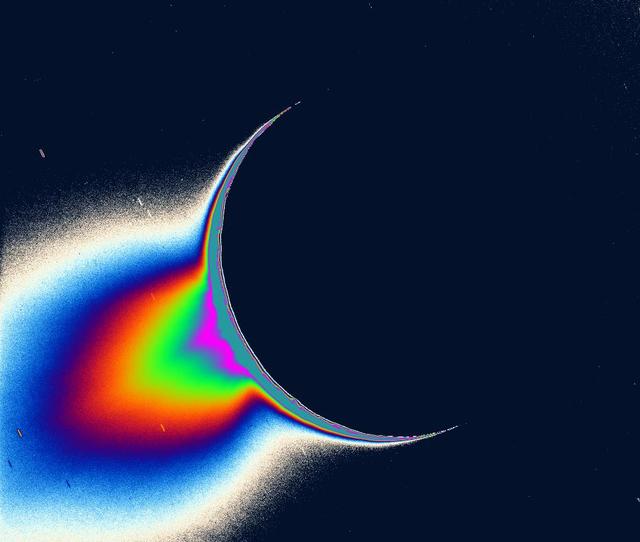
Enceladus has something Europa does not: a delivery system. NASA's Cassini spacecraft spent thirteen years in the Saturnian system and, in 2005, discovered geysers erupting from the moon's southern polar region, venting water vapor, ice particles, and organic compounds into space. Cassini flew directly through those plumes and tasted them. The results were striking: molecular hydrogen, silica nanoparticles consistent with high-temperature water-rock interaction, and complex organic molecules with masses above 200 atomic units — structures too heavy to be simple hydrocarbons, suggesting chemistry happening in a warm, chemically active environment.
The molecular hydrogen is particularly significant. On Earth, serpentinization — the reaction between water and iron- or magnesium-rich rock — produces hydrogen gas that supports entire microbial communities through hydrogenotrophic methanogenesis. Methanogenic archaea strip electrons from hydrogen, combine it with carbon dioxide, and produce methane as a byproduct. These organisms have been found in deep mines, ocean sediments, and permafrost, operating at temperatures near freezing and at depths far removed from sunlight or oxygen. The detection of hydrogen in Enceladus's plumes suggests the same chemical reaction may be operating in its seafloor, and where that reaction occurs on Earth, life tends to follow.
This is where extremophile research becomes strategically operational rather than merely interesting. The archaea that thrive in these environments — members of genera like Methanobacterium, Methanococcus, and Methanopyrus — have been characterized well enough that researchers can articulate what chemical signatures their metabolic activity would leave in surrounding water. Knowing what methanogenesis smells like, geochemically speaking, is prerequisite knowledge for designing instruments capable of detecting it somewhere else.
The biosignature problem
The difficulty with biosignature detection is that almost every chemical signal associated with life also has an abiotic explanation. Methane is produced by methanogens, but it is also produced by serpentinization and volcanic outgassing. Complex organics appear in carbonaceous chondrite meteorites that have never been near biology. Oxygen is the canonical biosignature for Earth's atmosphere, but it can also be generated by photolysis of water. This problem has sharpened considerably as extremophile research has catalogued the sheer diversity of metabolic strategies life employs, because it has simultaneously revealed how many of those strategies overlap with purely geochemical processes.
The scientific response has been to look for combinations — patterns of multiple chemicals in ratios that are difficult to explain without biology. In Earth's deep subsurface, the co-occurrence of hydrogen, methane, and specific isotopic signatures in the carbon and sulfur ratios can distinguish biotic from abiotic methane production with reasonable confidence. Research groups studying alkaline hydrothermal systems like the Lost City field in the Atlantic have found that methanotrophs — organisms that consume methane — create isotopic depletions in carbon-13 that are statistically distinguishable from background. If instruments aboard future missions can achieve the sensitivity to measure isotopic ratios in plume material or subsurface samples, the same discriminatory logic may apply at Enceladus or Europa.
The psychrophiles — cold-adapted organisms that function optimally below 15°C and survive well below freezing — offer a different kind of guidance. Research on organisms living in Antarctic subglacial lakes, particularly Lake Vostok and the more recently accessed Lake Whillans, has demonstrated that microbial ecosystems can persist in total darkness, under kilometers of ice, fueled by chemical energy from basal melting and ancient organic carbon. The organisms found there have evolved antifreeze proteins, highly unsaturated membrane lipids that remain fluid at temperatures that would rigidify standard phospholipid bilayers, and DNA repair mechanisms adapted to slow metabolic rates over geological timescales. These are the biochemical fingerprints — lipid biomarkers, specific protein structures — that astrobiologists have begun modeling as potential targets for detection in icy moon environments.
What extremophile research has ultimately provided is not a prediction that life exists on Europa or Enceladus, but a much more disciplined set of hypotheses about where it might concentrate, what metabolic strategy it would likely exploit, and what chemical evidence that metabolism would leave in its environment. The field has gone from speculating about whether life could survive in a subsurface ocean to designing specific instrument packages and sampling protocols based on the exact geochemistry of environments where it already does. That is a significant shift in how the question is being asked — and in what kind of answer might actually be achievable.
