
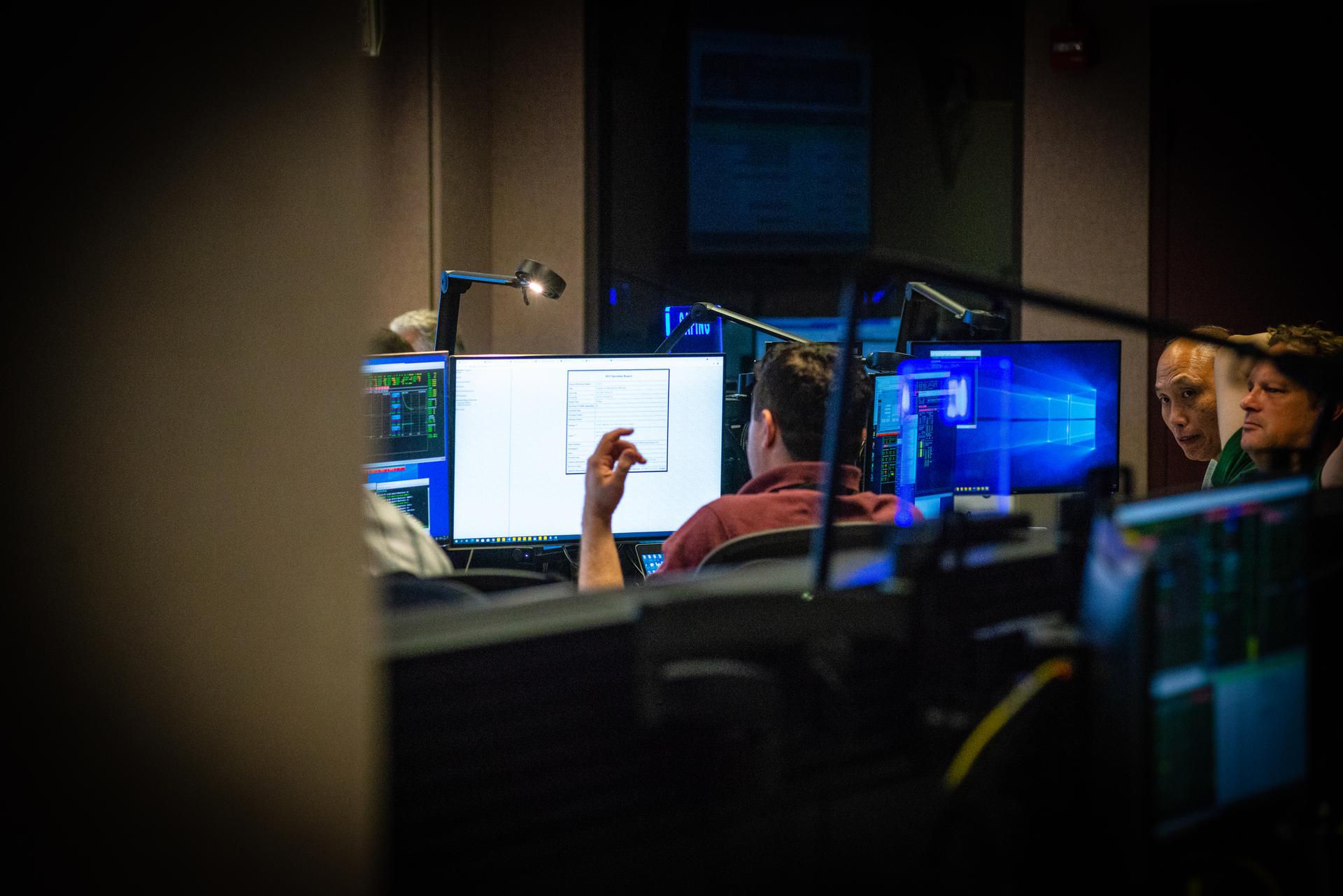
More than a year and a half after the Trump administration ordered the Pentagon to build a homeland missile shield modeled loosely on Israel's Iron Dome, the program's first major field test has finally come into public view — and it didn't involve a single interceptor leaving a rail. Speaking Aug. 27 at the Intelligence and National Security Summit in Bethesda, Maryland, Lt. Gen. Brian Gibson, vice director of the Golden Dome program, described a June test at White Sands Missile Range, New Mexico, that was built entirely around software: command-and-control architecture and the digital links connecting sensors to shooters.
It's a detail that cuts against the popular image of missile-defense testing, which tends to conjure dramatic footage of interceptors streaking skyward to smash incoming targets. Golden Dome's opening act looked nothing like that. According to Gibson, the June exercise — and a second, related test — were designed to prove that the program's various sensors, command nodes, and weapons systems can actually talk to each other and hand off targeting data fast enough to matter, before anyone worries about whether the interceptors themselves work.
Why It Matters
Golden Dome is not a single weapon; it's an attempt to stitch together a sprawling, layered constellation of existing and future sensors, command systems, and interceptors — spanning satellites, radars, and ground assets across multiple military services — into one system capable of detecting and defeating threats ranging from cruise missiles to hypersonic glide vehicles to intercontinental ballistic missiles. That kind of architecture lives or dies on its software. A shooter with a perfect kill probability is useless if the cueing data from a sensor arrives too late, in the wrong format, or not at all. By testing command-and-control and sensor-to-shooter linkages first, the Pentagon is effectively validating the nervous system before it worries about the muscles — a sequencing choice that says as much about the program's priorities and risk as any single test result.
The stakes are also financial and political. The program's price tag remains one of the most contested numbers in defense circles: Golden Dome's own current projected budget is roughly $180 billion, while independent cost estimates — including a Congressional Budget Office projection reported at $1.2 trillion over 20 years — put the full system well north of $1 trillion. With long-term funding beyond fiscal year 2027 still unresolved, early demonstrable progress — even software-only progress — gives the program something concrete to point to as it fights for sustained appropriations.
Industry in the Room
One of the more striking details to emerge from Gibson's remarks is who was allowed to watch. Pentagon commanders invited private companies whose technologies aren't yet part of Golden Dome's formal "program of record" to observe the two secretive tests firsthand. "It wasn't just military," Gibson said, according to the Washington Times. "We invited industry partners with non-program of record things to come inside those venues." He added: "How often does that happen inside of our military today? Not often."
That's a notable departure from how the Pentagon typically runs early-stage, sensitive testing, which is usually locked down to cleared government and contractor personnel directly involved in the program. Opening the venue to outside firms suggests the Golden Dome office is trying to keep the door open for newer or non-traditional technologies to compete for a piece of the architecture, rather than locking in incumbent contractors this early in the program's life. It may also reflect simple necessity: a system this large, on this timeline, likely can't be built by any single contractor base alone.
The Army's Piece of the Puzzle
Golden Dome isn't being built from scratch. A Congressional Research Service In Focus brief published July 8 lays out the Army's role in the broader architecture, identifying the Patriot air-and-missile-defense system and the Integrated Battle Command System (IBCS) — described by CRS as the Army's centerpiece command-and-control platform, built to provide 360-degree protection against air and missile threats — as existing Army assets being folded into the Golden Dome framework. That command-and-control mission makes IBCS a natural, if unglamorous, fit for the kind of sensor-to-shooter integration Gibson said the June test was validating, even though CRS does not itself draw a direct line between IBCS and the June exercise. Rather than reinventing every layer of the shield, the Pentagon appears to be leaning on systems the Army has already fielded and refined, then extending their reach into a larger, more complex architecture.
What Comes Next
Gibson's remarks left plenty unanswered. He did not detail what the second, related test involved, nor did he lay out a public timeline for when Golden Dome will move from software validation to testing actual interceptor engagements. The cost gap between the program's internal estimate and outside assessments also remains unresolved — a gap that will likely shape congressional appropriations debates well before any interceptor test makes headlines.
For now, the takeaway is narrower but still meaningful: the Pentagon says the plumbing works, or at least works well enough to have been worth showing off to outside industry. Whether that plumbing can support real interceptors, against real threats, at the scale and cost the program promises, remains the far bigger and far more expensive question.
