
The Government Accountability Office has been grading the Pentagon's biggest weapons programs for years, and the report card keeps getting worse. In its latest Weapon Systems Annual Assessment, released July 2, 2026, GAO found that the average time to deliver a major defense capability has stretched past 12 years -- a new high for a review that already had a reputation for grim reading. The assessment covers 48 of the Defense Department's costliest and most complex programs, and the space enterprise gets an uncomfortable spotlight of its own.
The headline number, as GAO put it in comments reported by Breaking Defense, is stark: "the overall average time frame to deliver a capability increased this year to over 12 years." That is not a one-off blip in a single troubled program. It is an average across a portfolio that includes ships, aircraft, missiles -- and satellites.
What's slipping, and why
Some of the delays are conventional hardware problems. The Navy's DDG 51 Flight III destroyer program is now running 55 months behind schedule, up from 41 months in the prior assessment -- a 14-month deterioration in a single year. But the space portfolio has its own entry on the list, and it is a program that matters well beyond the Pentagon: the Next-Generation Overhead Persistent Infrared, or Next-Gen OPIR-GEO, missile-warning satellite.
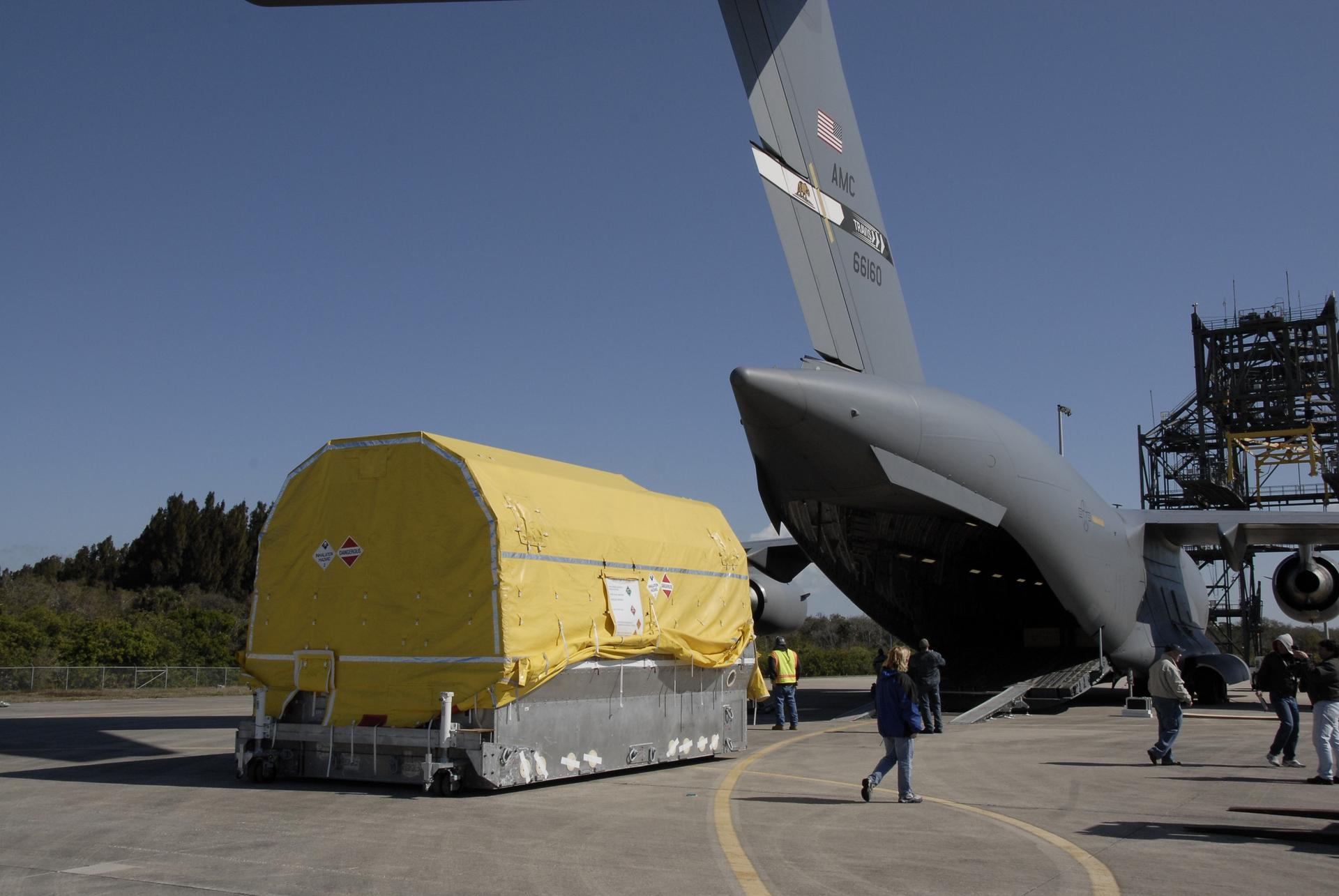
According to Breaking Defense's reporting on the GAO findings, the first Next-Gen OPIR-GEO satellite was completed in January 2026, four months later than planned, and has also absorbed a cost increase of roughly $340 million. The bigger surprise is what happens next: even though the satellite itself is now built, GAO found its launch has been pushed to no earlier than October 2026 -- not because of a problem with the spacecraft, but because the Space Force's launch manifest is too crowded to fit it in sooner.
That's a different kind of bottleneck than a busted circuit board or a software bug. It's a scheduling problem born of success -- the U.S. is launching more military and national-security payloads than ever -- colliding with a workforce that GAO says isn't growing to match.
A launch cadence the workforce can't keep up with
The scale of what's coming is part of what makes the OPIR delay notable rather than routine. Under the National Security Space Launch Phase 2 and Phase 3 contracts, the Space Force has roughly 50 launches planned through fiscal year 2028, and around 85 through 2031. GAO's assessment raises doubts about whether the enterprise can absorb that cadence smoothly, given the same staffing constraints showing up across the report. Space Force middle-tier acquisition (MTA) programs -- a fast-track acquisition pathway meant to speed things up, not slow them down -- now account for fully half of all Pentagon MTA costs, underscoring how central space has become to the department's acquisition portfolio, and how much is riding on it working well.
The staffing piece is where the report connects space delays to a much broader, department-wide story. Federal News Network's coverage of the GAO report found that more than 48,000 Defense Department employees -- about 6% of the department's civilian workforce -- had been approved to leave under the Trump administration's Deferred Resignation Program as of June 2025, with some program offices losing close to 40% of their core personnel and struggling to backfill positions because of an ongoing hiring freeze. Military Times, reporting separately on the Pentagon's test-and-evaluation oversight office, found that its civilian staffing was cut from 126 authorized positions to as few as 30 amid a departmental reorganization, before partially recovering to 45 positions -- with the number of programs receiving dedicated oversight dropping from 265 in fiscal 2024 to 173 in fiscal 2025.
GAO's framing, echoed across both Military Times' and Federal News Network's coverage, is that the Pentagon's own push to field weapons faster is at risk of outrunning the oversight and expertise needed to do it responsibly, even as the department leans harder on expedited pathways like MTA to compress timelines.
Why It Matters
Missile-warning satellites are not a discretionary capability. The SBIRS constellation and its Next-Gen OPIR successor exist to give the United States and its allies advance notice of a ballistic or hypersonic missile launch anywhere on Earth -- the kind of warning that shapes decisions measured in minutes, not months. A four-month construction delay is a paperwork problem. A launch slipping past a satellite's completion date because the range and the workforce supporting it are stretched thin is a systemic one, and it's the kind of problem that doesn't resolve itself just by finishing the hardware.
The broader 12-year average delivery timeline matters for the same reason it always has: threats don't wait for acquisition cycles. But the space-specific findings add a wrinkle that's easy to miss in a report full of ships and aircraft. The Space Force is simultaneously being asked to ramp up launch cadence toward 85 missions by 2031, rely more heavily on fast-track MTA authorities that now make up half its acquisition costs, and do all of it with an acquisition workforce that GAO-linked reporting says is shrinking rather than growing. Those three trends point in opposite directions, and Next-Gen OPIR-GEO's manifest-driven launch delay is early evidence of the strain that mismatch can produce.
