
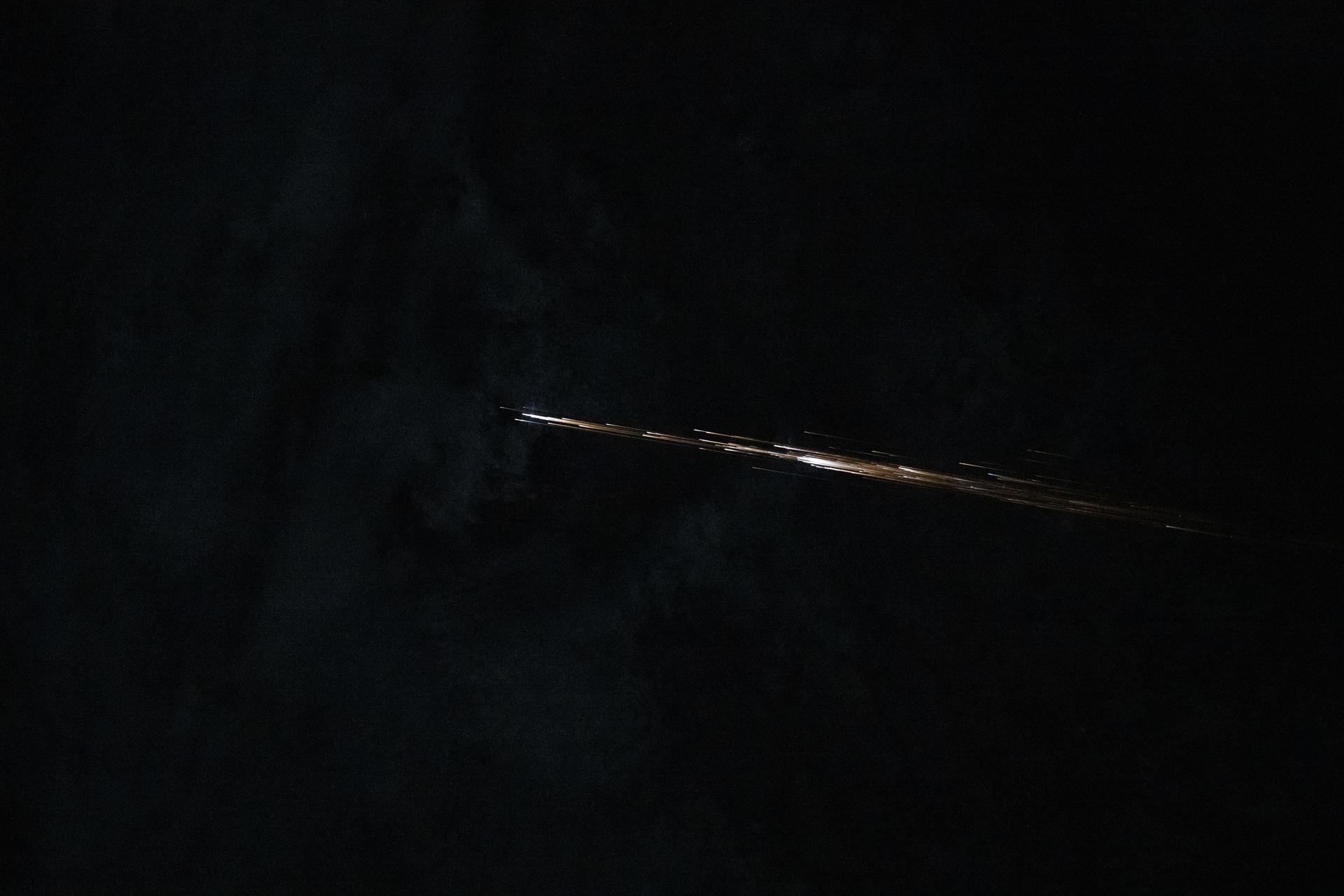
There is a particular class of space junk that keeps orbital-debris analysts up at night, and it is not the millimeter-scale shrapnel that ESA estimates now numbers in the hundreds of millions. It is the big, intact, abandoned stuff: spent rocket bodies, several tonnes apiece, left tumbling in long-lived orbits with residual propellant still sloshing in their tanks. They are the orbital equivalent of leaving a fuel-air bomb parked in a crowded lane and walking away. And according to a LeoLabs analysis that surfaced in late-June 2026 reporting, China is leaving far more of them up there than everyone else on Earth combined.
The numbers, first reported by Breaking Defense on June 25 and amplified by a KeepTrack space brief the following day, are stark. Between January 2021 and January 2025, China abandoned 51 spent rocket bodies in low Earth orbit above 650 kilometers — the altitude band where atmospheric drag is too weak to clean up after sloppy disposal for decades or centuries. That is 86 percent of all rocket bodies left in high-LEO worldwide over that span. For comparison, the United States left four; Russia left one.
China's tally over those four years more than doubled its prior five-year total, pushing the cumulative count to 96. And mass is what matters when these things come apart: the abandoned mass above 650 km rose from 98,000 kg to 305,000 kg — a tripling, and 98 percent of the entire global increase. Nearly seven times the rest of the world combined, concentrated in exactly the orbits that take longest to self-clean.
Why Spent Stages Are the Worst Kind of Debris
Not all space junk is created equal. A dead satellite is inert; it will eventually hit something or decay, but it does not actively make the problem worse. A spent upper stage is different, for two reasons.
First, it is massive and structurally large, which means a single collision converts one trackable object into a sprawling cloud of hundreds. Second — and this is the dangerous part — these stages frequently retain residual propellant and pressurized fluids after their final burn. Left in orbit, those reservoirs can rupture or combust, turning a passive hunk of metal into an explosion that fragments the stage from the inside out. No collision required. The thing just goes off on its own.
This is not hypothetical. LeoLabs counted three Chinese rocket bodies that have fragmented in the past four years: two Long March 6A (CZ-6A) upper stages and one Zhuque-2. The CZ-6A in particular has a documented breakup history; one such event scattered a cloud of more than 700 pieces of trackable debris into low orbit. The most recent entry came on June 9, 2026, when the US Space Force confirmed that a Zhuque-2E upper stage fragmented shortly after launch — likely during or after a disposal maneuver — producing an estimated 100 to 150 trackable objects.
The clouds left at these high altitudes will linger for decades to centuries. The pieces do not stay neatly bunched, either; they spread along the orbital track and disperse into a shell that everything else passing through has to dodge, indefinitely.
The Collision Course Nobody Wants
Here is where the geometry turns ugly. Many of the abandoned Chinese stages sit at 800 to 820 km. That is not empty real estate — it is prime megaconstellation territory.
China's own Qianfan ("Thousand Sails") constellation is planned for 800 to 1,160 km, with as many as 15,000 satellites envisioned. The US military's Proliferated Warfighter Space Architecture (PWSA) is slated for an orbital layer near 1,000 km. In other words, the same nation seeding these altitudes with derelict, potentially explosive stages is also planning to fly thousands of operational satellites straight through them — alongside a US military layer that has no choice but to share the neighborhood.
That overlap is what elevates this from a housekeeping nuisance to a national-security and space-domain-awareness problem. Every fragmentation event degrades the tracking picture, forces collision-avoidance maneuvers, and chips away at the usability of orbits that both civilian and defense systems are counting on. LeoLabs' Darren McKnight and the Secure World Foundation's Victoria Samson, both quoted in the Breaking Defense report, have long warned that the difference between a managed orbital environment and a runaway one comes down to exactly these large, abandoned objects.
The Backdrop: A System Already Under Strain
None of this is happening against a calm backdrop. ESA's latest Space Environment Report frames a low Earth orbit that is already trending the wrong way. Its catalog now tops 40,000 tracked objects, but the modeled population is far larger: an estimated 54,000 objects bigger than 10 cm (including roughly 9,300 active payloads), about 1.2 million objects between 1 and 10 cm, and on the order of 140 million fragments from 1 mm to 1 cm.
The report's sober conclusion is that heavily used LEO bands are trending toward "functional unusability," and that without active debris removal, a collision cascade — the long-feared Kessler-style chain reaction in which collisions beget more collisions — remains plausible over the coming centuries. Adding hundreds of tonnes of explosive-prone hardware to the most congested altitudes is precisely the input that model does not need.
Why It Matters
Orbital debris is often discussed in the abstract — a slow-motion tragedy of the commons that someone, someday, will have to address. The LeoLabs data makes it concrete and assigns it an address. The single largest driver of new, long-lived, high-risk debris mass in low orbit over the past four years is one country's rocket-body disposal practices, and the objects it is leaving behind are the kind most likely to detonate without warning. Three already have.
The stakes are no longer purely environmental. With China's Qianfan and the US PWSA both targeting the 800-1,160 km shell now salted with these derelict stages, a single additional fragmentation could force cascading maneuvers across operational and military constellations and muddy the space-domain-awareness picture that defense planners rely on. The physics here is unforgiving: debris at these altitudes does not come down on any timescale that helps. What goes up at 800 km, and breaks apart, stays broken apart for generations. The window to change disposal behavior — to passivate stages, vent residual fuel, and deorbit promptly — is open now. It does not stay open forever.
Sources
- China dumping more rocket bodies in space, endangering LEO satellites: Report — Breaking Defense
- Three Chinese Rocket Bodies Exploded, Generating Decades of LEO Debris — KeepTrack Space Brief
- Chinese rocket stage breaks up into cloud of more than 700 pieces of space debris — SpaceNews
- ESA Space Environment Report — European Space Agency
