
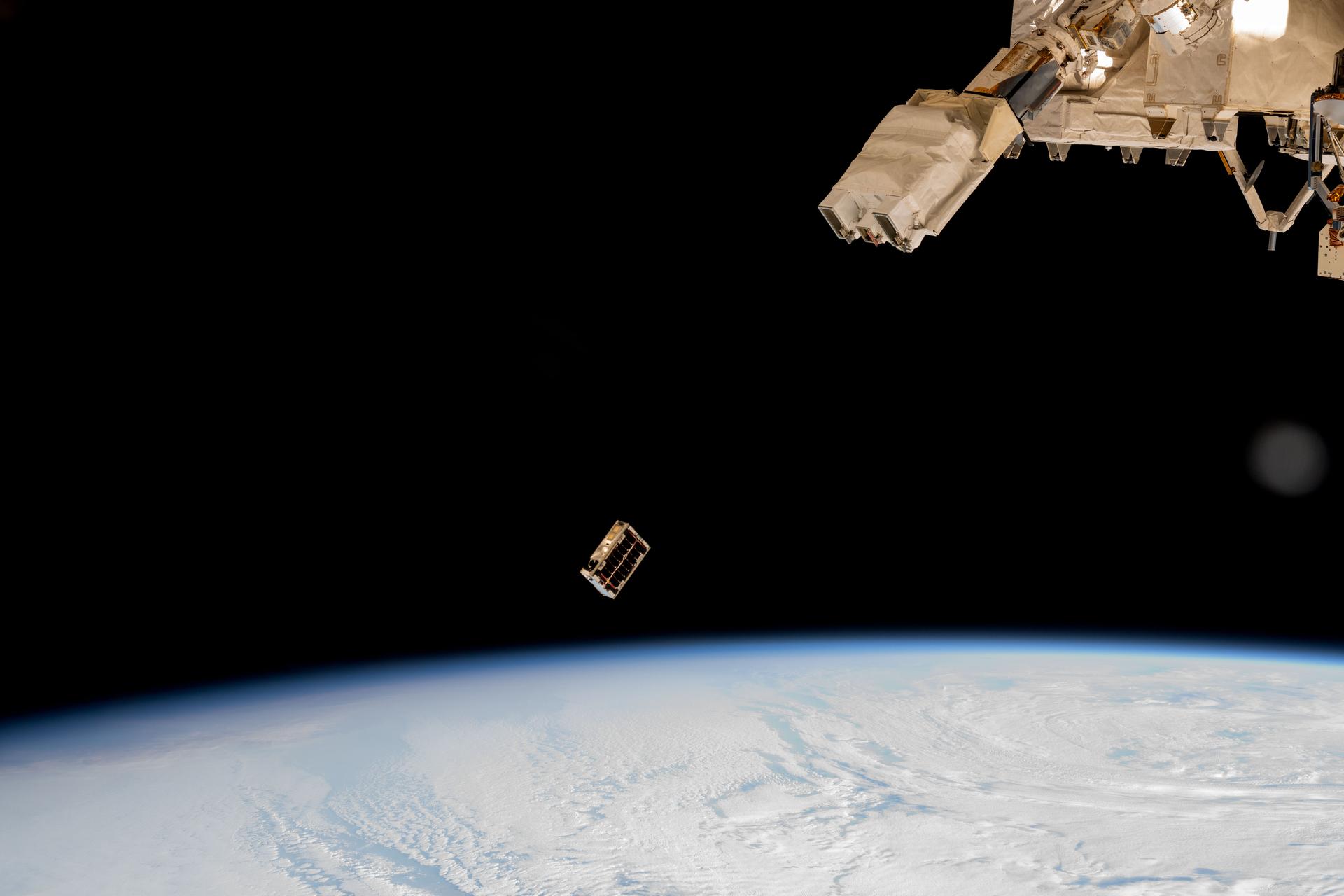
On the night of June 19, 2026, a Rocket Lab spacecraft called Puma left the pad just 16 hours and 42 minutes after receiving its official Notice to Launch. It had no advance knowledge of where its target was hiding in orbit. By the time it was done, it had found that target, closed in for a look, taken pictures, and slipped back to where it started — all in service of a blunt strategic question the U.S. Space Force has been asking with increasing urgency: how fast can we find and inspect a satellite we didn't know was coming?
The exercise, called VICTUS HAZE, is the latest in a series of "tactically responsive space" (TacRS) demonstrations run by Space Systems Command's Space Safari program office, working with the Defense Innovation Unit and SpaceWERX. This time, two companies had to work in tandem rather than one company proving it could launch fast. Rocket Lab National Security held a $32 million Defense Innovation Unit contract to build and launch the chaser spacecraft, Puma. True Anomaly held a $30 million Space Force contract, administered through SpaceWERX as part of a $60 million total effort — with True Anomaly matching the government's investment with its own private capital — to build and operate the target and inspector spacecraft, Jackal-0004.
A Launch Faster Than the Last Record
The launch itself broke a mark set by the Space Force's own prior responsive-launch exercise, VICTUS NOX, which took 27 hours from notice to launch. Rocket Lab got Puma off the ground in 16 hours and 42 minutes from Notice to Launch, more than 10 hours faster than that previous benchmark. That number matters more than it might sound: the entire premise of tactically responsive space is that a satellite built and stored on the ground is strategically useless if it takes weeks to get into orbit once a crisis starts. Cutting that timeline from days to under a day changes what's operationally possible.
But VICTUS HAZE wasn't only testing whether a rocket could fly fast. It was testing what happens after liftoff — whether a spacecraft launched on short notice could actually do something useful once it got there, without a scripted rendezvous plan.
Finding a Needle in Orbit Without a Map
According to reporting from TechCrunch, Jackal-0004 — True Anomaly's target and inspector satellite, which had already been on orbit after completing its Mission X-3 flight test program and full commissioning — detected Puma from roughly 200 kilometers away using its own onboard sensors. Neither spacecraft had advance knowledge of exactly where the other would end up. Jackal then closed the gap to a distance the companies have not disclosed, imaged Puma from multiple angles, and returned to its original orbit.
That sequence — detect, close, inspect, retreat — is the basic choreography of what the Space Force calls rendezvous and proximity operations, or RPO. It's the same maneuver set that would be used to characterize a suspicious foreign satellite: is it carrying a weapon, a sensor, a grappling arm? The difference in VICTUS HAZE is the speed and the lack of pre-briefed coordinates, which is the entire point. A real adversary isn't going to file a flight plan.
Jackal-0004 is notable in its own right: it's the fourth spacecraft True Anomaly has built and flown in four years, and it operates under the company's Mosaic platform, a command-and-control system designed to manage multiple vehicles at once rather than one satellite at a time.
Why the Company Behind This Says It's Necessary
True Anomaly CEO Even Rogers framed the exercise around a gap he says the U.S. currently has in space domain awareness. "Right now we have gaps in our collection capability," Rogers told TechCrunch, specifically citing the difficulty of tracking Chinese and Russian space assets. In materials announcing the mission's start, Rogers argued that the "unwarned deployment of agile adversary engagement platforms" is what's driving the need for a space-superiority response measured in minutes or hours, not the weeks or months traditional satellite programs assume.
That pitch has attracted serious capital. True Anomaly has raised more than $1 billion to date, including a $650 million round in March 2026, positioning the four-year-old company as one of the more heavily funded entrants in the emerging market for military space vehicles built to maneuver, inspect, and potentially counter other satellites.
Why It Matters
Space has quietly become congested with objects nobody fully explains — inspector satellites, "patrol" spacecraft, and vehicles capable of getting close enough to another country's assets to tamper with, jam, or disable them. The U.S. military's public concern, echoed in VICTUS HAZE's design, is that potential adversaries could put such a spacecraft into orbit with no warning, and American space forces would have no fast way to find out what it is or what it can do.
VICTUS HAZE is a rehearsal for closing that gap. It demonstrates two capabilities stacked together for the first time in this program: a launch system that can get a spacecraft to orbit in under 17 hours, and an inspection satellite that can autonomously locate and characterize another object in orbit without prior coordinates. Neither capability alone is new — rendezvous and proximity operations have been demonstrated before, and responsive launch was proven in VICTUS NOX. What's new is doing both in sequence, on a compressed timeline, with two different companies' hardware talking to each other under Space Force oversight.
It's also a signal about how the Pentagon plans to buy this kind of capability going forward: not through a single prime contractor building an exquisite, decade-long satellite program, but through fixed-price contracts with newer entrants — Rocket Lab and True Anomaly among them — funded partly through innovation offices like DIU and SpaceWERX rather than traditional acquisition channels. If the model holds, VICTUS HAZE won't be the last exercise where launch speed and orbital detective work get tested together under a countdown clock.
Sources
- US Space Force demonstrates responsive launch for VICTUS HAZE mission, begins on-orbit operations - Space Systems Command
- Private space pilots are flying orbital missions for the US Space Force - TechCrunch
- True Anomaly Begins VICTUS HAZE Mission
Correction: an earlier version said 2,000 km, following the source's original figure; TechCrunch has since corrected it to 200 km.
