
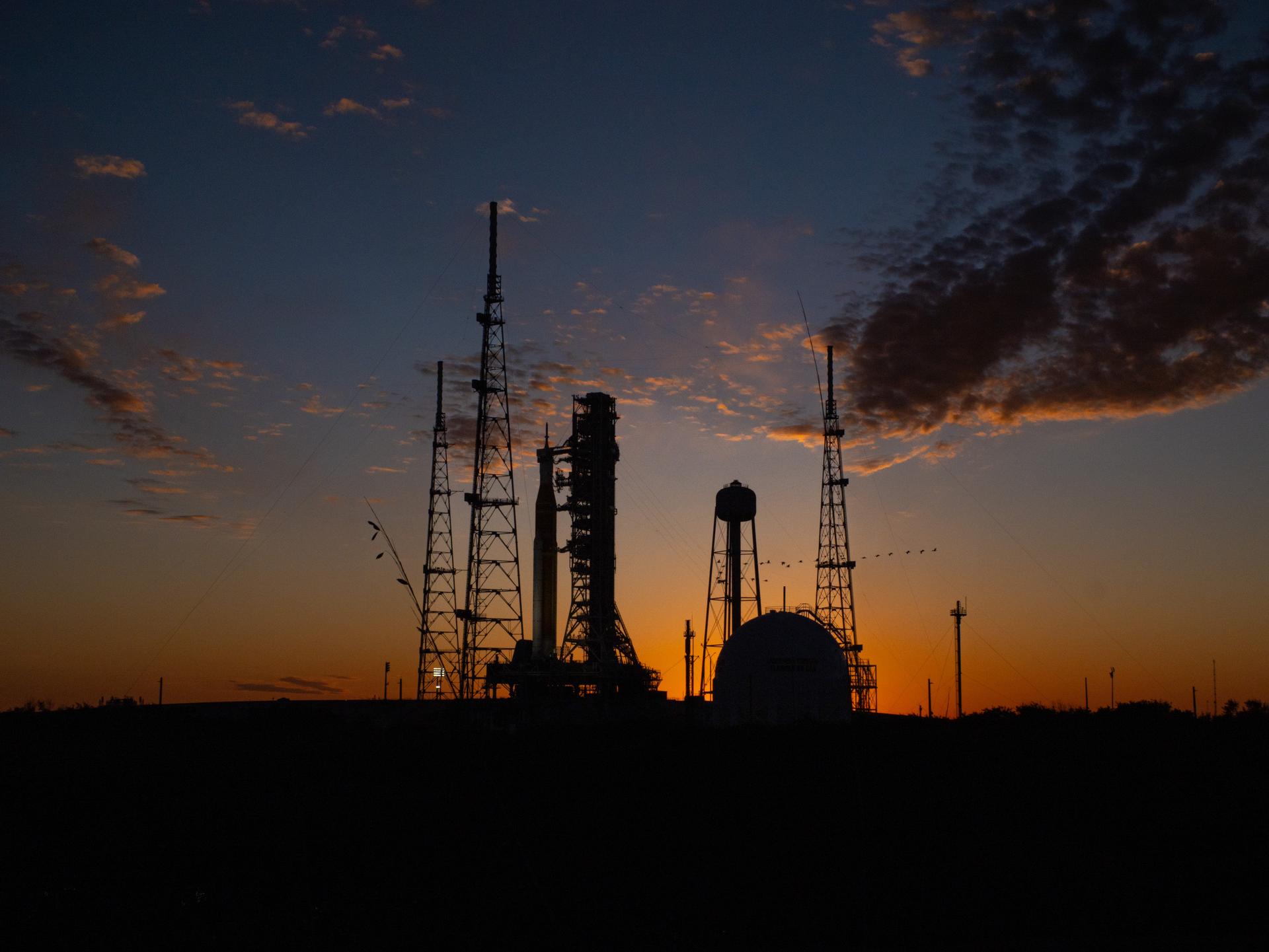
China's Chang'e-7 lunar south pole mission was supposed to leave Earth late on August 23, 2026 U.S. Eastern time — early Monday, August 24 UTC — riding a Long March 5 off the pad at Wenchang Space Launch Site on Hainan Island. Instead, with the rocket already stacked on the pad, China's space program called it off — hours before the window opened.
The spacecraft had been rolled out to the pad on August 19. That plan collapsed on August 23, when Chinese officials told international mission partners the launch was being pushed back by at least a month, according to SpaceNews. The wording used in that announcement was ambiguous enough, SpaceNews reported, to leave open whether the mission could slip all the way into 2027.
The official explanation, relayed through Chinese state media, was blunt. The China Manned Space Agency said the mission "does not meet the launch conditions and cannot be carried out within the scheduled launch window this year" after what officials described as a comprehensive assessment. The proximate trigger was Tropical Storm Narra, which was developing in the South China Sea near the Hainan launch site at the time — the kind of weather system that has scrubbed Chinese and other national launches before, given the risk high winds and lightning pose to a fueled rocket sitting exposed on a coastal pad.
Why the Delay Isn't Just a Few Days
A typical weather scrub buys a launch team a day or two — wait out the storm, recheck the vehicle, try again. Chang'e-7's problem is that it doesn't have that luxury. The mission is headed for Shackleton Crater at the lunar south pole, a landing site chosen specifically because its rim and interior harbor near-permanent shadow that may be hiding water ice. Landing there safely, and in a way that lets the spacecraft's instruments actually work once down, depends on the sun striking the terrain at a very specific angle. That geometry only lines up during narrow windows tied to the Moon's orbital mechanics and the local lighting conditions at the pole.
Miss the window, and there isn't a "try again next week" option — the next viable sun angle over the crater may not arrive for weeks. That's why Thailand's National Astronomical Research Institute (Narit), which contributed an instrument to the mission, put the earliest realistic new launch date at about a month out. It's also why SpaceNews's sourcing left the door open to a landing slipping into 2027 rather than a simple September do-over: if the storm-driven scrub eats into the current window entirely, the mission may have to wait for the next one that satisfies both the rocket's readiness and the Moon's lighting at Shackleton.
What's Riding on the Long March 5
Chang'e-7 is not a simple orbiter-and-lander pair. The stack includes an orbiter, a lander, a rover, and a hopper — a small vehicle designed to make short, powered jumps across the lunar surface, letting it reach into permanently shadowed crater floors that a wheeled rover can't safely enter. That hopper is central to the mission's core science goal: directly sampling or sensing water ice inside terrain that has never seen sunlight.
The mission also carries six science instruments built through international partnerships — a detail China's National Space Administration (CNSA) has highlighted. Italy contributed a laser retroreflector array, a passive optical target that lets other spacecraft and ground stations precisely range the lander's position for years after landing. Russia supplied an instrument to study lunar dust and electric fields, phenomena that affect both scientific measurements and the survivability of hardware on the surface. Egypt and Bahrain jointly built a hyperspectral camera for mapping surface composition, and the International Lunar Observatory Association (ILOA) is flying a lunar-based telescope. Switzerland, working with Chinese researchers, built a two-channel Earth-radiation spectrometer — described by CNSA as the first lunar-based system designed to monitor the radiation Earth both receives from the Sun and re-emits into space, using the Moon as a stable vantage point roughly a light-second away.
Why It Matters
Chang'e-7 is a marquee piece of China's push toward a crewed lunar south pole presence and its planned International Lunar Research Station, which depends on confirming just how much water ice is actually recoverable near the pole. A month's delay is an inconvenience; a slip into 2027 would ripple into the sequencing of China's later Chang'e missions and the broader timeline for lunar infrastructure it has been racing to build ahead of, or alongside, NASA's Artemis program, which has likewise targeted the lunar south pole region.
The episode is also a reminder that lunar polar missions carry a launch-planning burden that missions to more forgiving destinations don't. A weather delay that would cost a communications-satellite launch a few days can cost a Shackleton-bound lander weeks or months, because the mission has to thread both a functioning rocket and a lighting condition on the Moon that it cannot control or hasten. For the seven-nation instrument consortium riding along on Chang'e-7 — and for the broader effort to characterize lunar ice before anyone tries to mine or drink it — the wait is now the story.
