
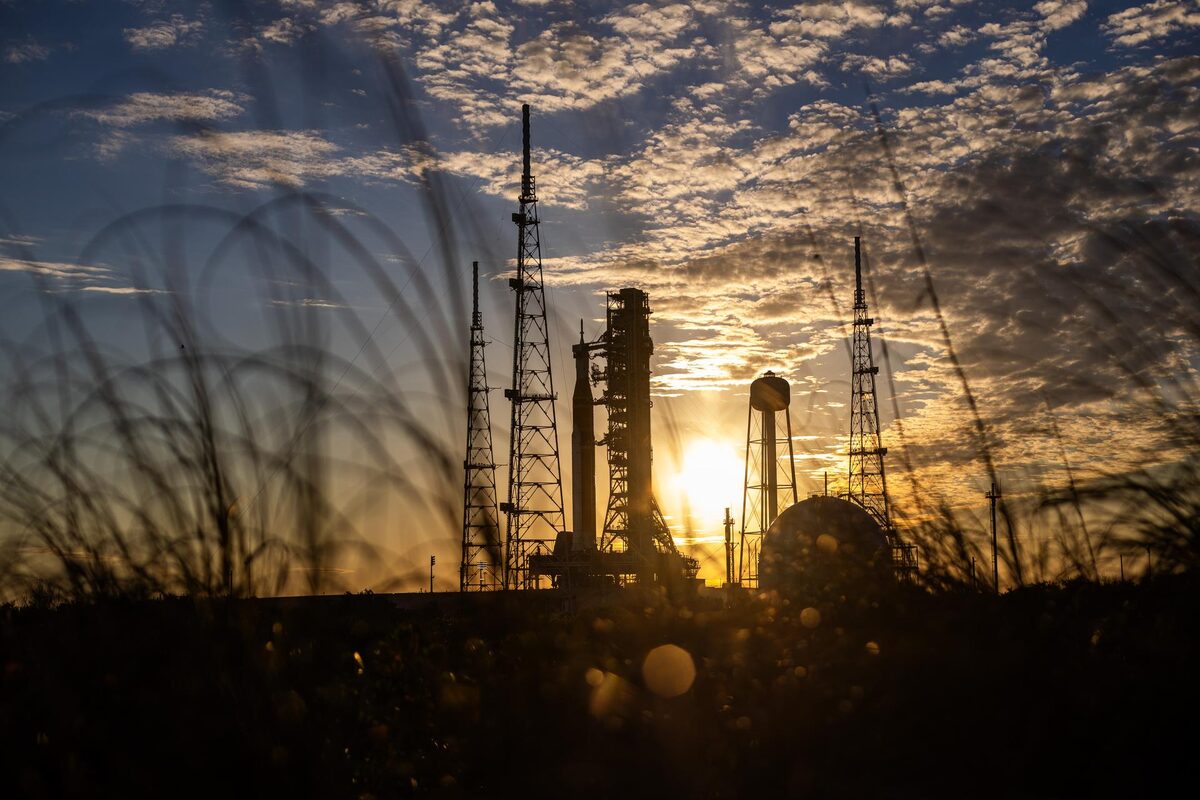
Arianespace scrubbed its Monday attempt to launch 36 Amazon Leo broadband satellites from French Guiana. The cause was not the rocket. It was the equipment around it. According to Space.com, the November 23 try was called off because of a technical issue with ground support systems. The mission, flight VA271 (Amazon calls it LE-04), is now set for Tuesday, November 24.
The new window is 29 minutes long. It opens at 5:45 a.m. EST (1045 GMT), and the Arianespace homepage gives it as 10:45 to 11:14 UTC. On paper this is a routine one-day slip. In practice the flight carries more weight than a normal constellation deployment, because it is Amazon's first launch since a rocket failure nine days earlier.
What is on the pad
VA271 is Ariane 6's 10th flight. Arianespace confirmed that count, and the 36-satellite payload, in an October 14 release. The rocket first flew in July 2024. This is its fourth Amazon Leo mission, after flights in February, April and June.
ESA's overview describes two versions of Ariane 6. The Ariane 62 has two strap-on boosters and the Ariane 64 has four. With a full payload the rocket stands more than 60 meters tall and weighs nearly 900 tonnes at liftoff. ArianeGroup is the prime contractor. France's space agency, CNES, runs the launch facilities at Europe's Spaceport in French Guiana.
The Arianespace homepage shows how the campaign unfolded:
- November 18: Arianespace announces the November 23 launch window.
- November 21: The launch kit is published.
- November 23: The attempt is scrubbed and the launch moved to November 24.
The November 15 problem
The scrub matters mostly because of what happened the week before. On November 15, a Vulcan rocket failure destroyed 40 Amazon Leo satellites, Space.com reports. That one loss equals about a tenth of the roughly 400 Amazon Leo satellites now in orbit.
The sources here do not say what caused the Vulcan failure, so this article does not speculate. The effect on Amazon is easier to see. Space.com says Vulcan will be grounded for a while as ULA investigates. That leaves more of the load on whatever else is ready to fly, and right now that means Ariane 6.
Amazon's other heavy-lift option is not ready either. Space.com notes that Blue Origin's New Glenn has not flown since April. On May 28 it exploded during a prelaunch test. With Vulcan grounded and New Glenn out of service, a clean Ariane 6 flight this week is worth more to Amazon than it would have been a month ago.
Why It Matters
The basic issue is scale. SpaceX's Starlink has more than 11,000 operational satellites, according to Space.com. Amazon Leo has about 400 in orbit, out of a planned constellation of more than 3,200. Amazon needs many more launches before its network can compete on coverage, and each failure or long delay pushes that point further away.
That is why the rockets matter so much. A constellation of this size gets built one batch at a time. A 36-satellite batch is roughly nine percent of what Amazon has in orbit today. Losing 40 satellites on Vulcan wiped out more than one Ariane 6 load. If Tuesday's flight succeeds, it nearly makes up for that loss.
The mission also matters to Europe. If it flies, Ariane 6 will have made four flights for one large commercial customer. That is the kind of steady business the rocket was built to win, and dependable launches of a big US constellation strengthen its case. Each flight that leaves on schedule helps, and so does each scrub that is fixed quickly. A ground-equipment problem that costs one day is the kind of delay launch teams can live with.
What to watch Tuesday
The key question is whether the ground-support issue has been fully fixed. Arianespace has set the new date, but the sources here do not say what the problem was. A 29-minute window leaves some room for a short hold but not much more.
After that comes the usual sequence: liftoff, separation of the satellites, and Amazon confirming that it has contact with all 36. If everything goes to plan, Amazon will have about 436 satellites in orbit by the end of the day. That is a step forward, but it is still only about one-seventh of the planned constellation of more than 3,200, and one more reason for Amazon to watch the progress of every rocket it has booked.
