
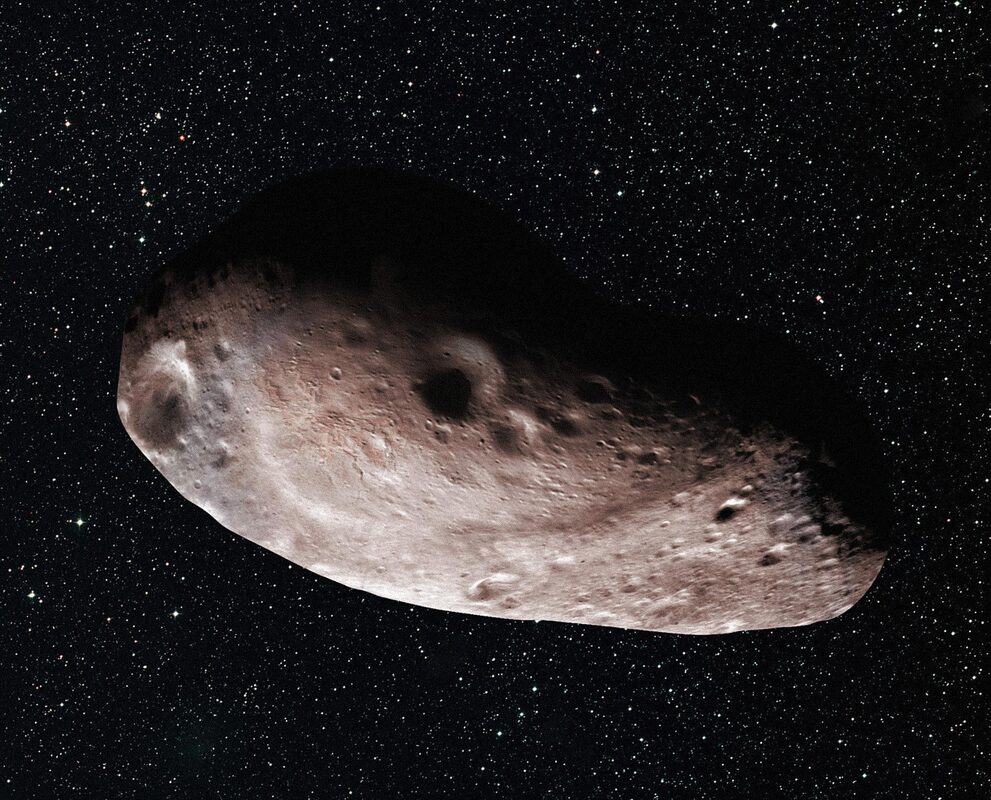
The Transiting Exoplanet Survey Satellite was not designed to find faint, slow-moving bodies in the outer solar system. Its job is to stare at stars and wait for planets to pass in front of them. But a paper submitted to arXiv on November 13 shows that the telescope has also been picking up something else. Buried in eight years of TESS data are eleven trans-Neptunian objects that the authors report as new discoveries, along with eight more candidates that still need confirmation.
The study, titled "Eleven Trans-Neptunian Objects and Eight Candidates Discovered by TESS", describes a blind search. The team did not start from known orbits and check whether TESS happened to see them. They searched the data for moving objects without knowing in advance where any might be. That is a much harder test, and the authors show the method works.
How do you find a dim, distant object in a planet-hunting camera?
TESS records full-frame images (FFIs) of large areas of sky. The search covered FFIs taken from July 25, 2018, through November 6, 2026, and focused on fields near the ecliptic, the plane where most solar system bodies orbit. In total that came to 572 CCD fields across 95 observing sectors.
Distant trans-Neptunian objects are faint and move slowly, so the method has to pull them out of the noise. First, the researchers modeled and subtracted Gaia stars using the TESS-Gaia Light Curve package. Then they stacked the leftover residual images along curved trial paths and linked the detections across sectors. If you shift and stack frames along an object's possible path, its faint light adds up while the background noise averages out. A body too dim to see in any one exposure can then stand out in the combined image.
A signal in stacked data is not a discovery yet, so each of the eleven new objects had to clear more checks. Each was detected blindly in between two and five separate TESS sectors. Each was also found independently in archival ground-based images, which gave observed orbital arcs of 2 to 20 years. Those long arcs are what turn a faint smudge into an object with a usable orbit. The eight remaining candidates were linked across only two or three TESS sectors, and the archives the authors examined did not give them a secure independent recovery, so they remain candidates.
What did the search turn up?
The eleven new objects are faint, with visual magnitudes from V=20.8 to 22.1. They lie between 25 and 57 au from the Sun, which puts them beyond Neptune. Their orbits are noticeably tilted, with inclinations of 16 to 27 degrees. The paper also notes that they sit 9 to 26 degrees from the ecliptic, and that the largest is 5 degrees from the Galactic plane.
The size estimates come with a caveat. The paper gives diameters of roughly 120 to 910 km, but those figures assume a surface albedo of 0.08, meaning the object reflects about 8 percent of the light that hits it. Brightness alone cannot tell a small, reflective object apart from a larger, darker one, so the real sizes will shift if the actual albedos are different. Even so, the top of that range is large. An object near 900 km across would be a substantial body by trans-Neptunian standards.
Can the method be trusted?
A pipeline that turns up new objects also needs to find the ones already known. The paper reports that the search recovered 314 known trans-Neptunian objects and Centaurs. The authors put the empirical recovery fraction at 50 percent at V=21.6, measured before quality cuts. In other words, the pipeline catches about half of the known objects at that brightness.
The new objects have magnitudes of V=20.8 to 22.1, so they straddle that 50 percent point. TESS is working near the limit of what it can detect here, and objects at the faint end of that range are the ones a survey is least likely to have caught earlier. The authors conclude that the results demonstrate the effectiveness of TESS for finding bright outer solar system objects and extending their observational arcs.
Seeing things before they were discovered
One of the more striking results concerns timing. Nine of the 314 known objects TESS recovered were officially discovered after TESS had already photographed them. The most notable is 2026 ED138, which Rubin discovered. According to the paper, TESS imaged it 6.8 years before that discovery.
This is not a sign that anyone missed something obvious. It shows what an archive can hold. When an imaging dataset covers the sky repeatedly over many years, it captures objects long before anyone knows to look for them. Recovering those earlier sightings, called precovery, can stretch an orbital arc back by years and tighten the orbit considerably. A dataset that does that well can also produce discoveries of its own, which is what this paper reports.
Why It Matters
Each newly catalogued trans-Neptunian object adds a data point for questions about how that distant population is distributed. The Minor Planet Center's list of transneptunian objects, which includes bodies such as Pluto and Sedna, shows the orbital elements kept for the known ones.
The larger point is about reusing data. NASA describes TESS as an exoplanet finder that, during its extended observations, also finds and monitors objects that change in brightness, from nearby asteroids to pulsating stars and distant galaxies containing supernovae. This study pushes that secondary role much farther from the Sun. A planet-hunting survey's archive, processed with star subtraction and image stacking, can work as a deep search for faint moving objects near the ecliptic.
It also works alongside dedicated surveys. The 2026 ED138 example shows the practical value: an object first reported by another facility can be traced back nearly seven years in TESS images, which extends its observed arc. TESS's eight-year record gives astronomers somewhere to look for earlier observations of objects that newer surveys report.
What comes next
The eight candidates are the obvious next step. They lack the independent recovery the eleven new objects received, so they would need archival ground-based images or new observations before they can be treated as real bodies with secure orbits. Better size estimates will also require measuring albedos directly instead of assuming one value for every object. The main result already stands, though. Eleven objects beyond Neptune, the largest possibly several hundred kilometers across, were recorded in a telescope's archive for years before this search found them.
