
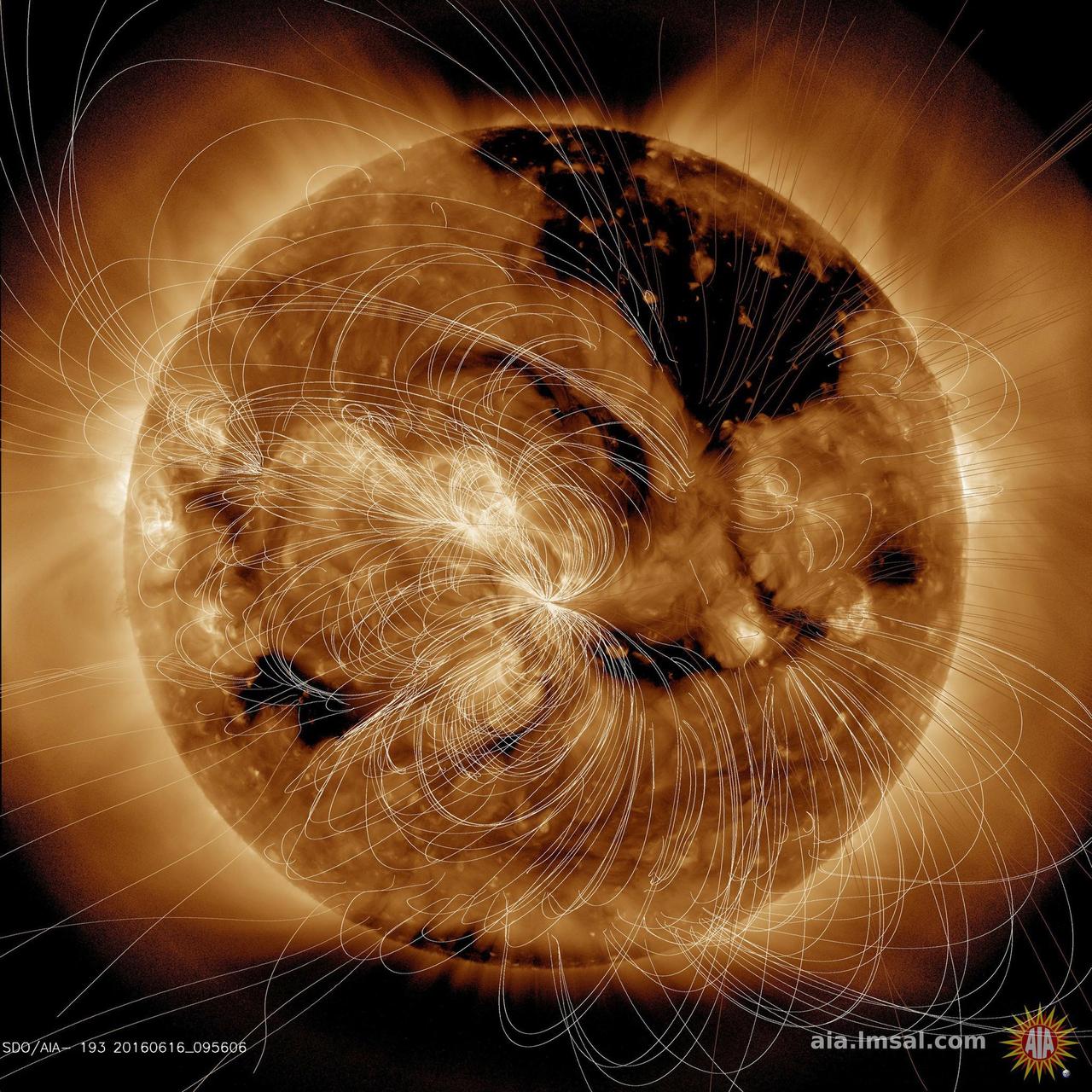
A week or so ago, the sun was considerably livelier — flirting with minor geomagnetic storm levels and putting out its strongest flares of the month. This week, it's practically dozing. NOAA's Space Weather Prediction Center and independent monitoring at Spaceweather.com describe an Earth-facing solar disk on July 15, 2026, that is, for the moment, remarkably well-behaved — a useful case study in just how quickly the sun's mood can change, and how forecasters try to keep up with it.
The numbers tell a calm story. As of July 15, the sun hosts 36 sunspots, and all of them are rated stable and quiet — no complex, flare-hungry magnetic configurations lurking in the mix. There have already been three spotless days in 2026, brief stretches when the disk showed no sunspots at all, a reminder that even in an active solar cycle the sun doesn't perform on a constant setting.
The strongest flare of the past day was a C3 at 0846 UT — solidly in the low-to-mid range of the C class, the weakest of the three flare categories (C, M, and X) that space weather forecasters track. For context, C-class flares are common and rarely disruptive; M-class flares can cause brief radio blackouts on the sunlit side of Earth; X-class flares are the heavy hitters. NOAA's outlook puts the odds of an M-class flare in the next 24 hours at just 10 percent, and X-class at a mere 1 percent.
What the Instruments Are Actually Showing
Solar wind — the constant stream of charged particles flowing off the sun — is running at 475 kilometers per second, a moderate speed that isn't unusual for quiet conditions. The planetary K-index, the standard measure of geomagnetic disturbance on a 0-to-9 scale, sits at 3.00, which falls squarely in "quiet" territory. And the interplanetary magnetic field's Bz component — the north-south orientation that determines how efficiently solar wind energy couples into Earth's magnetosphere — is reading 5.13 nT northward.
That northward Bz matters more than the raw number might suggest. When the interplanetary magnetic field points north, it tends to align with Earth's own field rather than fight it, which makes it harder for solar wind energy to leak into the magnetosphere and drive geomagnetic storms. A northward Bz is essentially the sky saying "not today" to auroral activity, even if the solar wind speed picks up.
Rounding out the calm picture: no significant coronal holes are currently facing Earth. Coronal holes are cooler, less dense regions of the sun's atmosphere where the magnetic field opens outward into space, allowing high-speed solar wind streams to escape. When one of these streams is aimed squarely at Earth, it can trigger recurring geomagnetic activity for days as the sun rotates the hole into view. Right now, there's nothing like that lined up.
A Narrow Window for Aurora Watchers
None of this means the aurora is entirely off the table. NOAA's three-day outlook, issued July 15, does not call for any G1-or-greater geomagnetic storm through July 17 — the greatest expected three-hour planetary K-index over that window is about 3.67, which is quiet-to-unsettled rather than storm-level. That leaves only a narrow chance of the more active swings that occasionally nudge the aurora oval to higher latitudes — good news for sky-watchers in places like northern Canada, Scandinavia, or Alaska, but not the kind of event that reaches the mid-latitude United States.
That contrast is the real story here. Just a few days earlier, conditions were noticeably more active: solar-activity tracking from EarthSky logged a G1 (minor) geomagnetic storm on July 12, when the planetary K-index reached 4, along with a C3.9 flare on July 14 — modest by flare standards, but enough to keep space-weather watchers occupied. Now, on July 15, the same star has settled into one of its quieter phases of the year, with spotless days already logged and flare probabilities back down in the single digits.
Why It Matters
Space weather forecasts function a lot like terrestrial weather forecasts, except the "storm" in question can degrade GPS accuracy, disrupt high-frequency radio communications used by aviation and emergency services, induce currents in power grids, and put satellites and astronauts at elevated radiation risk. NOAA's Space Weather Prediction Center — the primary US government authority for this kind of forecasting — issues its 3-day forecast, covering geomagnetic activity, solar radiation storms, and radio blackouts, precisely so that grid operators, airlines, satellite operators, and the public have advance notice of both benign stretches like this one and the more disruptive events, like the G1 storm and elevated flare activity earlier in the week.
The swing from a G1 geomagnetic storm and a C3.9 flare just days ago to a 1-percent X-class chance and a stable 36-sunspot disk today also underscores a basic truth about the current solar cycle: activity doesn't ramp up smoothly. It arrives in bursts, punctuated by lulls, and both the bursts and the lulls are worth tracking — one for the disruption it can cause, the other because it's the baseline against which the next eruption will be measured. For now, satellite operators and grid managers get a breather. Aurora chasers at high latitudes get a modest consolation prize. And everyone else gets a snapshot of a star that, this week at least, is behaving itself.
