
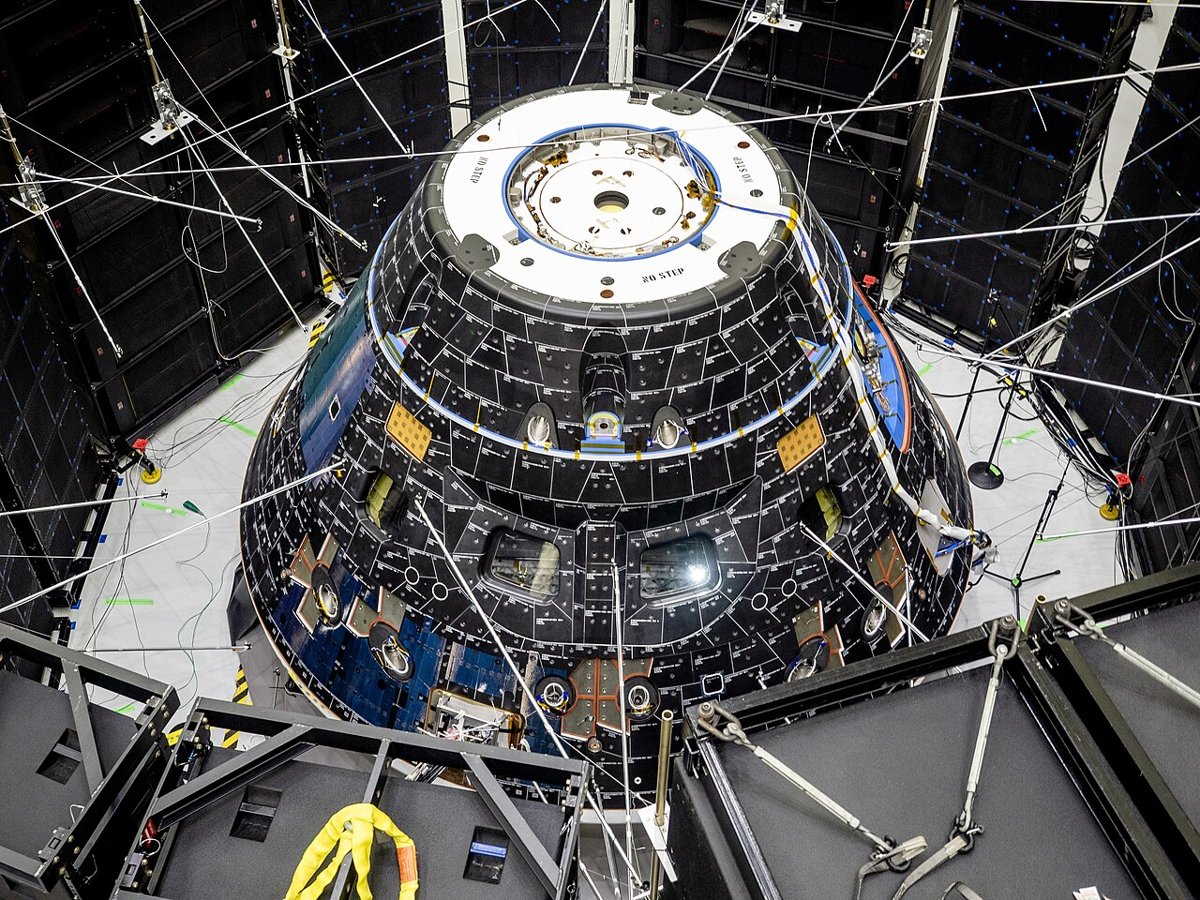
The lessons-learned process is unglamorous, often invisible, and absolutely essential to human spaceflight. At Johnson Space Center's Ion venue in Houston, NASA engineers recently did what the agency does after every crewed mission: they talked through what went right, what surprised them, and what needs to change. This time, the subject was Orion's performance during Artemis II — and the audience wasn't merely archiving observations for the record. The findings are feeding directly into the architectural decisions that will define how humans reach the Moon for extended stays, and eventually push outward toward Mars.
That direct feedback loop — from actual flight data to active mission design — is rarer than it sounds in large government programs. The fact that it is happening in real time, while Moon Base planning simultaneously advances, matters for anyone who cares whether NASA's Moon-to-Mars ambitions are grounded in engineering reality or aspirational slides.
The Ion: Where JSC Thinks Out Loud
Johnson Space Center has long been the hub of NASA's human spaceflight program, a place where flight controllers, astronauts, and systems engineers coexist in a culture that prizes technical depth over public performance. The Ion — a collaborative space at JSC — serves as a venue for this kind of internal knowledge transfer: less a formal conference than a structured forum where the people who built and flew a system explain what they observed to the people designing what comes next.
Artemis II's Orion capsule gave engineers what earlier Orion flights could not fully provide: real data from a crewed mission operating in deep-space conditions. The differences between an uncrewed test flight and a crewed mission are not trivial. Life support systems are active, crew interfaces are in use under operational pressure, and the thermal and environmental demands of human occupants are fully present. How the vehicle behaves under those conditions — how systems perform during actual operational use — is the kind of ground truth that simulation alone cannot reliably replicate.
From Flight Data to Architecture
According to NASA, the findings presented at the Ion are directly informing the agency's Moon-to-Mars architecture planning. That phrase — Moon-to-Mars architecture — has been part of NASA's vocabulary for years, but it carries different weight when it is being actively revised based on flight data rather than projected requirements and engineering estimates.
The broader architecture determines how missions chain together: what role the Gateway station plays in lunar orbit, how surface habitats are supplied and maintained, what capabilities crewed vehicles need to handle the communication delays and extended mission durations that Mars will demand. Every real-world data point from Artemis II is an input into those calculations. If a system behaved differently in flight than models predicted, the model gets updated — and potentially so does the architecture downstream of it.
This is the technical logic behind running early Artemis missions as crewed test flights rather than purely operational ones. The point is not merely to say humans went around the Moon; it is to collect performance data that makes subsequent missions more reliable and more capable. Artemis II was, in engineering terms, a data acquisition mission as much as it was a human spaceflight milestone. What NASA does with that data in the months that follow will determine how substantially Artemis III and later missions benefit from the program's early investments.
Moon Base Planning Moves in Parallel
While Orion flight data is being digested and debated, NASA's Moon Base planning has not paused. The agency is providing fresh updates on Moon Base program progress — an acknowledgment that architecture for sustained lunar surface presence is advancing alongside the lessons-learned process from early Artemis flights.
The two tracks are not running independently. They intersect at every level of system design. What engineers learn about Orion's performance in deep space informs what surface mission planners must account for. Transit time, communications windows, life support margins, crew fatigue profiles — all of these connect vehicle performance to the surface destination. A Moon Base designed around optimistic performance projections is more fragile than one built around what the hardware actually delivered in flight.
NASA's emphasis on sharing these updates publicly also reflects the agency's position in a more competitive and collaborative space environment. Lunar planning today involves international partners under the Artemis Accords, commercial contractors providing surface logistics and landers, and congressional stakeholders whose appropriations depend on confidence that progress is measurable and real. Accurate, current information about what the program has learned and where it is heading is not optional — it is the connective tissue that holds the coalition together.
The Commercial Backdrop
The pace at which lessons are extracted and applied matters partly because the commercial spaceflight sector is not standing still. In June 2026, SpaceX's Starlink constellation continued to expand via regular Falcon 9 launches from the West Coast — a cadence that illustrates how rapidly commercial programs move compared to the longer planning cycles inherent to human exploration missions.
This contrast is not a criticism of NASA. Human deep-space exploration involves different risk tolerances, different failure modes, and mission profiles that bear little resemblance to satellite constellation deployment. But it does underscore the value of moving quickly through the lessons-learned cycle. The longer it takes to apply Artemis II findings to future mission designs, the more pressure accumulates on a program timeline that is already ambitious. Commercial partners who will contribute to the lunar ecosystem — from logistics providers to surface system developers — are watching those timeline commitments closely, and the design decisions NASA makes based on Artemis II data will cascade through their own contracts and development schedules.
The Long View: Moon as Proving Ground for Mars
The Moon-to-Mars framing is not rhetorical. The decisions being made now — about Orion refinements, life support adjustments, crew systems, and navigation — will compound across the coming decade. A vehicle that works reliably in cislunar space provides the engineering baseline for understanding what additional capabilities are needed for the months-long transit a Mars mission will require. A Moon Base that functions predictably serves as both a destination and a technology proving ground for systems that will eventually have to operate without resupply for years at a time.
Every iteration of this feedback loop — fly the mission, analyze the data, revise the architecture — builds toward that goal. The Ion presentations at JSC are one small but essential node in that chain. They represent the institutional capacity to convert hard-won flight experience into better engineering decisions, rather than letting lessons learned calcify into after-action reports that nobody acts on. Whether that capacity is sustained through funding cycles, personnel continuity, and leadership commitment is a separate and open question — but the mechanism, at least, appears to be functioning as intended.
Why It Matters
Space programs succeed or fail not on launch day, but in the sustained, incremental work of applying what each mission teaches to the next one. NASA presenting Artemis II Orion lessons at JSC's Ion venue and feeding those findings directly into Moon-to-Mars architecture planning is exactly the kind of institutional behavior that separates programs that iterate toward reliability from ones that repeat the same mistakes on progressively larger budgets.
The Moon Base program is advancing in parallel, which means the feedback loop from flight data to mission design is operating on a compressed and consequential timeline. Getting this translation right — accurately converting what Orion's real-world performance tells engineers about what future missions will need — is foundational to whether the agency's Moon-to-Mars ambitions remain credible as the decade progresses. That makes the Ion presentations, unglamorous as they are, among the most strategically important technical work NASA is doing in the summer of 2026.
