
At 04:41 Japan Standard Time on 20 October 2026, an H3 rocket lifted off from Tanegashima carrying JAXA's Martian Moons eXploration probe, MMX. That was 19:41 UTC on 19 October, or 3:41 p.m. EDT on the US East Coast. Roughly 71 minutes later the spacecraft separated from the upper stage and was on course for Mars. The launch has worked, and the long part begins.
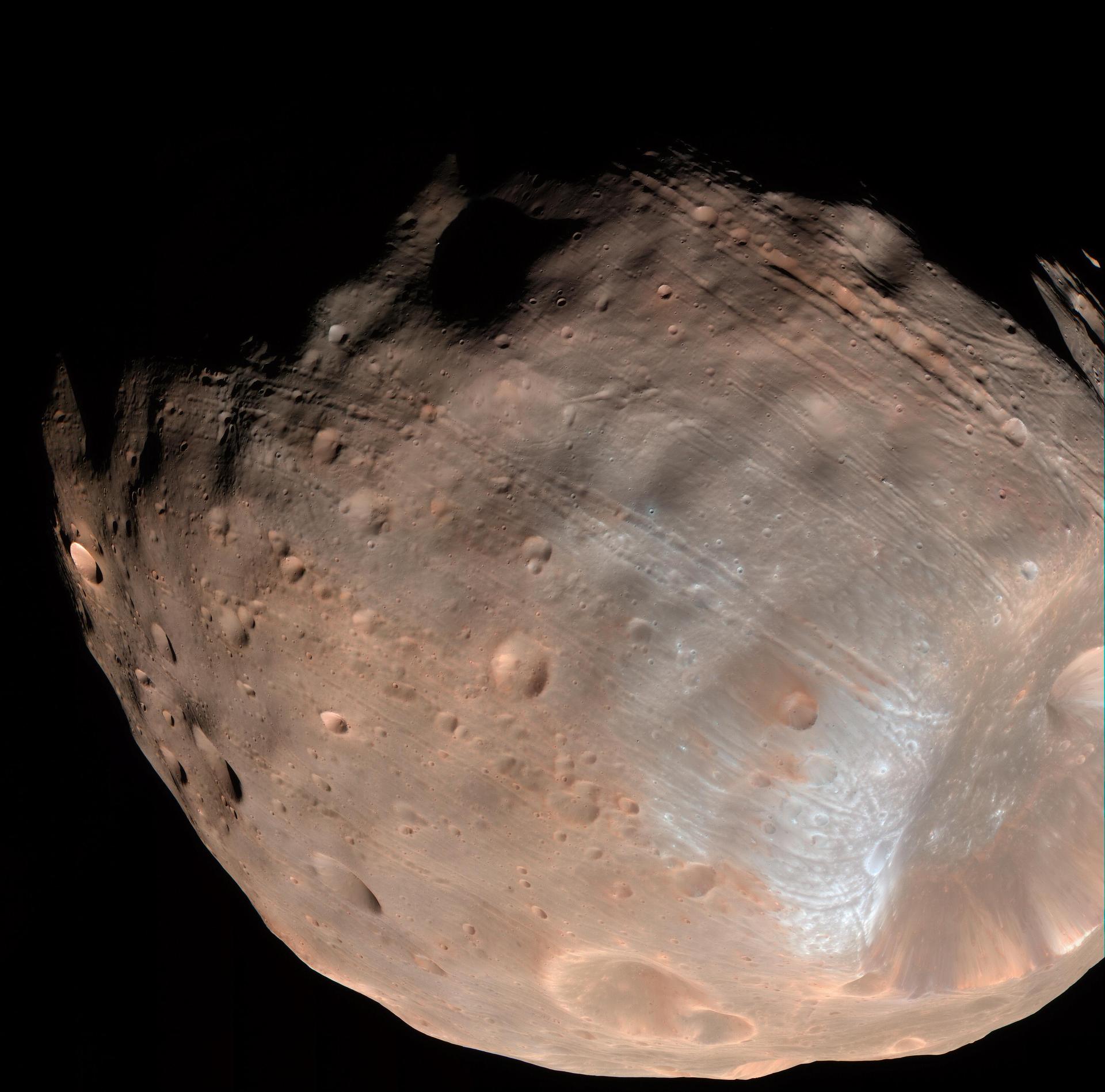
MMX is going to Phobos, the larger of Mars's two small moons. It plans to orbit the moon, put a rover on it, land, collect surface material and bring that material back to Earth. According to the European Space Agency, MMX will be the first spacecraft to orbit Phobos, the first to collect samples from this moon's surface, and the first to return to Earth from the Mars system.
How the launch unfolded
The rocket left Pad-2 of the Yoshinobu Launch Complex, and it was the tenth H3 to lift off, Space.com reported. The solid rocket boosters were jettisoned in pairs just before the two-minute mark. The upper stage then ignited its engine a second time for the critical step.
That step was the trans-Mars injection burn. It began about 1 hour 4 minutes after liftoff and lasted about 6 minutes 25 seconds. During the burn MMX reached a maximum velocity of about 38,858 km/h (24,145 mph). Separation came about a minute after the burn ended, roughly 71 minutes after liftoff. Putting MMX on its way to Mars was the launcher's job, and that job is done.
The cruise lasts about ten months, with arrival at Mars planned for August 2027. ESA put it more casually: "next summer."
What MMX is going to do when it gets there
The plan has several distinct phases, and the timeline runs long. Space.com reports the spacecraft is expected to spend about three years in the Martian system.
Quasi-satellite orbit. MMX will not settle into an ordinary orbit around Phobos. Phobos is only about 22 km (14 miles) across, and ESA notes that gravity there is extremely low. Instead, MMX will fly a quasi-satellite orbit, which Space.com describes as a path within the space around the moon as both circle Mars. ESA says MMX will be the first spacecraft to orbit Phobos, and expects it to do so from September 2027.
IDEFIX. MMX carries a small rover called IDEFIX, a joint effort of the French and German space agencies. According to Space.com, it will be deployed onto the surface in late 2028 or early 2029. ESA says the 25-kg rover has two main tasks: providing information to prepare for the main spacecraft's landing, and analysing the composition and texture of Phobos's surface.
Landing and sampling. After the rover is deployed, the main spacecraft lands to collect samples, ESA says, with the landing planned for 2030. If that works, MMX will be the first mission to collect samples from a moon other than Earth's.
The trip home. On the way back, MMX will fly past and further investigate Deimos, the smaller Martian moon, and Mars itself. EarthSky reports the sample is due back on Earth in 2031, landing in Australia.
An international spacecraft with a Japanese lead
JAXA leads MMX, with NASA, the French space agency CNES, the German space agency DLR, and ESA as partners. ESA's hardware part is communications. It supplied deep-space communication equipment for the spacecraft, and its Estrack ground station network will support the mission by sending commands and receiving data. Within ESA, MMX is a Mission of Opportunity in the Science Programme. European scientists appointed by ESA are also directly involved in the mission science team. ESA Director of Science Carole Mundell and ESA Project Scientist Elliot Sefton-Nash both commented on the launch.
The rover shows the same split. IDEFIX comes from France and Germany and rides on a Japanese spacecraft. Its job is to look at the surface the main spacecraft will later land on and sample.
Why It Matters
The scientific question behind MMX is old and still open: where did Phobos and Deimos come from? ESA and EarthSky both describe the two main hypotheses. In one, the moons are asteroids that Mars captured. In the other, they are the remnants of debris thrown into orbit after a giant collision on Mars.
Space.com explains how samples could help decide between them: scientists will study the returned material's composition and mineralogy, then compare its chemical fingerprints with those of Martian rocks and asteroid material. ESA says that, so far, only a few flybys have revealed anything about the moons, because no spacecraft has dwelled near them for long. Analyzing returned material in laboratories on Earth is the kind of evidence that could settle the question.
The mission also has engineering stakes. ESA says special technology has been created to help land, manoeuvre and collect samples robotically in the extremely low gravity at Phobos. Doing that, and then getting the material back across interplanetary space, is a demanding sequence. MMX would be the first mission to return to Earth after visiting the Mars system, and ESA notes that the ability to make such round trips could matter for future missions that bring back samples from Mars itself.
What to watch next
The launch was the first milestone and the one with the least room for error. The rest of the mission gets harder and will take years. The next big event is arrival at Mars in August 2027, followed by operations around Phobos. After that come the IDEFIX deployment in late 2028 or early 2029, the landing and sampling, and the return. The recovery in Australia, planned for 2031, is when MMX will have done what it set out to do.
For now, the probe is on its way to Mars.
