
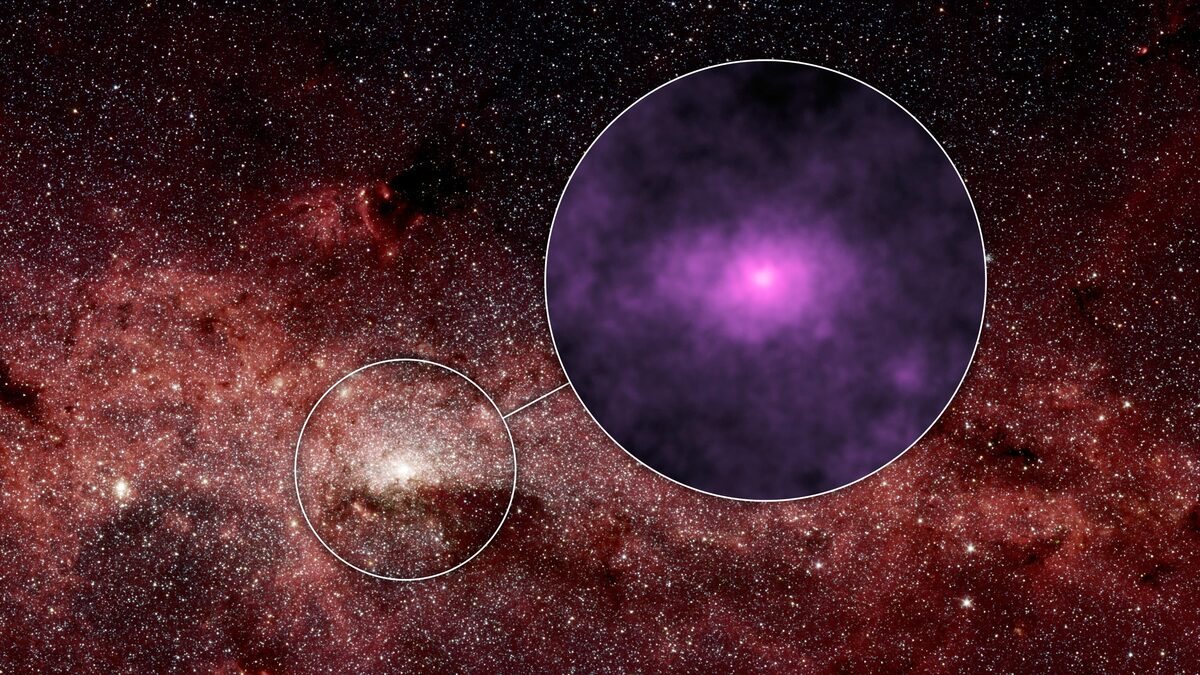
Astronomers have a black hole inventory problem, and the gap is huge. By one estimate cited by Space.com, the Milky Way has produced more than 10 million black holes over roughly 13 billion years. Stellar evolution models, Universe Today reports, put the number of galactic black holes in the hundreds of millions. Astronomers have located about 70.
A University of Southampton project called Black Hole Hunters wants to shrink that gap by asking for public help. Volunteers do not need a telescope or a physics degree. They need to look at graphs of starlight and spot a pattern that a machine has already flagged as worth a second look.
The problem with finding something invisible
Black holes form from massive stars, roughly 20 times the mass of the Sun according to Space.com. They emit no light of their own, so a black hole sitting quietly in space is close to impossible to see directly. The ones astronomers can find are usually given away by their effect on something nearby.
Black Hole Hunters targets one of those effects. When a black hole orbits a companion star, it can at times pass between that star and Earth. Its gravity bends the star's light on the way to us. The University of Southampton says this produces a clue called gravitational self-lensing. Instead of dimming the star the way a transiting planet would, the passing black hole briefly makes it look brighter, as Space.com describes it. And because the black hole is in orbit, the brightening repeats.
Dr Adam McMaster of Southampton's physics and astronomy department explains in the university's announcement that black holes "often leave clues because of their strong gravity, which can bend light as they orbit around stars." The job is to find stars whose brightness rises on a regular schedule for that reason, and not for one of the many other reasons a star's brightness can change.
From noisy ground data to TESS
The project is not brand new. According to Universe Today, it was created in 2021 and at first prioritized photometry from SuperWASP, a ground-based survey. That data suffered from a significant amount of noise and weather gaps, which is a serious problem when you are looking for a short, faint signal that repeats.
McMaster, originally a student at The Open University and more recently moved to Southampton, according to Universe Today, rebuilt the pipeline around data from NASA's TESS spacecraft. TESS records how bright stars are over time, and those records become light curves. The Southampton team turned them into simple graphs and animations that volunteers can read without specialist training, according to the university.
Where the AI stops and people take over
The scale is too large for people to search alone. Southampton says an AI system pre-screened millions of possible locations, doing in days a search that used to take years. Universe Today describes the system as a machine-learning algorithm that sorts light curves into two groups: "interesting" and "boring."
The classifier does not get the final say, and there is a good reason for that. Universe Today notes that the AI can be tricked by stars that brighten and dim for ordinary reasons, including sunspots and pulsating variable stars, and that TESS itself suffers from occasional glitches. Those signals can look like the regular brightening the project is hunting for. The final determination needs human eyes, so volunteers review the candidates the classifier passes along.
That division of labor is common in citizen science. The machine cuts millions of options down to a manageable number, and people do the pattern judgment. McMaster put the volunteer role this way in the university's statement, quoted by Space.com: "You'll be narrowing down precisely where we need to point our telescopes next."
That quote also sets expectations. A volunteer flag does not confirm a black hole. It marks a target for follow-up observations with telescopes, which astronomers would then need to carry out.
Who is doing the looking
According to Universe Today, the project's Zooniverse page showed it about 43% complete, with almost 23,000 volunteers contributing almost 12,000,000 classifications since October 2021. Southampton's announcement highlights one of them: Grace Clarke, a 20-year-old undergraduate who studies physics with astronomy and is president of the university's astronomy society.
Anyone who wants to join can find the project on Zooniverse at zooniverse.org/projects/cobalt-lensing/black-hole-hunters, the address given in the university's release.
Why It Matters
The gap between roughly 70 known black holes and estimates in the millions or more is more than a curiosity. It shows how little of this population astronomers have actually seen. The black holes found so far were detected because something made them visible. Any census built from that small, selected group could give a distorted picture of how many black holes the galaxy contains and where they are.
Self-lensing offers another way to find them. It relies on the bending of light, so it can in principle pick up black holes that are otherwise quiet, as long as they orbit a star and the alignment with Earth is right. Combining a TESS-based pipeline, an AI pre-filter and roughly 23,000 volunteer reviewers is an attempt to apply that method at a scale that was not practical when the project relied on noisy ground-based data.
The method has limits. It requires a companion star and a favorable orbital alignment, and every candidate still needs telescope follow-up before it counts. The near-term payoff is a shortlist, not a list of discoveries. But with about 70 known objects to work from, even a modest number of confirmed finds from this approach would noticeably add to the census.
